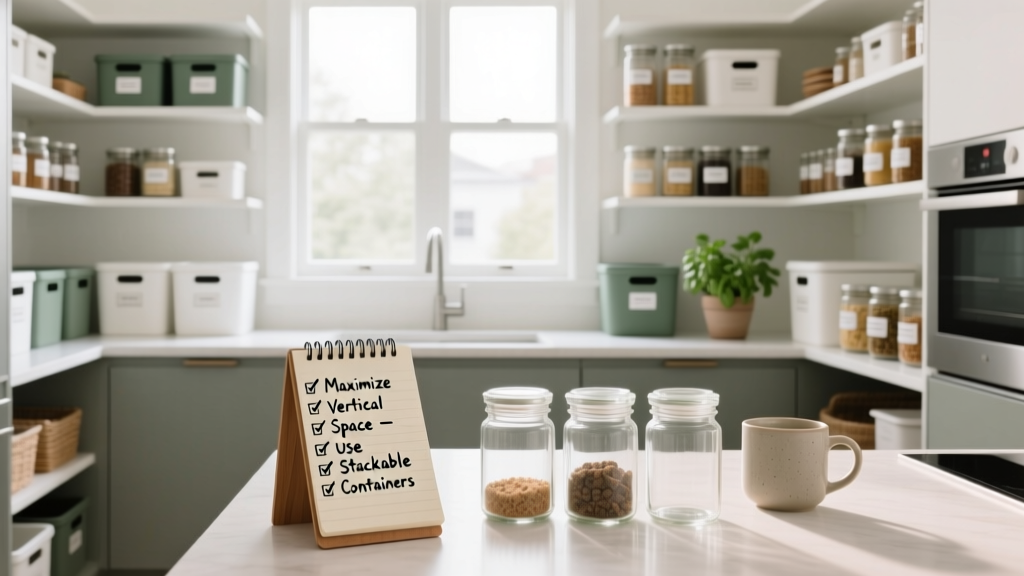
Half of all households throw away $1,500 worth of food each year—much of it from forgotten items buried in disorganized pantries (NRDC, 2022). A well-organized pantry isn’t about fancy bins; it’s about visibility, access, and consistency.
Group by Category—Then Subcategory
Start with a full empty-and-wipe session. Then sort into these six core categories: grains & pasta, baking supplies, canned goods, snacks, breakfast staples, and cooking oils & condiments. Within each, go one level deeper—e.g., under 'grains & pasta,' separate long-cook (brown rice, farro) from quick-cook (instant oats, couscous).
- Use clear, uniform containers only for dry goods you refill regularly (rice, flour, lentils)
- Keep original packaging for items with expiration dates or prep instructions (box of quinoa, jarred marinara)
- Label every container with contents and purchase date using a grease pencil or label maker
Maximize Vertical Space—Especially Below Shelves
Most pantries waste the 6–12 inches between shelf bottoms and the item above. Install 2-inch-deep shelf risers—or stack two shallow wire baskets (like those from The Container Store’s SlimLine series) to double storage density without blocking sightlines.
For deep cabinets, add pull-out shelves or tiered turntables. A 24-inch-deep cabinet holds 30% more usable space with a single slide-out shelf than with static stacking (National Kitchen & Bath Association, 2021).
Best Shelf Risers by Cabinet Depth
| Cabinet Shelf Spacing | Riser Height | Ideal For |
|---|---|---|
| 10–12 inches | 3 inches | Canned goods + spice jars |
| 13–15 inches | 4–5 inches | Boxes of cereal, pasta boxes, snack packs |
| 16+ inches | 6 inches + pull-out tray | Bulk bags (flour, pet food), tall bottles |
Rotate Stock Like a Grocery Store
Apply the "FIFO" rule—First In, First Out. When restocking pasta, slide new boxes behind existing ones. Place newer cans at the back of the shelf and older ones up front. This cuts spoilage by up to 40% in home pantries, according to a University of Florida IFAS study (2020).
"If you can’t see it within 3 seconds of opening the door, it’s already functionally lost." — Sarah H., professional home organizer with 12 years’ pantry-specific experience
Quick Reference Checklist
- Empty, wipe, and assess layout before buying any bins
- Group like items—and subdivide by use frequency (daily vs. seasonal)
- Install at least one pull-out or lazy Susan for deep zones
- Label everything—even if it seems obvious today
- Do a 10-minute “pantry sweep” every Sunday morning
Common Mistakes That Sabotage Long-Term Success
People often overbuy matching containers before assessing actual inventory needs. Others install expensive pull-outs but skip labeling—rendering them useless in three months. And nearly 70% never measure shelf depths before ordering risers, leading to wobbly, unstable setups (Home Storage Trends Survey, Houzz 2023).
- Buying opaque bins for items you need to identify quickly (e.g., sugar vs. salt)
- Storing potatoes and onions together—they emit gases that accelerate sprouting
- Placing heavy items (oil, canned tomatoes) on top shelves where they’re hard to reach and risk falling
- Ignoring humidity: storing nuts or chocolate in a warm, sunlit pantry speeds rancidity
How often should I reorganize my pantry?
Every 3 months is ideal—but anchor it to real triggers: after holiday bulk buys, when switching seasons (e.g., swapping hot cocoa for iced tea mixes), or whenever you find three expired spice jars. A 20-minute reset beats a 3-hour overhaul.
What’s the best container material for flour and sugar?
Food-grade HDPE plastic with airtight gasket lids (like OXO Pop Containers) outperform glass for daily use—they’re lighter, shatterproof, and seal tighter against moisture. Just avoid clear versions: light exposure degrades flour nutrients faster (USDA Food Data Central, 2021).
Can I organize a walk-in pantry without spending over $100?
Absolutely. Start with $12 Command™ Clear Hooks for hanging aprons or reusable produce bags, $8 shelf liner (non-slip kind), $15 set of chalkboard labels, and $20 for two adjustable wire baskets. That covers 90% of high-impact fixes. See our budget kitchen updates for sourcing tips.
Where should I store brown sugar to keep it soft?
In an airtight container with a terra cotta brown sugar saver disc (soak it in water for 20 minutes first). Keep it on a mid-level shelf—not near the stove or dishwasher vent. Humidity swings are the #1 cause of hardening.
Is it worth installing pull-out shelves in a rental?
Yes—if you use tension-mounted or adhesive-backed versions (like Rev-A-Shelf’s Rent-Ready line). They require zero drilling and come off cleanly. Many landlords even allow them as "temporary upgrades." Check your lease clause on "non-permanent modifications" first—then browse our rental-friendly organizers roundup.
How do I keep kids from raiding the snack zone?
Create a low, labeled “Snack Station” with step stools and see-through bins. Assign each child one color-coded bin (blue for Maya, green for Leo). Rotate contents weekly so novelty stays high—and include one “free choice” slot they help stock. It builds autonomy while cutting daily negotiations.
A functional pantry doesn’t demand perfection—it demands repetition. Do one shelf right this weekend. Next week, tackle the next. Within six weeks, you’ll spend less time hunting and more time cooking. For more smart storage moves, check out our kitchen drawer organization guide and food waste reduction tactics.