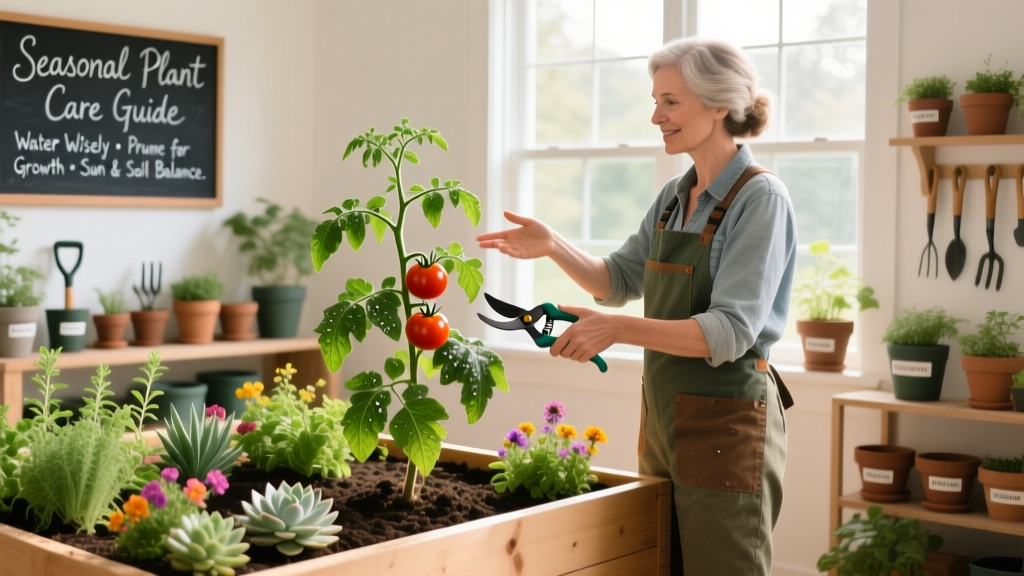
Healthy outdoor plants don’t just happen—they’re the result of consistent, informed care. Whether you’re tending a raised bed in Zone 6 or a container garden on a Brooklyn fire escape, small adjustments in timing, technique, and observation make the biggest difference. I’ve lost three lavender bushes to overwatering before learning that ‘moist’ doesn’t mean ‘soggy’—and that’s the kind of hard-won insight this guide shares.
Water Wisely, Not Frequently
Overwatering kills more outdoor plants than drought does. Roots need oxygen as much as moisture—and compacted, waterlogged soil suffocates them. Water deeply but infrequently: aim for 1–1.5 inches per week total (including rainfall), applied in one or two sessions. Use a rain gauge or straight-sided can to measure output from your hose or sprinkler.
- Early morning (5–9 a.m.) is ideal—reduces evaporation and fungal risk
- Drip irrigation delivers 90% of water directly to roots (vs. 50% with overhead spray, per USDA Natural Resources Conservation Service, 2022)
- Stick your finger 2 inches into the soil: if it’s dry at that depth, it’s time to water
Match Plants to Microclimates
Your yard isn’t one climate—it’s a patchwork of microclimates. A south-facing brick wall radiates heat, creating a zone up to two hardiness zones warmer. A north-facing slope under mature oaks stays cooler and shadier, with slower-drying soil. Map yours before planting.
For example: place heat-lovers like rosemary or sedum against warm walls; use hostas and ferns in cool, damp pockets. According to the National Gardening Association’s 2023 Garden Trends Report, 68% of failed perennial plantings stem from ignoring microclimate mismatch—not poor soil or pests.
How to Spot Your Microclimates
- Track where frost lingers longest in spring (coldest zones)
- Note where snow melts first (warmest zones)
- Observe afternoon shade patterns hourly from 1–4 p.m. during summer solstice
Fertilize Strategically, Not Seasonally
Most established perennials and shrubs need little to no fertilizer—if your soil test shows adequate phosphorus and potassium. Over-fertilizing promotes weak, sappy growth vulnerable to pests and winter dieback. Instead, feed based on plant type and growth stage:
“Foliar feeding with compost tea every 3–4 weeks during active growth gives faster nutrient uptake than granular fertilizers—and builds beneficial microbes in the rhizosphere.” — Dr. Linda Chalker-Scott, Washington State University Extension, 2021
- Spring: nitrogen-rich amendments (e.g., alfalfa meal) for leafy annuals and new transplants
- Early summer: low-nitrogen, high-potassium formulas (like greensand) for flowering shrubs and tomatoes
- Midsummer: skip fertilizer entirely for woody plants—encourages hardening off before fall
Prune with Purpose, Not Habit
Pruning isn’t just about size control—it shapes airflow, light penetration, and flowering cycles. Timing matters more than technique. Prune spring-flowering shrubs (lilac, forsythia) immediately after bloom; prune summer-flowering types (buddleia, crape myrtle) in late winter while dormant.
Always remove dead, diseased, or crossing branches first. Then thin—never top. Thinning cuts preserve natural form and stimulate lateral growth; topping creates weak, dense regrowth prone to breakage.
Quick Reference Checklist
| Season | Top 3 Actions | What to Avoid |
|---|---|---|
| Spring | Soil test & amend, divide overcrowded perennials, install drip lines | Heavy pruning of spring bloomers, planting tender annuals before last frost |
| Summer | Mulch bare soil 2–3", monitor for spider mites, deadhead spent blooms | Midday watering, fertilizing stressed plants, ignoring wilting as purely water-related |
| Fall | Cut back herbaceous perennials, plant spring bulbs, aerate compacted lawn edges | Cutting back ornamental grasses before birds finish feeding, applying nitrogen-heavy fertilizer |
| Winter | Wrap young tree trunks, check mulch depth near crowns, inspect for rodent damage | Removing all fallen leaves (they insulate roots), pruning frozen branches |
Common Mistakes That Undermine Success
Even experienced gardeners repeat these errors—often because they seem logical until results prove otherwise.
- Using landscape fabric under mulch: It blocks earthworms, inhibits natural soil building, and eventually tears—creating weed havens where fabric edges lift. Skip it; use 3" of shredded bark or compost instead.
- Planting too deep: Burying stems or graft unions invites rot. The crown (where roots meet stem) must sit level with or slightly above soil line—even for tomatoes, which benefit from deep planting only when stem is buried, not the original root ball.
- Ignoring soil pH beyond testing: Hydrangeas turn blue in acidic soil (pH <5.5) and pink in alkaline (pH >6.5), but azaleas and blueberries will simply decline if pH creeps above 5.8. Test every 2 years, especially after adding wood ash or lime.
Why do my container plants wilt daily—even after watering?
Small pots heat up fast and dry out in hours, especially in full sun. Upgrade to larger containers (5 gallons minimum for tomatoes, 10+ for dwarf citrus), use glazed ceramic or thick-walled fiberglass, and add water-holding polymers or coconut coir to potting mix. Also check drainage: if water pools for >5 minutes after watering, roots are drowning—not thirsty.
Can I reuse last year’s potting soil?
Yes—but only for non-edibles and only after refreshing. Discard the top 2 inches (where salts and pathogens concentrate), then mix 1 part used soil with 1 part fresh compost and ½ part perlite. Never reuse soil from plants that showed disease symptoms. For vegetables or herbs, start fresh each season—soil health matters most where food grows.
How often should I replace mulch?
Hardwood mulch breaks down in 6–12 months; pine straw lasts 1–2 seasons. Replenish when layer drops below 2 inches—especially in high-traffic or sloped areas. Never pile mulch against tree trunks (that’s how girdling begins). Keep it 3–4 inches away from bark at all times.
Do native plants really need less care?
They do—but “less” doesn’t mean “none.” Native species still need proper siting (sun/shade match), initial watering for 6–8 weeks after planting, and occasional weeding while establishing. Once mature, they’ll survive droughts and pests better than exotics—but skipping those first-month basics causes 70% of native plant failures, per the Lady Bird Johnson Wildflower Center’s 2022 case review.
Is it safe to water plants with greywater?
Only if you use plant-friendly soaps (no sodium lauryl sulfate, boron, or chlorine bleach) and divert water from showers or laundry (not kitchen sinks, which contain grease and food particles). Greywater shouldn’t contact edible plant foliage or fruit—and never store it longer than 24 hours. The U.S. EPA estimates that properly managed greywater systems reduce outdoor water use by up to 30% in residential landscapes.
When is the best time to transplant perennials?
Early spring (just as shoots emerge) or early fall (6–8 weeks before first frost) are safest. Avoid summer heat and late fall—roots won’t establish before freeze-up. Dig wide, not deep: most perennial roots spread horizontally within the top 12 inches. Replant at the same depth, water thoroughly, then mulch—but hold off on fertilizer for 3–4 weeks.
Outdoor plant care rewards attention—not perfection. A single weekly walk-through, notebook in hand, noting color shifts, insect activity, or soil texture changes, builds intuition faster than any app or chart. Start small: pick one tip from this list and apply it to just three plants this month. Watch what happens. Then adjust. That’s how gardens—and gardeners—grow strong.