Moving for the first time feels like assembling IKEA furniture without the manual — equal parts hopeful and slightly terrifying. You’ve got boxes, a rental truck, and Google search history full of 'how much does moving cost?' But what you really need isn’t theory — it’s what movers actually do when no one’s watching.
Start Packing — Two Weeks Before Move Day
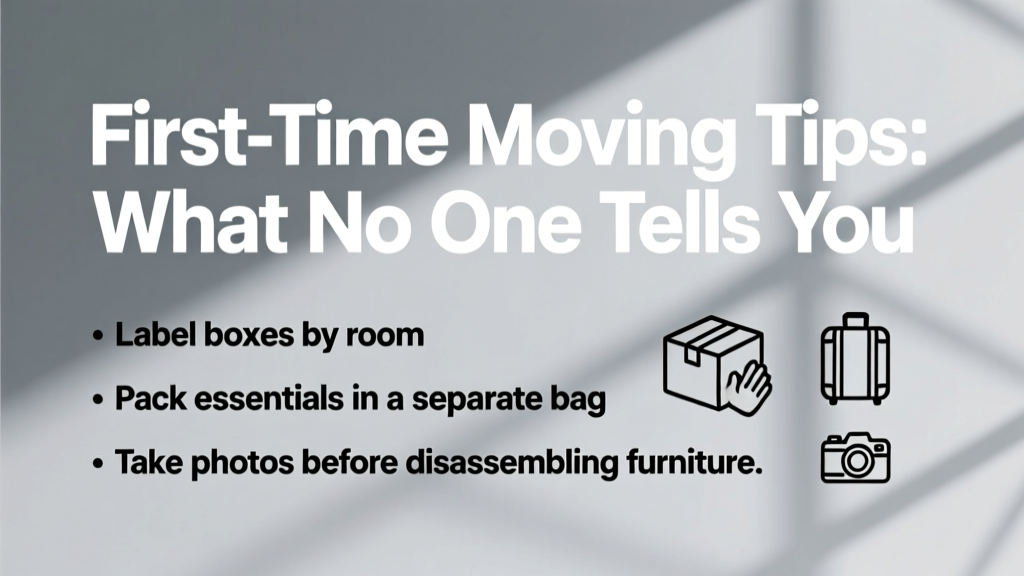
Don’t wait until the weekend before. Begin with non-essential items: off-season clothes, books, décor, and spare linens. Label every box with room + contents (e.g., "Kitchen – Mugs & Measuring Cups") and mark fragile items with red painter’s tape — not just 'Fragile' stickers, which get ignored.
- Use wardrobe boxes for hanging clothes — saves hours of unpacking and prevents wrinkles
- Wrap glassware in clean socks or towels instead of bubble wrap (saves money, works better)
- Keep a 'first-night box' with chargers, toilet paper, medications, and a change of clothes — tape it shut and load it last (unload first)
Hire Smart — Not Just Cheap
A $300 quote might look great — until you learn it excludes stairs, long carries, or elevator fees. Always get written estimates that specify labor rate per hour, minimum charge, and fuel surcharge. According to the American Moving & Storage Association’s 2023 Consumer Report, 68% of first-time movers who booked based solely on price ended up paying 27% more at delivery.
"If a mover won’t walk through your apartment and count rooms or major items, walk away. A proper estimate requires seeing what you’re moving." — Lisa Chen, Senior Relocation Coordinator, Allied Van Lines (2024)
What’s Included in a Basic Local Move?
Most reputable local movers include: two crew members, a 16–26 ft truck, basic padding for furniture, and up to 3 hours of labor. Anything beyond that — disassembling beds, hauling heavy safes, or carrying pianos — is extra. Ask for their moving cost calculator to compare line-item quotes side by side.
Protect Your Belongings — Legally and Logistically
Your renter’s insurance likely doesn’t cover damage during transit — and most movers offer only minimal valuation coverage (typically $0.60 per pound per item). For a 50-lb sofa, that’s just $30 — nowhere near replacement value. Upgrade to full-value protection (FVP) for ~1% of declared goods value. The U.S. Department of Transportation requires all licensed movers to offer this option — but they won’t push it unless you ask.
- Take timestamped video of every room before packing — shows pre-move condition
- Photograph high-value items (art, electronics, antiques) with serial numbers visible
- Keep receipts for anything over $100 — required for FVP claims
Quick Reference: First-Time Moving Checklist
| Timeline | Task |
|---|---|
| 4 weeks out | Book movers; notify utilities; update address with USPS |
| 2 weeks out | Start packing non-dailies; confirm parking permits for truck |
| 3 days out | Defrost fridge; pack cleaning supplies; prep 'first-night box' |
| Move day | Do final walkthrough; sign inventory sheet; get supervisor’s contact info |
Common Mistakes First-Timers Make
The biggest regrets aren’t about broken lamps — they’re about avoidable oversights. Overpacking boxes (anything over 35 lbs is unsafe to lift), forgetting to drain gas from lawnmowers or power tools (a fire hazard and violation of DOT rules), and assuming your new apartment’s outlets match your old ones (they often don’t — bring a multimeter and check voltage).
- Using duct tape on boxes — it fails under weight and humidity
- Not measuring doorways and stairwells before buying oversized furniture
- Leaving cable/satellite accounts active — you’ll pay for service you can’t use
- Skipping the walk-through with the mover before loading — leads to disputes later
How much should I tip movers?
$4–$5 per hour per mover is standard. For a 4-hour job with two people, $32–$40 is appropriate. Tip in cash at delivery — not via app — so it goes directly to the crew.
Do I need to clean my old place before moving out?
Yes — and get it in writing. Most leases require 'broom-clean' condition. Take photos before you leave, and request a joint inspection with your landlord. If you skip this, you risk losing your security deposit — here’s how to dispute unfair deductions.
Can I move plants across state lines?
Many states restrict live plant imports to prevent invasive pests. California, Florida, and Arizona have strict rules. Call your destination state’s Department of Agriculture *before* packing them. Most movers won’t transport plants anyway — drive them yourself in your car.
What if my stuff arrives late or damaged?
File a claim within 9 months for interstate moves (per FMCSA rules). Document everything: photos, inventory notes, and the original bill of lading. Keep copies — not originals — of all paperwork. For help filing, see our moving claim guide.
Should I hire a professional packer?
Only if you’re short on time *and* moving high-value or delicate items (e.g., antique china, framed art, or home office equipment). Professional packing adds ~15–20% to your total cost — but cuts packing time by 60%, according to Move.org’s 2023 survey of 1,200 first-time movers.
First-time moving isn’t about perfection — it’s about preparation that holds up under pressure. You’ll forget something. You’ll misjudge a box’s weight. But if you start early, document thoroughly, and ask questions *before* the truck pulls up, you’ll land on the other side with your sanity — and your favorite mug — intact.