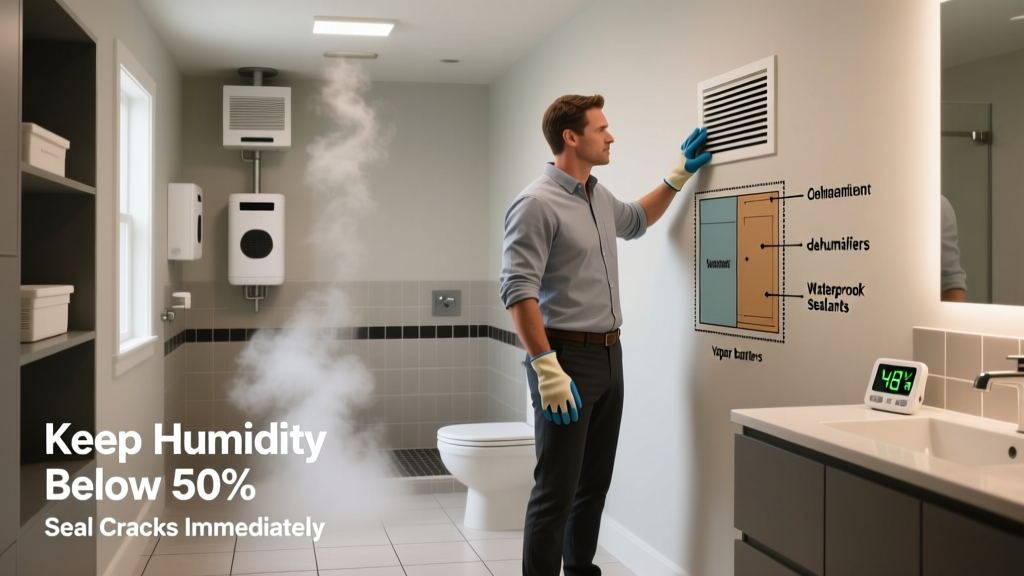
If you’ve ever peeled back a corner of bathroom caulk to find fuzzy black specks or smelled that unmistakable musty odor in your basement after heavy rain, you’re already fighting mold on its terms—not yours. Mold doesn’t need a flood to take hold: just 48 hours of sustained humidity above 60% is enough for spores to germinate (U.S. EPA, 2022). The good news? Over 90% of indoor mold problems are preventable with consistent, targeted habits—not expensive remediation.
Control Indoor Humidity Year-Round
Relative humidity between 30–50% is the sweet spot for human comfort and mold deterrence. But most homes hover at 60–70% in summer basements and winter bathrooms—prime breeding ground. Run a hygrometer ($12–$25) in high-risk zones like laundry rooms and crawlspaces. In humid climates, pair a dehumidifier with a smart plug that auto-starts when readings hit 55%. For every 5°F drop in temperature, air holds ~10% less moisture—so avoid overcooling bedrooms overnight, which can cause condensation on windows and walls.
- Run bathroom exhaust fans for at least 20 minutes after showering—even if the mirror isn’t fogged (ASHRAE Standard 62.2-2022)
- Set whole-house HVAC systems to “auto” fan mode—not “on”—to prevent recirculating damp air
- Wipe down cold-water pipes in basements weekly during humid months; condensation drips feed mold behind drywall
Fix Hidden Leaks Before They Become Colonies
Leaky supply lines under sinks, pinhole cracks in tub surrounds, and slow-drip A/C drain pans rarely make noise—but they create perfect micro-environments for Stachybotrys and Aspergillus. The U.S. EPA estimates that 14% of household water usage is from leaks—many invisible until discoloration appears.
Inspect these three spots monthly:
- Under kitchen and bathroom sinks: feel for damp insulation or warped particleboard
- Behind toilets: lift the tank lid and check for weeping at the fill valve gasket
- Air handler drip pans: shine a flashlight into the access panel—standing water = immediate cleaning + bleach rinse
Why silicone caulk fails faster than polyurethane in showers
Silicone repels water but lacks adhesion strength on porous grout or painted drywall. Within 6–12 months, it pulls away at corners—creating a hidden reservoir. Polyurethane-based sealants (like GE Advanced Silicone II or Sashco Big Stretch) bond aggressively to tile, grout, and fiberglass, resisting UV and movement. Re-caulk every 3 years—not just when it looks cracked.
Ventilate Without Wasting Energy
Opening windows in humid weather often backfires: you’re pumping moist outdoor air into cooler interior walls, where it condenses. Instead, use balanced ventilation. Heat-recovery ventilators (HRVs) exchange stale indoor air with fresh outdoor air while retaining 70–85% of heating/cooling energy (Building Science Corporation, 2021). For rentals or older homes, install inline bathroom fans with humidity sensors (e.g., Panasonic WhisperGreen) that ramp up only when needed—cutting runtime by 40% versus timer-only models.
How to test if your dryer vent is clogged
Run a normal load, then place your hand 6 inches from the exterior vent hood. You should feel strong, steady airflow for the full cycle. If airflow is weak or stops mid-cycle, lint has built up inside the duct—raising fire risk and trapping moisture in the wall cavity. Clean flexible aluminum ducts annually with a $25 brush kit; replace plastic or foil ducts with rigid 4-inch metal.
Quick Reference Mold Prevention Checklist
| Room | Action | Frequency |
|---|---|---|
| Bathroom | Caulk all seams with mold-resistant polyurethane sealant | Every 3 years |
| Basement | Install vapor barrier on dirt floor + dehumidifier set to 45% | One-time + ongoing |
| Kitchen | Check refrigerator drip pan for algae; clean with vinegar biweekly | Biweekly |
| Attic | Verify soffit and ridge vents are unobstructed (no insulation blocking) | Twice yearly |
Common Mistakes That Invite Mold
Many well-intentioned efforts actually worsen conditions. Here’s what inspectors see most often:
- Using bleach on porous surfaces: It kills surface spores but doesn’t penetrate wood or drywall—and leaves moisture behind. The CDC advises against bleach for mold cleanup on absorbent materials (CDC, 2020).
- Running humidifiers without monitoring: Adding moisture to already humid rooms (like basements in summer) pushes RH past 60%—triggering growth in under 48 hours.
- Blocking vents with furniture or rugs: A sofa pushed against a supply vent creates a cold spot behind it. Condensation forms on the wall, then mold follows—often unnoticed for months.
What to Do When You Spot Early Mold
Small patches (<10 sq ft) on non-porous surfaces—tile, glass, metal—can be cleaned safely. Larger areas, or any growth on drywall, insulation, or carpet, require professional assessment per IICRC S520 standards.
Can air purifiers stop mold from spreading?
HEPA filters capture airborne spores—but only those already floating. They do nothing for active colonies growing in walls or under flooring. As certified industrial hygienist Dr. Linda Hines notes:
“An air purifier is like putting a bandage on a broken pipe—it addresses the symptom, not the source.” (Indoor Air Quality Association, 2023)
Does painting over mold work?
No. Paint seals spores in place but doesn’t kill them. Moisture continues feeding growth beneath the film. Eventually, the paint blisters or stains reappear. Always remove affected material first—then treat substrate with EPA-registered fungicide like Concrobium Mold Control before priming.
Are mold test kits worth buying?
Rarely. DIY kits (like EMMA or Mold Armor) have high false-negative rates and can’t distinguish between harmless spores and toxigenic strains. The EPA recommends visual inspection and moisture testing first—and only lab analysis if health symptoms persist after fixing water issues (mold testing cost breakdown).
How long does it take for mold to grow after a leak?
Under ideal conditions (60%+ RH, 70°F, organic food source), visible growth begins in 24–48 hours. That’s why the water damage restoration industry mandates drying within 24 hours to meet insurance requirements.
Do houseplants contribute to mold?
Yes—if overwatered. Potting soil stays damp for days, releasing moisture and hosting Fusarium and Penicillium. Use self-watering pots with reservoirs, or switch to succulents and snake plants that need watering only every 2–3 weeks. Always empty saucers within 15 minutes of watering.
Preventing mold isn’t about perfection—it’s about consistency. Swap one habit this week: start timing your bathroom fan, check one sink cabinet for dampness, or swap out that cracked shower caulk. Small actions, repeated, change the environment mold needs to survive. And when your walls stay dry and your air stays clear, you’ll know you’ve shifted the balance—for good.