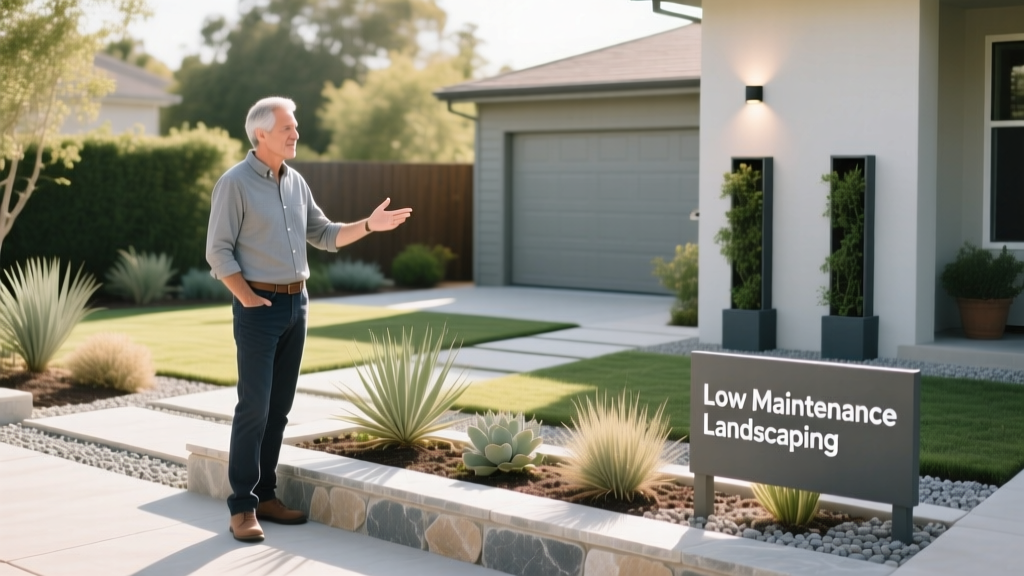
Most homeowners spend 12–15 hours per month on yard work—mowing, weeding, pruning, and watering. That’s over 150 hours a year, just to keep things looking okay. Low maintenance landscaping isn’t about letting your yard go wild; it’s about designing with intention so your yard works *for* you—not the other way around.
Choose Plants That Fit Your Climate Zone
Native and adapted perennials require far less intervention than non-native exotics. In USDA Zone 7, for example, switchgrass (Panicum virgatum) and purple coneflower (Echinacea purpurea) thrive with zero fertilizer and only occasional watering after establishment. Avoid thirsty species like hydrangeas or impatiens in arid regions—they’ll demand daily attention and frequent replacement.
- Check your USDA Hardiness Zone using the USDA Zone Map
- Visit local extension offices (e.g., Texas A&M AgriLife or Rutgers NJAES) for region-specific plant lists
- Group plants by water needs—don’t mix drought-tolerant lavender with moisture-loving hostas in the same bed
Replace Lawn with Functional Ground Covers
Traditional turfgrass consumes 30% of residential water use in dry climates (U.S. EPA, 2022). Replace high-traffic zones with clover (white or microclover), which fixes nitrogen, stays green year-round, and tolerates light foot traffic. In shady areas, consider creeping Jenny or Pennsylvania sedge—both suppress weeds and need no mowing.
For full sun and minimal irrigation, try dwarf mondo grass (Ophiopogon japonicus ‘Nana’) or blue fescue (Festuca ovina glauca). These form dense mats that choke out weeds and grow just 4–6 inches tall.
Top 5 Low-Maintenance Ground Covers by Sun Exposure
| Sun Exposure | Plant | Water Needs (weekly) | Mature Height |
|---|---|---|---|
| Full Sun | Dwarf Mondo Grass | 0.5 inch | 3–4 in |
| Full Sun | Blue Fescue | 0.75 inch | 6–8 in |
| Part Shade | Pennsylvania Sedge | 1 inch | 8–12 in |
| Shade | Creeping Jenny | 1.25 inches | 2–4 in |
| Shade | Barrenwort (Epimedium) | 1 inch | 12–18 in |
Install Smart Hardscaping Early
Hardscaping reduces surface area needing care—and pays for itself in labor savings within 2–3 years. Use permeable pavers instead of solid concrete: they allow rainwater infiltration, eliminate puddling, and require no sealing or re-staining. Gravel paths (¾-inch decomposed granite) stay stable underfoot and resist weed growth when laid over landscape fabric and edged with steel or stone.
According to the National Association of Landscape Professionals’ 2023 Contractor Survey, yards with ≥30% hardscape see 68% fewer service calls for edging, mulch replenishment, and seasonal cleanup.
"We tell clients: invest in hardscape first, plants second. A well-built patio or gravel path won’t need pruning, fertilizing, or replacing every three years." — Maria Chen, certified landscape contractor, Portland OR (2023)
Quick Reference Checklist
Use this before planting season or during spring cleanup to audit your current setup:
- ✅ At least 70% of plants are native or climate-adapted
- ✅ Lawn area reduced by ≥40% (replaced with ground cover, mulch, or hardscape)
- ✅ Drip irrigation installed on all perennial beds (not spray heads)
- ✅ Mulch layer is 3 inches deep and replenished every 18 months
- ✅ No annuals used in permanent beds (they’re high-effort, low-return)
Common Mistakes That Backfire
Low-maintenance landscaping fails most often due to small, avoidable errors. Overmulching—piling mulch against tree trunks—rots bark and invites pests. Installing drip lines without a filter leads to clogged emitters within one season. And choosing 'low-water' plants but planting them in heavy clay without soil amendment guarantees poor root development and early die-off.
Another frequent misstep: skipping soil testing. A $25 lab test from your county extension reveals pH, organic matter, and compaction issues—information that prevents wasted effort on plants doomed to struggle.
- Planting drought-tolerant species in poorly drained soil
- Using shredded hardwood mulch near foundations (attracts carpenter ants)
- Installing automatic sprinklers without a rain sensor or smart controller
- Assuming 'xeriscape' means 'no irrigation'—even desert natives need consistent water for the first 12–18 months
How often should I replace mulch?
Every 18–24 months in full sun; every 30–36 months in shade. Replenish only the top 1–1.5 inches—never add fresh mulch to existing layers deeper than 3 inches total. Overmulching suffocates roots and creates anaerobic conditions that invite fungus gnats and root rot.
Do I still need to prune if I choose low-maintenance plants?
Yes—but much less. Most native shrubs like buttonbush (Cephalanthus occidentalis) or American beautyberry (Callicarpa americana) need only one light shaping cut per year, ideally right after flowering. Skip shearing; use hand pruners for selective removal of crossing or dead branches. This preserves natural form and encourages stronger growth.
Can I convert my lawn myself—or do I need a pro?
You can DIY a small lawn conversion (under 500 sq ft) using sheet mulching: layer cardboard + 4 inches of compost + 2 inches of mulch, then wait 8–12 weeks. For larger areas or slopes >5%, hire a certified installer—especially if installing drip lines or retaining walls. The drip irrigation setup guide walks through emitter spacing and pressure regulation for beginners.
What’s the lowest-cost upgrade with biggest impact?
Installing a smart irrigation controller like Rachio 3 or RainMachine. It adjusts watering based on local weather, soil type, and plant zone. Homeowners in California’s Central Valley reported cutting outdoor water use by 37% in Year 1 (UC Davis Water Efficiency Program, 2022). Pair it with a rain sensor—it pays for itself in water bill savings within 14 months.
How do I keep weeds down without herbicides?
Three layers: 1) Install 3-mil black polypropylene landscape fabric (not woven fabric—it degrades faster), 2) Overlap seams by 4 inches and pin with U-shaped staples every 18 inches, 3) Top with 3 inches of coarse mulch (cocoa hulls attract pests; avoid). For persistent weeds like bindweed, solarize bare soil for 6 weeks in summer before planting—cover with clear plastic to reach 140°F at 2 inches depth.
Is artificial turf ever worth it?
Rarely—for most residential uses. Modern turf lasts 12–15 years but heats up 30–50°F above ambient temps (ASLA Research Review, 2021), melts nearby vinyl siding, and sheds microplastics into storm drains. Better alternatives: crushed granite for patios, rubber mulch in play areas (tested for lead-free content), or low-growing sedges that mimic turf texture without the heat or runoff.
Low maintenance doesn’t mean low quality—it means working smarter, not harder. Start with one zone: replace a 10×10 section of lawn with clover and a flagstone path. Measure your time saved over three months. Then scale what works. You’ll gain back weekends, lower your water bill, and still have a yard that looks intentional—not ignored. For more on soil prep, see our soil testing guide.