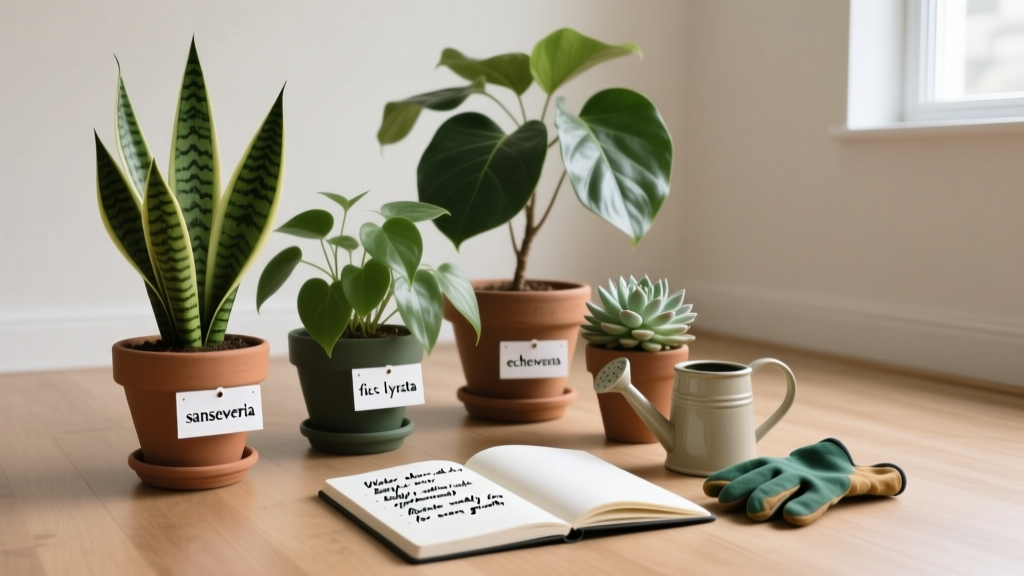
Most indoor plants don’t die from neglect—they die from overcare. I’ve killed a fiddle-leaf fig with too much love (and tap water straight from the faucet) and revived a desiccated snake plant by ignoring it for three weeks. Indoor plant care isn’t about perfection—it’s about pattern recognition, consistency, and knowing when to step back.
Match Light Conditions to Plant Biology
Light isn’t just ‘bright’ or ‘dark’—it’s directional, seasonal, and spectrally variable. A south-facing window in Chicago delivers ~60% less usable light in December than in June (University of Illinois Extension, 2022). Don’t assume ‘low-light tolerant’ means ‘no light.’ ZZ plants survive under fluorescent office lights, but they grow fastest with 2–4 hours of indirect morning sun.
- East windows: Ideal for pothos, spider plants, and calatheas—gentle morning light, no leaf burn
- West windows: Good for rubber trees and monstera—but pull them back 12–18 inches in summer to avoid scorch
- North windows: Stick to cast iron plants, Chinese evergreens, or snake plants only
Use a $15 lux meter app like Lux Light Meter Pro to measure actual foot-candles—not guesses. Most foliage plants need 100–500 fc; flowering types like African violets need 800–1,200 fc.
Water Smarter, Not More Often
Overwatering causes 70% of indoor plant deaths (American Society for Horticultural Science, 2021). The ‘finger test’ fails for dense soils and deep pots. Instead, use a moisture probe—or better yet, weigh your plant weekly. A 6-inch pot holding a peace lily will lose ~120g between thorough waterings when healthy. That weight drop tells you more than any chart.
“If you’re unsure whether to water, wait 24 hours—and then check the soil at the 2-inch depth with a chopstick. If it comes out clean and dry, it’s time. If it’s damp or has soil clinging, hold off.” — Maria Torres, horticulturist at Brooklyn Botanic Garden, 2023
- Always empty saucers within 15 minutes of watering
- Let tap water sit uncovered for 24 hours to dissipate chlorine (but not fluoride—use rainwater or distilled for sensitive ferns)
- Group plants with similar water needs: succulents + cacti, ferns + calatheas, palms + dracaenas
Fertilize Like a Seasonal Rhythm, Not a Schedule
Fertilizer isn’t plant food—it’s a supplement for active growth. Plants absorb nutrients primarily when roots are warm (above 65°F) and light is abundant. That means zero fertilizer November–February for most houseplants—even if the label says “feed monthly.”
Use a balanced 3-1-2 NPK formula (like Espoma Organic Indoor!) diluted to half-strength. Apply every 4–6 weeks March–September. Skip entirely during dormancy or after repotting into fresh soil (which already contains nutrients).
Quick Reference Checklist
| Season | Water Frequency | Fertilize? | Key Task |
|---|---|---|---|
| Spring | Every 5–10 days (varies by plant) | Yes, every 4 weeks | Check for root-bound signs; prune leggy stems |
| Summer | Every 3–7 days; watch for rapid drying | Yes, every 4–6 weeks | Rotate pots weekly; mist only if humidity <40% |
| Fall | Slow to every 7–14 days | No (or once in early fall) | Clean leaves with damp cloth; inspect for pests |
| Winter | Every 10–21 days (often longer) | No | Move away from cold drafts; avoid heater vents |
Common Mistakes That Kill Plants Fast
The top five missteps aren’t exotic—they’re routine habits disguised as care.
- Repotting into a pot >2 inches larger — creates excess wet soil volume that invites rot (especially for snake plants and succulents)
- Misting foliage daily — raises humidity temporarily but encourages fungal spots on rex begonias and African violets
- Using decorative cachepots without drainage — traps water against roots even if the inner pot has holes
- Cutting brown leaf tips with scissors — exposes vascular tissue; instead, trim along natural leaf edge with clean shears
- Assuming yellow leaves = underwatering — it’s more often overwatering, compacted soil, or fluoride toxicity (common with spider plants)
How often should I dust plant leaves?
Dust blocks up to 30% of light absorption (Royal Horticultural Society, 2020). Wipe large leaves (monstera, rubber tree) weekly with a microfiber cloth dampened in room-temp water. For fuzzy leaves like African violets, use a soft makeup brush—never water.
Why do my plant’s leaves curl inward?
Inward curling usually signals underwatering *or* low humidity stress—but check the soil first. If dry 2 inches down, soak the pot in a basin for 30 minutes. If moist, increase ambient humidity with a pebble tray (not misting) or group plants together. Calatheas and prayer plants curl dramatically before they’re truly stressed.
Can I use coffee grounds in my houseplant soil?
Not directly. Fresh grounds acidify soil, inhibit seed germination, and attract fungus gnats. Composted coffee grounds (mixed at ≤5% volume) are safe for philodendrons and pothos—but skip them for succulents and cacti. Better options: worm castings or a slow-release granular like Osmocote Indoor.
What’s the best way to get rid of mealybugs?
Dip a cotton swab in 70% isopropyl alcohol and dab each white cottony mass—don’t wipe. Then spray the entire plant (including undersides) with insecticidal soap (like Safer Brand) every 5 days for three rounds. Isolate infested plants immediately; mealybugs spread via air currents and clothing.
Should I rotate my plants?
Yes—if they’re near a single light source. Rotate 90° weekly so all sides receive equal light. Plants lean toward light due to auxin redistribution; rotating prevents lopsided growth and weak stems. Don’t rotate flowering plants like peace lilies mid-bloom—they may drop buds.
Do indoor plants really purify air?
Not meaningfully in real homes. NASA’s famous 1989 study used sealed chambers with 10+ plants per square foot—impossible in typical rooms. The U.S. EPA estimates you’d need 10–100 plants per square foot to impact VOCs. But they *do* reduce stress: a University of Michigan study (2022) found participants with 3+ houseplants had 12% lower cortisol levels during desk work.
Plants respond to routine—not romance. Keep a simple log: date, soil moisture reading, new growth, and any leaf changes. After six weeks, patterns emerge: your snake plant thrives on the bathroom shelf (not the sunny kitchen), your ZZ plant grows fastest when ignored for 18 days between waterings, and your fern perks up only after you switch from tap to filtered water. That’s not magic—that’s observation. For more on choosing low-light survivors, see our low-light plants guide. And if root rot strikes, don’t panic—our step-by-step repotting tutorial walks you through rescue pruning and soil selection. Start small. Track one plant for 30 days. You’ll learn more than any app or influencer can tell you.