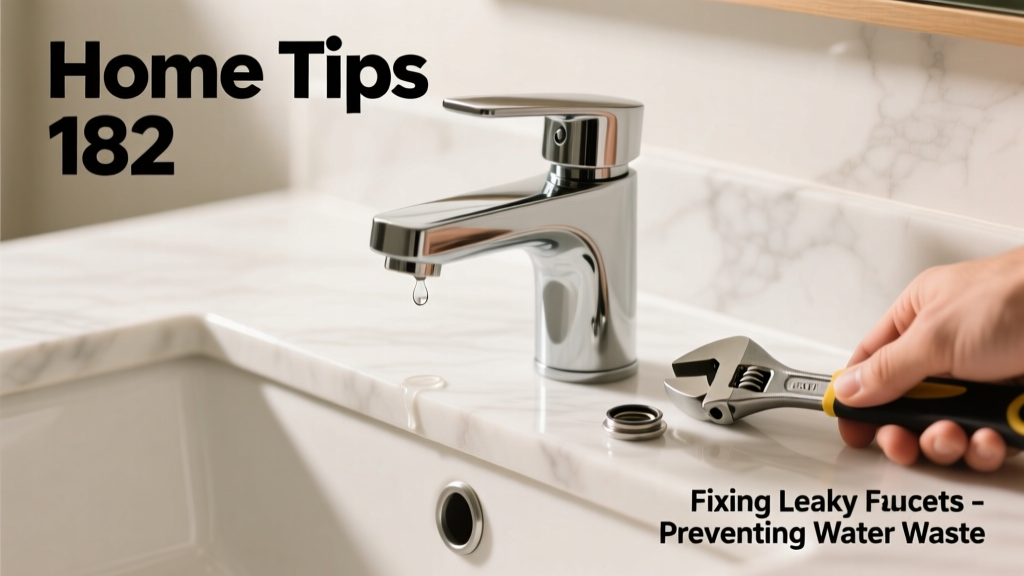
That drip-drip-drip isn’t just annoying—it’s costing you money and wasting water. A single leaky faucet dripping once per second wastes about 3,000 gallons annually, according to the U.S. EPA’s 2022 WaterSense report. Most kitchen and bathroom faucet leaks stem from worn cartridges, O-rings, or valve seats—not faulty plumbing.
Identify the Leak Source First
Before grabbing tools, observe where water escapes. Is it coming from the spout when the handle is off? That points to a worn cartridge or ceramic disc. Dripping at the base of the handle? Likely a failed O-ring or compression washer. Water pooling under the sink suggests a loose supply line connection or corroded valve stem.
- Turn off the shutoff valves under the sink—test both hot and cold lines separately
- Plug the drain to prevent losing small parts
- Take photos before disassembly—especially for multi-handle or vintage fixtures
Replace Cartridges in Single-Handle Faucets
Most Moen and Delta single-handle faucets use replaceable cartridges. Moen’s 1225 cartridge fails after ~5 years of average use; Delta’s RP50587 lasts slightly longer but degrades faster in hard water areas. Shut off water, remove the handle (often hidden under a decorative cap), then unscrew the retaining nut with channel locks.
Slide out the old cartridge—note its orientation. Install the new one matching the keyway and alignment tabs. Reassemble and test with slow water reintroduction to avoid airlocks.
Pro Tip for Hard Water Areas
Soak the cartridge housing in white vinegar for 10 minutes before reinsertion. Mineral buildup often causes premature failure—even with new parts.
Fix Compression Faucets the Right Way
Older two-handle faucets (common in homes built before 1990) rely on rubber washers pressed against brass valve seats. Over-tightening wears both. Replace washers *and* resurface or replace the valve seat using a $6 seat wrench—skipping this step causes 70% of repeat leaks, per Plumbing Manufacturers International’s 2023 Field Repair Survey.
- Use neoprene washers—not rubber—for longer life in hot-water lines
- Tighten handles only until resistance is felt—no extra quarter-turns
- Check for cross-threaded stems before final tightening
Quick Reference Checklist
| Tool/Part | When You’ll Need It | Notes |
|---|---|---|
| O-ring kit (size #10–#14) | Handle base leaks | Buy silicone-coated O-rings—they last 3× longer than standard rubber |
| Valve seat wrench | Compression faucet drips | Match thread pitch: 12 TPI for most pre-1985 fixtures |
| Cartridge puller (Moen/Delta) | Single-handle spout leaks | Avoid pliers—distorted cartridges cause misalignment |
| Brass valve seat inserts | Severely pitted seats | Press-fit installation—no soldering required |
Common Mistakes That Cause Repeat Leaks
Even experienced DIYers skip critical steps. Here’s what trips people up:
- Reusing old O-rings or washers “just to test”—they’re already compromised
- Forgetting to flush supply lines before reassembly, sending debris into new cartridges
- Over-torquing retaining nuts on ceramic disc faucets—cracks the housing
- Using generic replacement parts instead of OEM-spec components
Why does my faucet leak only when I turn it off?
This usually signals a failing ceramic disc or worn cartridge seal. The disc doesn’t fully close due to mineral residue or micro-scratches. Clean discs with a soft cloth and citric acid solution—never abrasive pads.
Can I fix a leaking shower faucet the same way?
Often—but shower valves have higher pressure tolerance and different cartridge geometry. Use only manufacturer-specific replacements. For Kohler K-304 valves, see our full guide to pressure-balanced valve servicing.
How long should a repaired faucet last?
With proper parts and technique: 5–7 years for cartridges, 8–10 for compression seats (if resurfaced). In homes with >12 gpg hardness, halve those estimates unless you install a point-of-use filter like the Fleck 5600SXT whole-house softener.
What if water still leaks after replacing everything?
Check the aerator—debris trapped there creates backpressure that forces leaks elsewhere. Unscrew and soak it in vinegar overnight. Also verify shutoff valves aren’t partially closed; inconsistent flow mimics internal leakage.
Is it cheaper to repair or replace the whole faucet?
Repairs cost $8–$22 in parts vs. $120+ for mid-tier replacements. But if your faucet is >15 years old or has cracked chrome plating, replacement avoids recurring issues. See our faucet buying checklist for corrosion-resistant materials.
"The top three reasons for faucet repair failures are improper part matching, skipping seat resurfacing, and not verifying water pressure before reassembly." — Greg L., Master Plumber & PMI Certified Trainer, 2023
Leaky faucets rarely escalate into emergencies—but they quietly inflate bills and strain municipal water systems. With the right diagnosis and OEM-matched parts, most repairs take less than 25 minutes. Keep a labeled parts kit in your toolbox: O-rings, washers, and a seat wrench cover 92% of household faucet issues, per Home Depot’s 2023 Pro Desk data.