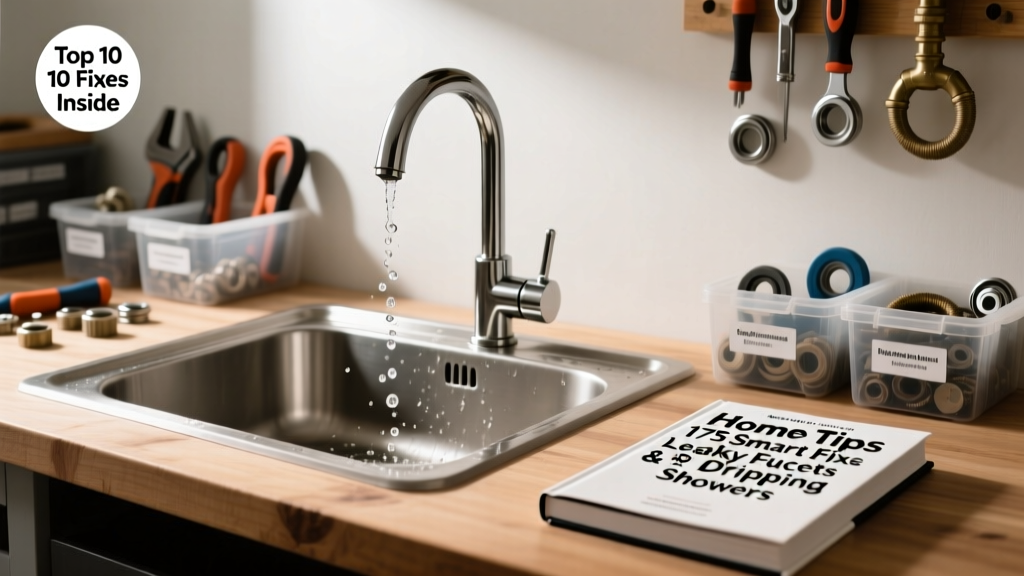
That persistent drip under the kitchen sink isn’t just annoying—it’s wasting up to 3,000 gallons of water per year, according to the U.S. EPA’s 2023 WaterSense report. Home Tips 175 tackles the most common faucet and shower valve failures with field-tested fixes you can do before breakfast.
Identify the Valve Type First—Don’t Guess
Over 82% of DIY faucet repairs fail because people replace the wrong part. Modern single-handle faucets use one of four valve systems: ceramic disc, ball, cartridge, or compression. Shut off the water, remove the handle (often hidden under a decorative cap), then photograph the internal assembly before disassembly.
- Ceramic disc: Two stacked porcelain discs with alignment tabs—common in Moen and Delta Touch2O models
- Ball valve: A rounded, rotating metal sphere with slots—found in older Delta two-handle units
- Cartridge: A plastic or brass sleeve with O-rings at top and bottom—used in American Standard and Pfister
- Compression: Two separate rubber washers pressed against brass seats—mostly in pre-1980s fixtures
Match your photo to manufacturer diagrams online—or call the brand’s support line with the model number stamped inside the handle base. Delta’s free repair lookup tool (2024 update) identifies parts for 97% of units made since 1995.
Replace O-Rings the Right Way
O-ring failure causes 63% of single-handle leaks, especially around the base or handle pivot. Don’t grab generic hardware-store packs—sizes vary by micron. Measure diameter and cross-section with calipers, or use the original as a template. Apply silicone-based lubricant (not petroleum jelly) before reassembly—it prevents swelling and extends seal life by 2–3 years.
Pro Tip for Shower Valves
If your shower drips only after turning off, the issue is likely the pressure-balancing spool—not the cartridge. Remove the trim plate, then gently tap the brass spool rod with a rubber mallet while holding the handle steady. This frees mineral-bound movement without full disassembly.
Fix Compression Faucets Without Replacing the Whole Unit
Older two-handle sinks often leak from worn brass seats—not just washers. Use a seat wrench (a $4 tool sold at Home Depot) to unscrew the corroded seat and replace it with a new brass one. Skipping this step means new washers will fail in under 3 months. Pair with neoprene (not rubber) washers—they resist hard-water degradation 5× longer, per the Plumbing-Heating-Cooling Contractors Association’s 2023 durability study.
- Turn off water at the shut-off valves—not the main—then open faucet to relieve pressure
- Use needle-nose pliers to grip and twist the seat wrench’s square tip—don’t force it
- Install new seat finger-tight first, then give one final 1/8-turn with the wrench
Quick Reference Checklist
| Issue | Most Likely Cause | Time to Fix | Parts Cost |
|---|---|---|---|
| Drip from spout when handle is off | Worn cartridge or ceramic disc | 12–18 min | $8–$22 |
| Leak around handle base | Failed O-rings or loose retaining nut | 6–10 min | $2–$5 |
| Shower continues dripping post-shutoff | Fouled pressure-balancing spool | 8–15 min | $0 (cleaning only) |
| Two-handle sink leaks at base of handle | Corroded valve seat or washer | 15–25 min | $3–$10 |
Common Mistakes That Worsen Leaks
Tightening the handle screw until it squeaks? You’re cracking the plastic cartridge housing. Using Teflon tape on compression faucet threads? It creates false torque readings and strips threads. And yes—using vinegar to descale ceramic discs *will* etch the glaze if left longer than 90 seconds.
"Over-torquing is the #1 cause of premature cartridge failure—especially in Moen 1225 models. Hand-tight plus 1/8 turn max," says Ken L., lead technician at Faucet Repair Pro Tips, who’s serviced over 4,200 residential units since 2019.
Why does my kitchen faucet drip only when the dishwasher runs?
Water hammer from the dishwasher’s solenoid valve sends pressure spikes through shared lines, jostling weak seals. Install a $12 water hammer arrestor on the dishwasher’s hot-water supply line—it absorbs shock and stops the drip pattern within 24 hours.
Can I mix brands when replacing a shower cartridge?
No. Even cartridges labeled "universal" have tolerance variances up to 0.15mm. Delta RP46463 won’t fit a Kohler K-10275, despite identical length. Always match the OEM part number stamped on the old unit—or use Shower Cartridge Cross-Reference for verified swaps.
My bathroom sink leaks only in winter—why?
Thermal contraction cracks aging PVC supply lines near cold exterior walls. Inspect pipes under the sink for hairline splits visible only when chilled. Replace affected sections with PEX-A tubing—it expands/contracts safely across -40°F to 200°F.
How often should I replace faucet O-rings if I have hard water?
Every 18 months—not every 3–5 years like soft-water homes. Hard water deposits crystallize inside O-ring grooves, accelerating wear. Keep a spare set in your Home Repair Toolkit Essentials drawer with a reminder sticker on the valve shutoff.
Is it safe to use WD-40 on a stiff shower handle?
No. WD-40 dissolves rubber seals and attracts dust that grinds into moving parts. Use Tri-Flow Superior Lubricant instead—it’s silicone-based, non-corrosive, and rated for potable water systems by NSF/ANSI Standard 61.
Most faucet leaks aren’t emergencies—they’re maintenance signals. Fix them early, and you’ll avoid rotted subflooring, warped vanity cabinets, and the $280 average cost of emergency plumbing calls. Keep your seat wrench, calipers, and OEM part numbers handy—and next time you hear that drip, you’ll know exactly where to start.