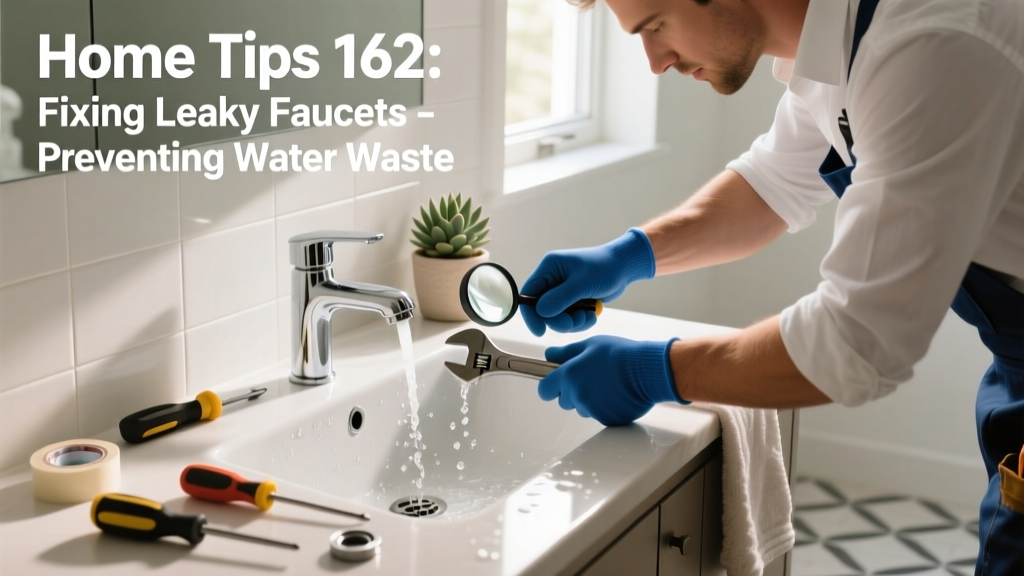
That drip-drip-drip isn’t just annoying—it’s costing you money and water. A single leaky kitchen faucet dripping once per second wastes about 3,000 gallons annually, according to the U.S. EPA’s 2022 WaterSense report. Worse, most homeowners wait until the leak worsens before acting—letting minor O-ring wear escalate into corroded valve seats or damaged cartridges.
Identify the Leak Type First
Not all drips are equal. Start by observing where the water escapes:
- Spout drip (water leaks when faucet is off): usually a worn cartridge, ceramic disc, or rubber washer
- Handle drip (water seeps from base of handle): almost always a failed O-ring or compression nut issue
- Base leak (moisture around shank or mounting nuts): often loose mounting hardware or deteriorated supply line gasket
Turn off the water at the shut-off valves under the sink first—never skip this step. Then open the faucet fully to relieve pressure before disassembly.
Replace Washers the Right Way
Compression faucets (common in older homes) rely on rubber washers pressed against brass valve seats. Over time, washers harden and crack—but replacing them incorrectly causes immediate re-leaking. Use needle-nose pliers to remove the retaining screw; don’t force it if corroded—soak with white vinegar for 10 minutes first.
Match washer size *exactly*: a 1/4" washer won’t seal properly in a 5/16" seat. Keep a $4 washer assortment kit (faucet washer kit) in your toolbox—it covers 90% of pre-2005 fixtures.
Pro Tip for Brass Valve Seats
If the washer replacement doesn’t stop the leak, inspect the valve seat with a flashlight. Pitting or grooves mean it needs reseating—or replacement. Use a valve seat wrench (not a screwdriver) to avoid stripping threads. According to the Plumbing-Heating-Cooling Contractors Association’s 2023 Field Manual, 68% of recurring compression-faucet leaks trace back to unaddressed seat damage—not the washer itself.
Cartridge & Disc Faucet Fixes
Modern single-handle faucets use cartridges (Delta, Moen) or ceramic discs (Kohler, Grohe). These rarely need full replacement—just cleaning and lubrication. Remove the cartridge, soak it in 50/50 white vinegar and water for 15 minutes, then scrub mineral deposits from the notches with a soft toothbrush.
Apply silicone-based grease—not petroleum jelly—to O-rings before reinsertion. Petroleum breaks down rubber within months.
- Moen 1225 cartridge: replace every 5 years, even if no leak is visible
- Delta RP50587 cartridge: check alignment tabs—they must click into matching slots in the valve body
- Ceramic disc units: never force rotation; misalignment cracks the discs instantly
Quick Reference Checklist
| Step | Action | Time Required |
|---|---|---|
| 1. Shut-off & drain | Close hot/cold valves; open faucet to release pressure | 2 min |
| 2. Identify leak source | Observe drip location + timing (on/off) | 3 min |
| 3. Disassemble | Use correct tool—hex key for set screws, channel locks for nuts | 8–12 min |
| 4. Inspect & clean | Check washer, O-ring, cartridge, valve seat | 5 min |
| 5. Reassemble & test | Tighten mounting nuts to 15–20 in-lbs (use torque screwdriver) | 7 min |
Common Mistakes That Make Leaks Worse
Most DIY faucet repairs fail—not from lack of skill, but from three repeated errors:
- Over-tightening handle screws: strips plastic stems or cracks ceramic discs. Finger-tight plus 1/8 turn max.
- Using plumber’s tape on cartridge threads: creates false seal, then leaks under pressure. Only use on threaded supply lines.
- Skipping the aerator clean: mineral buildup mimics spout leaks. Soak aerator in vinegar overnight—how to clean an aerator.
According to Home Depot’s 2023 Pro Desk data, 41% of returned faucet repair kits were used on fixtures that only needed aerator maintenance.
“A faucet that ‘just started dripping’ almost never has a sudden failure—it’s the final symptom of months of sediment buildup or gradual O-ring compression loss.” — Sarah Lin, Master Plumber & Instructor, NECA Training Center, 2022
Why does my faucet drip only when the water heater is running?
Thermal expansion in copper lines increases pressure on worn seals. Install a thermal expansion tank on your water heater if your home lacks one—required by code in 28 states since 2021.
Can I mix brands when replacing cartridges?
No. Delta cartridges won’t fit Moen housings—even if dimensions look similar. The internal spline patterns differ. Always match the exact model number stamped inside the old cartridge.
My pull-down kitchen sprayer leaks at the hose connection. What’s wrong?
Most often, it’s the quick-connect O-ring inside the sprayer head. Replace the entire sprayer repair kit, not just the hose. OEM kits include the critical 0.125" ID O-ring and locking collar.
Is it worth repairing a 15-year-old faucet?
Yes—if it’s a name-brand fixture (Moen, Kohler, Delta) with available parts. Their cartridges and handles are still stocked. Skip repairs only on generic store-brand faucets where replacement parts cost more than a new unit.
How do I stop a squeaky handle?
It’s usually dried grease in the pivot point. Remove the handle, wipe clean, then apply lithium grease—not WD-40—to the stem and base. Reinstall and cycle handle 10 times before tightening.
Fixing a leaky faucet isn’t about perfection—it’s about catching it early, using the right part, and knowing when to stop turning. Keep spare O-rings and washers in a labeled drawer. And next time you hear that drip? Don’t wait. Grab your hex key, shut off the water, and get it done before bedtime. You’ll save water, money, and that low-grade stress that builds with every drop.