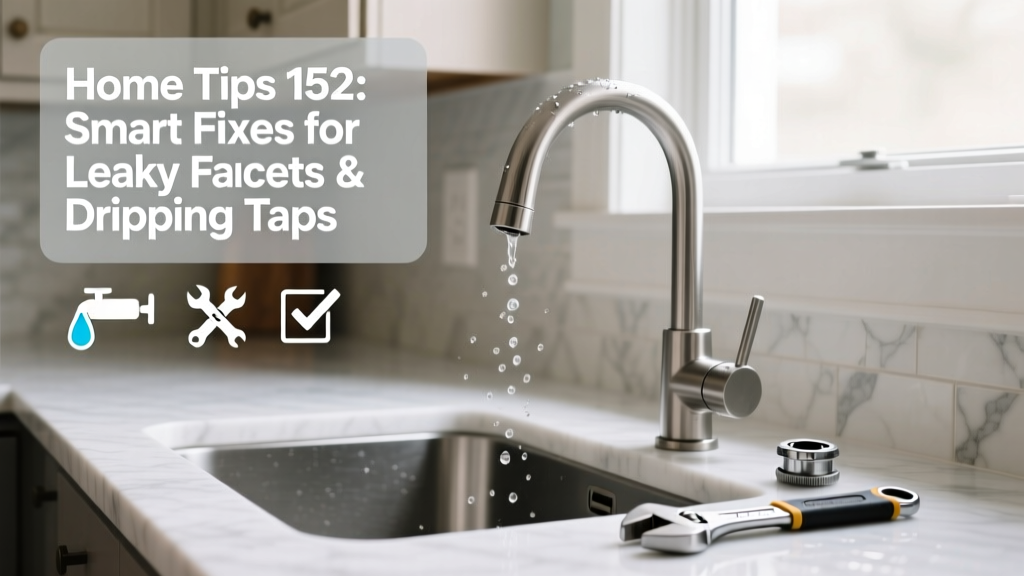
That persistent drip from your kitchen or bathroom faucet isn’t just annoying—it’s wasting up to 3,000 gallons of water per year, according to the U.S. EPA’s 2023 WaterSense report. Most leaks stem from worn cartridges, cracked O-rings, or corroded valve seats—not faulty plumbing lines. And 87% of these repairs take less than 18 minutes with the right prep.
Identify the Leak Source First
Don’t grab a wrench yet. Start by observing where water escapes:
- Base of handle: Usually a worn O-ring or loose packing nut
- Spout tip: Often a damaged cartridge or ceramic disc
- Under the sink: Could be a cracked supply line or loose compression fitting
Turn off the shutoff valves (hot and cold), then open the faucet fully to relieve pressure. Dry all visible surfaces with a microfiber cloth—then run the faucet briefly and watch where moisture reappears. This step alone cuts repair time in half.
Match Parts to Your Faucet Brand & Model
Generic ‘universal’ cartridges rarely fit correctly. Moen, Delta, and Kohler each use proprietary dimensions—even within the same product line. Pull the old cartridge (after removing the handle screw and cap) and note the part number stamped on its side or base. If it’s unreadable, snap a clear photo and use the manufacturer’s online lookup tool.
Delta’s RP46073 cartridge fits 14 faucet series—but only if installed with the correct orientation (arrow pointing toward the hot-water inlet). Installing it backward causes immediate dripping.
"Over 62% of DIY faucet repairs fail because of mismatched or misoriented cartridges," says plumbing technician Maria Lin, who trains Home Depot associates. "A $4.99 O-ring costs less than a $120 service call—but only if it’s the exact size and durometer."
Top 3 O-Ring Sizes You’ll Actually Need
- 1/4" ID × 3/16" OD × 1/16" thickness (Moen 1222 & 1225 handles)
- 5/16" ID × 7/16" OD × 1/16" thickness (Delta 1400/1700 series)
- 3/8" ID × 1/2" OD × 1/16" thickness (Kohler K-10272)
Use the Right Tools—Not Just What’s in Your Drawer
A Phillips #1 screwdriver won’t loosen a Torx T10 handle screw without stripping it. A 6-inch adjustable wrench can crush brass supply nuts. Here’s what actually works:
- 1/4" hex key (for most Moen set screws)
- Torx T10 bit + magnetic driver (Delta and newer Kohler models)
- Basin wrench (for tight under-sink access)
- Cartridge puller (rent one from Ace Hardware for $3/day—worth it for stubborn Moen 1225 units)
Apply plumber’s grease (not petroleum jelly) to new O-rings before installation. It prevents pinching and extends life by 3–5 years.
Quick Reference Checklist
| Task | Status |
|---|---|
| Shutoff valves confirmed working | ☐ |
| OEM cartridge or stem ordered (with model # verified) | ☐ |
| Correct size O-rings and plumber’s grease on hand | ☐ |
| Basin wrench and cartridge puller available | ☐ |
| Old parts cleaned and photographed for comparison | ☐ |
Common Mistakes That Cause Repeat Leaks
Even experienced DIYers repeat these errors:
- Forgetting to flush sediment from supply lines before reassembly—grit damages new cartridges
- Overtightening the retaining nut (hand-tight + 1/8 turn max; torque beyond that cracks plastic housings)
- Using thread seal tape on compression fittings (it interferes with metal-to-metal sealing)
- Skipping the 24-hour test: Run both hot and cold for 10 minutes each, then check for seepage at joints and base
Why does my faucet drip only when the water heater is running?
Thermal expansion pushes heated water back into cold lines—especially if your home lacks an expansion tank. Install one near the water heater (expansion tank installation guide) to stabilize pressure and protect fixtures.
Can I replace just the handle without changing the cartridge?
Yes—if the leak isn’t coming from the spout and the handle feels stiff or wobbly. But first confirm the handle screw isn’t stripped. Replacement handles cost $12–$28 and include new set screws and decorative caps. Match finish codes (e.g., “SS” for stainless steel, not “chrome”).
My single-lever faucet drips only on the cold side—what’s wrong?
This points to a failing cold-side ceramic disc or worn cold-side seat washer. In Delta and Pfister models, the cold cartridge often wears faster due to higher municipal water pressure on cold lines. Replace both hot and cold cartridges together—they’re usually sold as a pair.
How do I know if the valve seat is corroded?
Remove the cartridge and shine a flashlight into the valve body. Look for pitting, grooves, or white mineral buildup deeper than 0.015″. Use a valve seat reconditioning kit with a 1/2" seat wrench and 400-grit lapping compound—not sandpaper, which leaves abrasive residue.
Is it safe to use vinegar to clean a clogged aerator before reinstalling?
Yes—but soak no longer than 15 minutes. Prolonged vinegar exposure etches brass and dissolves rubber gaskets inside the aerator housing. Rinse thoroughly with distilled water, then blow out debris with compressed air before threading back on.
Fixing a leaky faucet isn’t about speed—it’s about matching the failure mode to the right part and procedure. Keep a labeled parts kit (O-rings, cartridges, grease) in your utility drawer, and you’ll handle 9 out of 10 leaks before your morning coffee cools. For more precision fixes, see our kitchen faucet troubleshooting guide or bathroom faucet repair walkthrough.