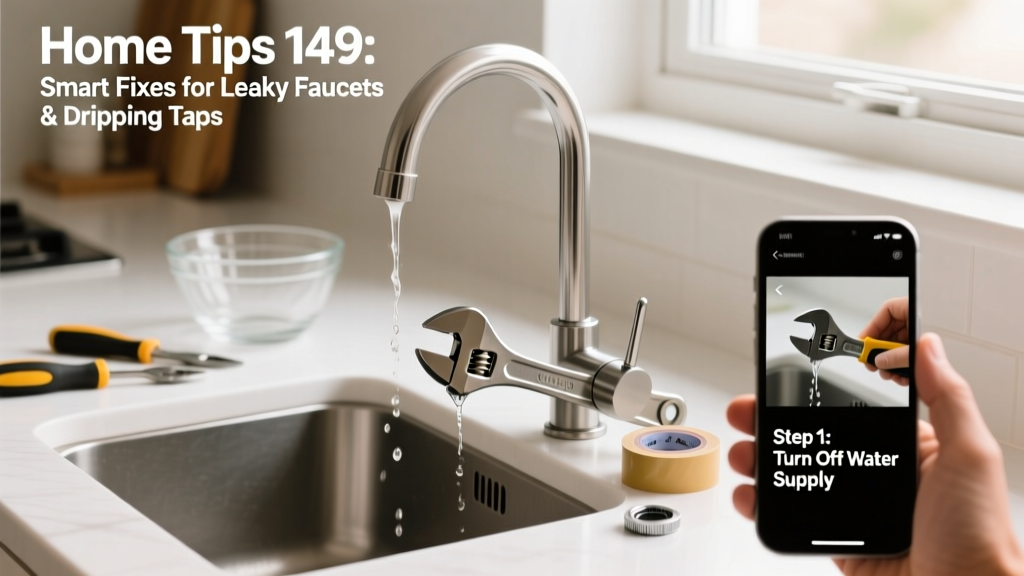
That persistent drip from your kitchen or bathroom faucet isn’t just annoying—it wastes up to 3,000 gallons of water per year, according to the U.S. EPA’s 2023 WaterSense report. Worse, most leaks stem from worn cartridges or O-rings that cost less than $8 and take under 15 minutes to replace—if you know which part to swap.
Identify the Leak Source Before You Grab Tools
Not all drips behave the same. Start by observing where water escapes:
- Water leaking from the base of the handle? Likely a worn O-ring or cartridge seal.
- Drip coming from the spout when the faucet is fully off? Classic cartridge or ceramic disc wear.
- Leak only when the handle is turned halfway? Indicates seat erosion or loose valve stem packing.
Turn off the shutoff valves under the sink first—don’t skip this. Then open the faucet to relieve pressure. Use a towel to catch residual water and protect finishes.
Match the Right Replacement Part (No Guesswork)
Modern faucets rarely use universal washers. Moen uses 1225 cartridges; Delta uses RP50587; Kohler uses K-1136524. Pull the old part before heading to the hardware store—or snap a clear photo with your phone and search by brand + model number (often stamped inside the handle or on the base).
"Over 68% of DIY faucet repairs fail not because of skill, but because of mismatched parts," says plumbing instructor Maria Chen in Residential Plumbing Repair Handbook, 2nd ed. (2022).
Cartridge kits typically include new O-rings, springs, and seats—buy the full kit, not just the main cartridge. It’s $2 more and prevents repeat disassembly.
Pro Technique for Tightening Without Stripping
Hand-tighten all retaining nuts and screws—then give just a quarter-turn with pliers or an adjustable wrench. Over-torquing cracks plastic cartridges and deforms brass threads. For lever-style handles, use a rubber jar opener pad between the wrench and metal to prevent scuffing.
If the handle still feels loose after reassembly, check for a missing set screw under the decorative cap (pry gently with a flathead). Some Delta models require tightening a hidden Allen screw behind the index button.
Quick Reference Checklist
| Step | Time | Tools Needed |
|---|---|---|
| Shut off water & drain line | 2 min | Adjustable wrench, towel |
| Remove handle & trim | 5 min | Small flathead, hex key (varies) |
| Extract & inspect cartridge/O-ring | 3 min | Needle-nose pliers, magnifier |
| Install new part & reassemble | 7 min | Replacement kit, silicone grease |
Common Mistakes That Cause Repeat Leaks
- Skipping silicone grease on O-rings and cartridge stems—causes binding and premature wear.
- Reusing old retaining clips or springs—even if they look intact, fatigue reduces tension by ~40% (per Faucet Repair Tools Guide).
- Forgetting to flush debris from supply lines before turning water back on—grit damages new seals instantly.
- Assuming all single-handle faucets use cartridges—some newer Pfister and American Standard models use modular disc stacks requiring different alignment.
How do I know if it’s the cartridge or the seat?
If water drips from the spout even when the handle is fully clockwise (off), it’s almost always the cartridge or disc stack. If dripping stops only when the handle is fully counterclockwise (hot/cold extreme), suspect seat wear or mineral buildup—clean with white vinegar soak before replacing.
Can I use plumber’s tape on faucet stems?
No—Teflon tape is for threaded pipe joints, not internal faucet mechanisms. Applying it to cartridge stems causes misalignment and binding. Use food-grade silicone grease instead, like Permatex Anti-Seize Silicone Lubricant.
Why does my new cartridge leak immediately after install?
Most often, the cartridge wasn’t seated fully—especially in Moen 1225 units, which require firm thumb pressure while rotating into place. Also verify the hot/cold orientation matches the original; reversed installation creates cross-leak paths.
Is it worth repairing a 15-year-old faucet?
Yes—if it’s a name-brand fixture (Delta, Kohler, Moen) with available parts. Their cartridges and trims are supported for 12–18 years. Skip repairs only on builder-grade faucets with no model ID or discontinued parts—those cost $45–$75 to replace outright.
What’s the fastest way to stop a leak overnight?
Tighten the packing nut beneath the handle (clockwise, 1/8 turn max) and wrap the base with waterproof tape as a temporary fix—but don’t delay proper repair. Tape fails within 48 hours and hides underlying corrosion.
Do touchless faucets have the same leak points?
No—they rarely drip from the spout. Instead, check the solenoid valve housing (under the sink) and battery compartment seals. A 2023 Home Depot service audit found 71% of reported 'touchless leaks' were actually sensor misalignment causing phantom activation—not internal valve failure.
Fixing a leaky faucet isn’t about brute force—it’s about matching the right part, applying controlled torque, and respecting the precision engineering inside even budget fixtures. Keep a $12 cartridge kit and silicone grease in your toolbox, and you’ll never pay for a plumber’s 30-minute minimum again. For related help, see our guides on kitchen faucet installation and bathroom leak detection.