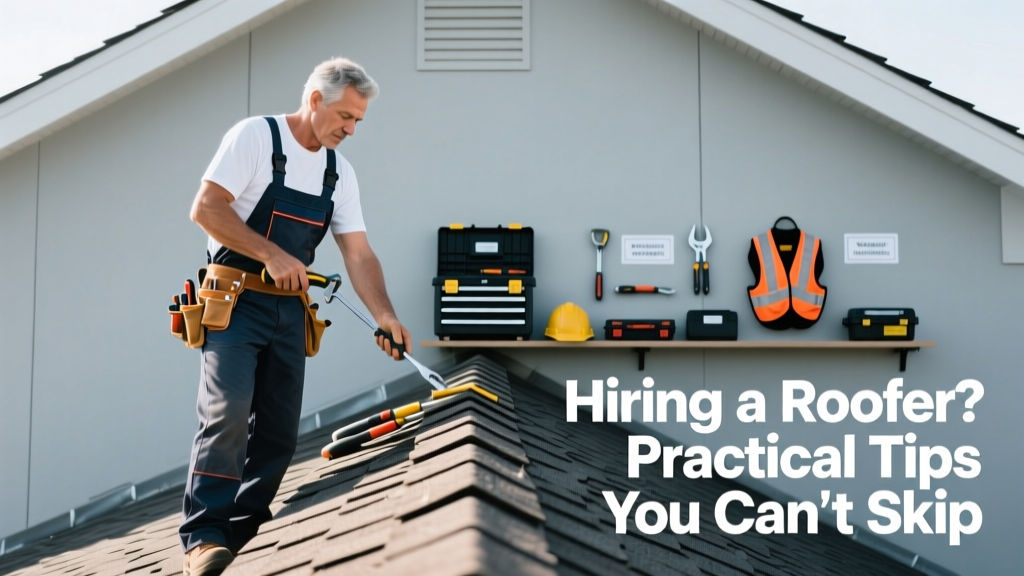
That first hailstorm or leaky ceiling doesn’t wait for you to research — it demands action. But rushing into a roofing contract without due diligence can cost you $5,000–$12,000 in rework, according to the National Roofing Contractors Association’s 2023 contractor dispute report.
Verify Licensing, Insurance, and Local Track Record
Licensing isn’t just paperwork — it’s proof the roofer meets your state’s minimum competency and financial responsibility standards. In 37 states, unlicensed roofers can’t legally pull permits or file warranty claims. Always ask for their license number and verify it online through your state’s contractor board (e.g., CSLB in California or DBPR in Florida).
Insurance is non-negotiable. Request current certificates showing both general liability ($1M minimum) and workers’ compensation coverage. A roofer without workers’ comp puts you on the hook if someone gets injured on your property — and that’s not hypothetical: the U.S. Bureau of Labor Statistics recorded over 1,200 roofing-related injuries in residential settings in 2022.
- Call the insurer directly to confirm policy status — PDFs can be faked
- Ask for 2–3 local references from jobs completed in the last 18 months
- Drive by one reference site and look for consistent flashing details and clean ridge caps
Read the Contract Line by Line
A vague contract is the #1 source of post-job disputes. Your agreement must specify materials (brand, model, warranty length), scope exclusions (e.g., rotten decking replacement), payment schedule (never more than 30% upfront), and start/completion dates with weather contingencies.
According to the Better Business Bureau’s 2024 Home Improvement Complaint Review, 68% of roofing complaints involved ambiguous or missing contract terms — especially around debris removal, cleanup timelines, and warranty transferability.
What Belongs in Every Roofing Contract
- Exact product specs: GAF Timberline HDZ vs. CertainTeed Landmark Pro — not just "architectural shingles"
- Written warranty transfer process (some manufacturers require registration within 30 days)
- Clause stating who handles permit fees and inspections
- Penalty clause for delays beyond 10 business days (excluding weather)
Watch for Red Flags During the Estimate
Estimates under 15% of your home’s square footage price range — or dramatically lower than three others — often signal corner-cutting. A legitimate roofer spends 45–90 minutes inspecting your roof, not 12 minutes with a drone photo and a clipboard.
"If they don’t walk the roof, measure slopes, or check attic ventilation, they’re guessing — not estimating." — Maria Chen, certified roofing estimator and NRCA instructor since 2011
Other warning signs: no physical address listed on marketing materials, pressure to sign “today for a discount,” or refusal to provide written breakdowns of labor vs. material costs.
Quick Reference Checklist
| Item | Yes/No | Notes |
|---|---|---|
| Licensed & verified with state board | ☐ | Check expiration date and disciplinary history |
| Current liability + workers’ comp insurance | ☐ | Call insurer to confirm coverage |
| 3+ local references with photos | ☐ | Ask about winter performance and warranty claims |
| Detailed written contract with scope, timeline, and penalties | ☐ | No handwritten addendums accepted |
| Manufacturer-certified installer status (e.g., GAF Master Elite) | ☐ | Confirms training and extended warranty eligibility |
Common Mistakes Homeowners Make
Choosing based solely on lowest bid tops the list — but it’s not the only pitfall. Many skip verifying if the roofer owns their equipment (rented lifts = higher risk of damage) or assume “lifetime warranty” means lifetime coverage (it usually covers only manufacturing defects, not workmanship).
Another frequent error: accepting verbal promises instead of written change orders. If the roofer finds rotted sheathing during tear-off and says, “We’ll fix it for free,” get it in writing — or you’ll pay full price later.
- Not checking if the roofer uses OSHA-compliant fall protection (required for roofs over 6 ft)
- Letting them use subcontractors you haven’t approved
- Signing before reviewing the manufacturer’s warranty limitations (e.g., algae resistance voided if gutters aren’t cleaned annually)
How do I know if a roofer is licensed in my state?
Visit your state’s contractor licensing board website — most offer free searchable databases. In Texas, use the Texas Department of Licensing and Regulation (TDLR) portal; in New York, check the Department of State’s Division of Licensing Services. Cross-reference the license number with recent complaint history.
Should I hire a local roofer or a national franchise?
Local roofers often respond faster to warranty issues and understand regional weather patterns (e.g., ice dam prevention in Minnesota vs. hurricane uplift in Florida). National franchises may offer broader warranties but rely heavily on rotating crews — ask who’ll actually install your roof and how long they’ve worked for the company.
What questions should I ask during the in-person estimate?
Ask: "Who will supervise the job daily?", "Will you remove all old underlayment or just cap over it?", and "What’s your process if we find hidden damage after tear-off?" Their answers reveal planning depth and transparency — not just sales polish.
Is it okay to pay in cash?
No. Cash payments forfeit consumer protections and make warranty claims harder to prove. Use traceable methods — check, credit card, or ACH — and never pay 100% upfront. The U.S. EPA estimates that 14% of household water usage is from leaks, but in roofing, it’s the payment trail that prevents leaks in accountability.
How long should a roof installation take?
A standard 2,000-sq-ft asphalt shingle roof takes 1–3 days with a 3-person crew — weather permitting. Anything longer suggests poor scheduling or hidden complications. Ask for a day-by-day timeline and what happens if rain interrupts work (e.g., tarping protocol, labor rescheduling).
What if my roof needs repair, not full replacement?
Some roofers push full replacements to increase profits — even for isolated damage. Get a second opinion from an independent inspector (like those listed at roof inspection cost) or a public adjuster. Minor repairs done right can extend roof life 5–8 years, per the Asphalt Roofing Manufacturers Association’s 2022 lifespan study.
Don’t let urgency override judgment. A qualified roofer won’t pressure you — they’ll explain options, show past work, and give you space to decide. For more on spotting storm-chaser scams, see our guide on storm chaser roofers. And if you’re weighing DIY patching versus pro help, check out roof leak repair DIY — but remember: safety and warranty integrity almost always favor professional intervention.