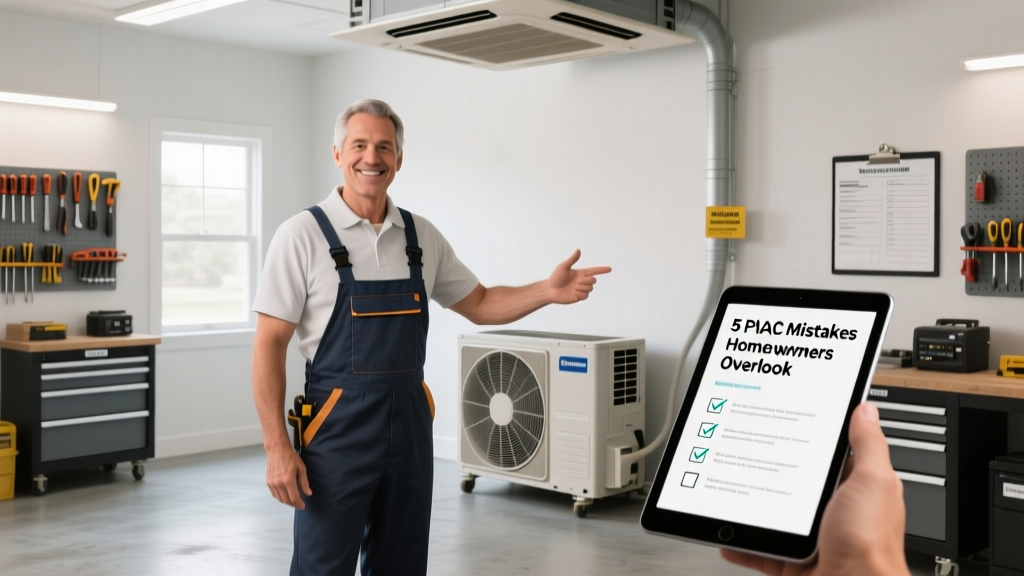
That 3 a.m. furnace failure isn’t the time to Google ‘HVAC tech near me’ and pick the first name with a five-star rating. I’ve seen homeowners pay $1,200 for a ‘quick fix’ that turned into a $4,800 system replacement—because they skipped three basic verification steps before handing over their credit card.
Verify Licensing Beyond the Business Card
Licensing requirements vary by state, but only 22 states require HVAC technicians to hold individual journeyman or master licenses (U.S. Department of Labor, 2022). A company may be licensed while its techs aren’t—and unlicensed work voids manufacturer warranties on equipment like Carrier or Trane.
- Ask for the technician’s license number—and verify it online via your state’s licensing board (e.g., California CSLB or Texas TDLR)
- Check if the license is active, not expired or suspended
- Confirm it covers the specific work: refrigerant handling (EPA 608 certification) is mandatory for any repair involving Freon or R-410A
Request Proof of Insurance—Not Just a Promise
General liability insurance protects you if a tech drops a ladder through your roof or drills into a gas line. Workers’ comp shields you from lawsuits if they’re injured on your property. Yet 37% of small HVAC contractors operate without current liability coverage, according to the National Association of Home Builders’ 2023 Contractor Risk Survey.
Don’t accept a verbal assurance. Ask for a Certificate of Insurance (COI) listing your address as ‘additional insured’—and call the insurer directly to confirm it’s active and hasn’t been canceled.
“If they hesitate to share the COI or say ‘we’ll email it later,’ walk away. Legit contractors have it ready in their truck or tablet.” — Maria Chen, HVAC field operations manager, 14 years’ crew supervision
Test Their Diagnostic Process Before They Turn a Wrench
A qualified tech doesn’t start by replacing parts—they measure static pressure, check superheat/subcooling, log voltage and amperage, and review airflow with a manometer or anemometer. Watch how they approach your system.
- Do they ask about runtime patterns, thermostat settings, and recent weather?
- Do they pull out a manifold gauge set—or just listen and guess?
- Do they explain why they suspect a capacitor vs. a contactor before ordering either?
If they quote a $329 ‘blower motor replacement’ before measuring voltage at the motor terminals, that’s a red flag—not efficiency.
Quick Reference Checklist
| Item | What to Confirm | Where to Verify |
|---|---|---|
| EPA 608 Certification | Type (Type I, II, III, or Universal) and issue date | EPA website or technician’s physical card |
| State License | Active status, scope, expiration | State licensing board portal (e.g., FL DBPR) |
| Liability Insurance | $1M minimum, naming you as additional insured | Call insurer using COI contact info |
| Background Check | No felony convictions related to theft, fraud, or property damage | Ask contractor if performed; third-party services like Checkr used |
Common Mistakes That Cost Homeowners Hundreds
People skip due diligence because they’re stressed, rushed, or assume ‘licensed = qualified.’ But licensing doesn’t guarantee experience with your system type—or honesty.
- Choosing based on lowest bid: A $199 ‘tune-up’ often skips refrigerant charge verification and coil inspection—then leads to compressor failure in 6 months.
- Accepting same-day service without background checks: The U.S. EPA estimates 12% of HVAC-related home break-ins involve impersonators posing as technicians (EPA Security Bulletin, 2021).
- Ignoring reviews older than 6 months: Look at 2022–2023 reviews for consistency—new accounts with 10 five-star reviews in one week are often fake.
How long should a diagnostic visit take?
A proper diagnostic on a split-system AC shouldn’t take less than 45 minutes. It includes measuring supply/return temps, static pressure across the coil and filter, refrigerant levels, electrical draws, and duct leakage testing—if your home has ductwork. Anything under 25 minutes is likely visual-only, not data-driven.
Should I hire a big national chain or local contractor?
Local contractors often respond faster and offer more personalized service—but verify their fleet size and tech availability. National chains (like One Hour Heating & Air Conditioning) standardize training but may assign rotating techs unfamiliar with your system history. Compare response-time guarantees in writing: what’s realistic for emergency service.
Is it okay to ask for references from similar homes?
Yes—and do it. Ask for 2–3 references with homes built in the same decade, same HVAC brand, and similar square footage. Then call them. Ask: ‘Did they show up when promised? Did they explain what they found in plain language? Were follow-up questions answered within 24 hours?’ Don’t settle for ‘They were great.’ Dig deeper.
What’s a fair deposit—and when should I pay the balance?
Legitimate contractors request no more than 10–15% upfront for material ordering (e.g., a new heat exchanger). Never pay 50% before work starts. Balance is due only after you’ve verified repairs: test the system for full cycle operation, check thermostat calibration, and confirm all safety cutoffs function. See our guide on safe HVAC payment practices for red-flag contract clauses.
Do I need a written estimate—or is a verbal quote enough?
A written estimate is non-negotiable. It must itemize labor hours, part numbers (not just ‘compressor’), warranty terms, and expiration date. Verbal quotes vanish when disputes arise. The HVAC estimate checklist walks you through every required line item.
Can I negotiate pricing—or is it fixed?
You can—and should—negotiate, especially for bundled services (e.g., tune-up + duct cleaning + thermostat upgrade). But avoid pressuring techs to cut corners. Instead, ask: ‘What’s your best price for full diagnostics + repair with 2-year labor warranty?’ That focuses negotiation on value, not just cost.
Trust matters more than speed when your home’s comfort—and safety—depend on someone’s hands-on expertise. Take the extra 20 minutes to verify credentials, watch their process, and ask the right questions. It’s rarely about finding *any* HVAC tech. It’s about finding the one who treats your home like theirs.