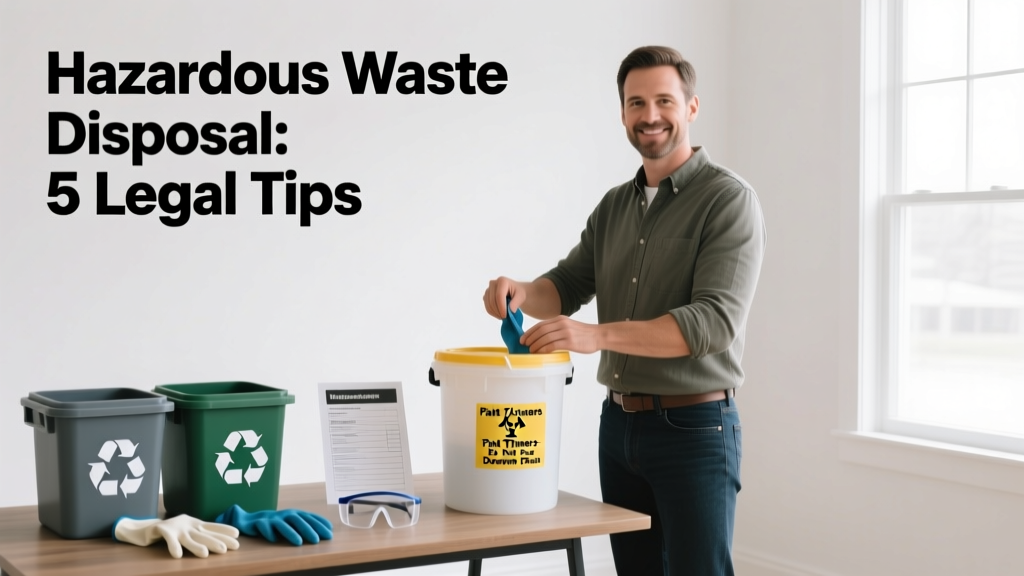
That half-empty can of paint thinner under your sink? The old fluorescent bulb in the garage? The unused pesticide bottle tucked behind the fertilizer? These aren’t just clutter—they’re regulated hazardous materials. Improper disposal can contaminate groundwater, trigger fires, or expose sanitation workers to toxic fumes—and in many states, it’s illegal. The good news: safe disposal is simpler than you think when you know where to start and what not to do.
Identify What Counts as Hazardous Waste
Not all ‘scary-looking’ substances qualify—but many common household items do. The U.S. EPA defines hazardous waste by four characteristics: ignitability (flash point <140°F), corrosivity (pH ≤2 or ≥12.5), reactivity (explosive or toxic gas release when mixed), and toxicity (leaches heavy metals or organics above regulatory limits). That means:
- Paint thinners, turpentine, and acetone (ignitable)
- Battery acid and drain cleaner (corrosive)
- Pool chlorine tablets and peroxide-based cleaners (reactive)
- Used motor oil, mercury thermometers, and lead-based paint chips (toxic)
According to the U.S. EPA’s 2023 National Biennial Report, over 6 million tons of hazardous waste were generated by small quantity generators—including households—last year. Yet only 37% was diverted to certified collection programs.
Store Safely Until Disposal
Never pour solvents down the drain or toss lithium batteries in the trash. Instead, stabilize containers and prevent reactions:
- Keep original labels intact—if faded, write contents and date on masking tape
- Store flammables in a cool, dry, ventilated area away from water heaters or pilot lights
- Place leaking containers inside a larger, sealed plastic tub with absorbent material (e.g., kitty litter or oil dry)
- Never mix chemicals—even ‘similar’ cleaners like bleach and ammonia create lethal chloramine gas
Pro Tip for Paint Cans
Latex paint isn’t hazardous once solidified—but oil-based paint is, even dried. To harden latex: stir in equal parts clay-based cat litter, cover, and let sit 24–48 hours before tossing in regular trash (check local rules first). Oil-based paint must go to a HHW facility.
Find Local Disposal Options
Municipalities vary widely—some offer monthly drop-off days; others run permanent facilities. Start with your county’s solid waste department website or call 1-800-CLEANUP (EPA’s hotline). Many communities also partner with retailers: Home Depot accepts rechargeable batteries and CFLs; Lowe’s takes compact fluorescents; Call2Recycle handles cell phones and single-use batteries.
“Over 80% of households don’t know their nearest HHW (Household Hazardous Waste) site—even though 92% of counties operate at least one program.” — National Waste & Recycling Association, 2022 Municipal HHW Survey
Don’t assume your city landfill accepts hazardous waste—it almost certainly doesn’t. Landfills licensed for municipal solid waste are prohibited from accepting most hazardous materials under RCRA Subtitle C regulations.
Quick Reference Checklist
| Step | Action | Timeframe |
|---|---|---|
| Identify | Check product label for hazard symbols (flame, skull, corrosion icon) or words like “toxic,” “caustic,” “flammable” | Before storing or using |
| Contain | Transfer leaking liquids to UN-rated containers; seal and label clearly | Immediately upon discovery |
| Research | Search “[Your County] HHW drop-off” or call 311 for verified locations/dates | Within 72 hours |
| Transport | Keep containers upright, secured in trunk or truck bed—not passenger cabin; avoid extreme temps | Day of drop-off |
| Document | Save receipts from certified facilities—required for business waste; helpful for insurance claims | After disposal |
Common Mistakes to Avoid
These errors land people in trouble—or worse, cause injury:
- Pouring antifreeze or pesticides down storm drains: These flow untreated into rivers and lakes. In 2022, the EPA cited 117 municipal violations tied to illegal stormwater dumping of household chemicals.
- Flushing medications: Pharmaceuticals disrupt aquatic ecosystems and show up in drinking water supplies. The FDA recommends take-back programs—not toilets or trash.
- Taping over broken mercury thermometer glass: Mercury vapor is odorless and highly neurotoxic. Use an EPA-approved mercury spill kit (not a vacuum!) and ventilate the room for 24+ hours.
- Assuming ‘eco-friendly’ labels mean safe-to-trash: Even plant-based herbicides like glyphosate formulations may be classified as hazardous due to concentration and formulation additives.
Can I recycle old paint cans?
Yes—if empty and dry. Remove lids, let air-dry completely (up to 30 days for large cans), then recycle metal cans curbside where accepted. If partially full, treat as hazardous waste. For help, see our paint recycling guide.
What do I do with expired fire extinguishers?
Most contain pressurized chemical agents (dry chemical, CO₂, or halon). Never puncture or disassemble. Contact your local fire department—they often accept expired units—or check with hardware stores like Ace Hardware, which partners with AmeriKing for cylinder recycling. Learn more in our fire extinguisher maintenance tips.
Are LED bulbs hazardous?
No—they contain no mercury and aren’t regulated as hazardous waste. But they do contain trace electronics and rare earth elements. Recycle them through retailers like Best Buy or via municipal e-waste programs to recover materials. Incandescent and halogen bulbs can go in regular trash (though recycling is preferred).
How do I dispose of old smoke detectors?
Ionization-type detectors contain a tiny amount of radioactive americium-241 (<0.9 microcuries)—safe if intact, but regulated for disposal. First Alert and Kidde offer free mail-back programs. Alternatively, some states (CA, MN, VT) allow disposal with regular trash; others require HHW drop-off. Always check your state’s radiation control program guidelines.
Is it okay to throw away aerosol cans?
Only if completely empty—no hiss, no spray, no pressure when shaken. If any product remains, it’s ignitable and hazardous. Do not pierce or crush. Take to HHW or use a puncturing device rated for aerosols (like the Aerosolv® system) only if trained and permitted.
What about automotive fluids like brake fluid or transmission fluid?
These are toxic and often chlorinated—never dump outside or down drains. Most auto parts stores (O’Reilly, NAPA) accept used motor oil, but brake and transmission fluids require HHW handling. Store in original, leak-proof containers and note fluid type on the label. For long-term storage tips, see our garage storage solutions.
Disposing of hazardous materials isn’t about perfection—it’s about consistent, informed choices. One properly handled container keeps toxins out of your child’s playground soil and your neighbor’s well water. Start small: pick one item this week, locate your nearest HHW site, and make the trip. You’ll build confidence—and protect more than you realize.