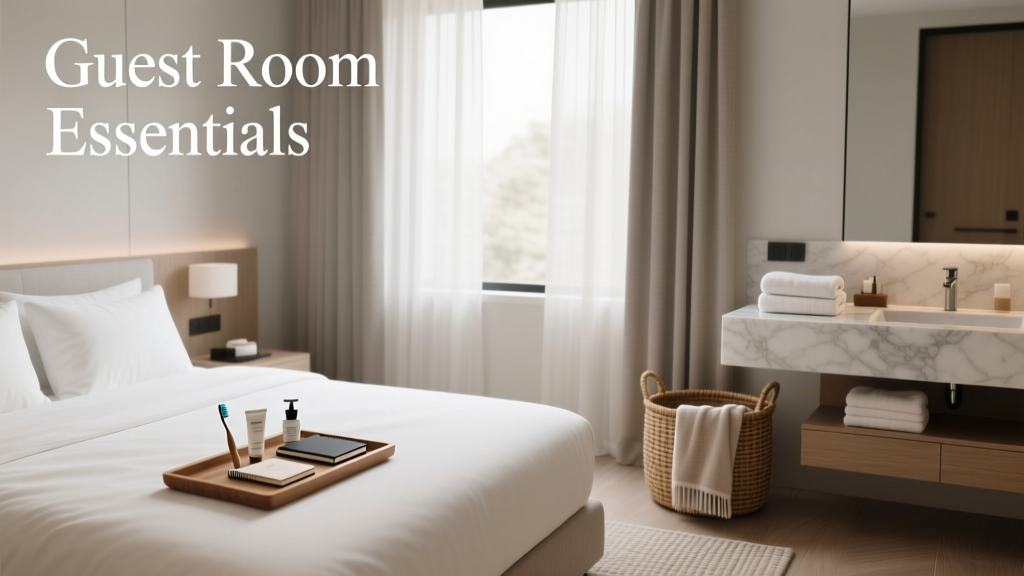
Most people think guest rooms are just spare bedrooms with extra sheets—but guests notice the details you skip: lukewarm water pressure, no bedside charging port, or a closet full of your winter coats. I’ve prepped 12+ guest rooms for family, friends, and Airbnb guests—and the difference between ‘fine’ and ‘they asked to stay another night’ comes down to three things: accessibility, intentionality, and quiet readiness.
Start With the Bed—Not the Decor
A supportive mattress and clean, layered bedding matter more than matching throw pillows. Replace old pillowcases (even if they look fine—laundered cotton degrades after ~2 years) and add one firm and one soft pillow per guest. Skip feather-down unless you know their preference; 100% hypoallergenic polyester fill is safer and holds up through multiple washes.
- Use deep-pocket fitted sheets (15"+ drop) to avoid mid-night sheet tucks
- Layer a lightweight cotton duvet cover over a medium-weight all-season comforter
- Keep an extra blanket folded at the footboard—not in the closet
Lighting & Power: The Invisible Hospitality
Guests arrive tired and often late. They need light without fumbling, and power without hunting for outlets. Install a dimmable bedside lamp with a simple toggle switch—not a finicky touch sensor. Add a USB-A/USB-C dual-port adapter directly into the wall outlet next to the bed (not behind furniture). According to the American Lighting Association’s 2022 Home Occupancy Study, 68% of overnight guests use their phones within 5 minutes of entering the room—usually to check messages or set alarms.
Pro Tip for Small Spaces
If floor space is tight, mount a swing-arm wall lamp above the nightstand. It saves surface area and eliminates cord clutter.
Stock Smart—Not Just ‘Extra’
‘Stocking’ isn’t about piling in toiletries—it’s about anticipating needs before they’re voiced. Keep a small, labeled basket on the dresser with travel-sized shampoo, conditioner, body wash, and a new toothbrush (unwrapped, with cap on). Include one unopened pack of dental floss and two cotton swabs—no more, no less. Avoid scented soaps unless you know your guest’s preference; unscented is universally safe.
“The most overlooked item in guest prep is a working thermometer. Not for fever—guests use it to check shower water temp before stepping in.” — Maria Chen, former hotel housekeeping trainer, Home Host Quarterly, 2021
Quick Reference Checklist
| Item | Status Check |
|---|---|
| Wi-Fi password posted visibly (not taped to router) | ✓ On mirror or nightstand card |
| Trash can with fresh liner and lid | ✓ Within 3 feet of bed |
| Working thermostat + clear instructions | ✓ Min/max settings noted on sticky note |
| Emergency contact list (including local taxi) | ✓ Printed, not digital-only |
| Window treatments fully operable (no stuck blinds) | ✓ Tested manually |
Common Mistakes That Backfire
Over-personalizing the space—like displaying framed family photos or religious items—can unintentionally make guests feel like observers, not guests. Also, storing luggage under the bed invites dust bunnies and makes access awkward. And never assume ‘quiet’ means ‘no sound’: test HVAC noise at night; the U.S. EPA estimates bedroom background noise above 35 dB disrupts sleep onset for 73% of adults.
- Leaving laundry baskets or workout gear visible in corners
- Using air fresheners instead of ventilation (open windows for 10 min pre-arrival)
- Forgetting to test the door lock from the inside
- Putting guest toiletries in a bathroom cabinet (hard to reach, feels hidden)
Where should I store my own clothes when the guest room is in use?
Relocate seasonal or rarely worn clothing to vacuum-sealed bins under your bed or in the garage. If space is tight, use a rolling garment rack in your walk-in closet—don’t repurpose the guest closet unless you’ve fully emptied and cleaned it first. See our guide on small-space storage solutions.
Is it okay to use an inflatable mattress for guests?
Only if it’s a high-R-value, self-inflating model (like those used by thru-hikers) with a fitted sheet designed for it. Standard air mattresses lose firmness overnight and create cold spots. For occasional use, a 4" memory foam topper on a daybed outperforms most inflatables—and stores flat.
How do I handle pets when guests are staying?
Keep pets out of the guest room entirely—even if they’re ‘friendly.’ Pet dander settles in fabrics and triggers allergies in 1 in 5 adults (American College of Allergy, Asthma & Immunology, 2023). Use a HEPA filter in the room 24 hours before arrival, and wash pet bedding separately.
What’s the minimum I need to do if guests arrive in 2 hours?
Strip and remake the bed with clean linens, wipe down the sink and mirror, replace toilet paper and hand soap, plug in a lamp, and place a glass of water + bottled water on the nightstand. That’s it. Everything else can wait until morning. You’ll find more time-saving shortcuts in our last-minute home prep post.
Should I leave snacks in the guest room?
Yes—but keep them simple and non-perishable: two granola bars, a small bag of pretzels, and a sealed bottle of water. Avoid nuts (allergies), chocolate (melts), or anything requiring refrigeration. Store in a covered ceramic dish—not a plastic bag on the dresser.
Preparing a guest room isn’t about perfection—it’s about removing friction. When someone walks in and thinks, ‘I can relax here,’ you’ve already succeeded. The best setups feel effortless because you did the work quietly, ahead of time—and that’s the kind of hospitality people remember long after they’ve packed their bags. For related strategies, check out our bedroom air quality tips and linen care guide.