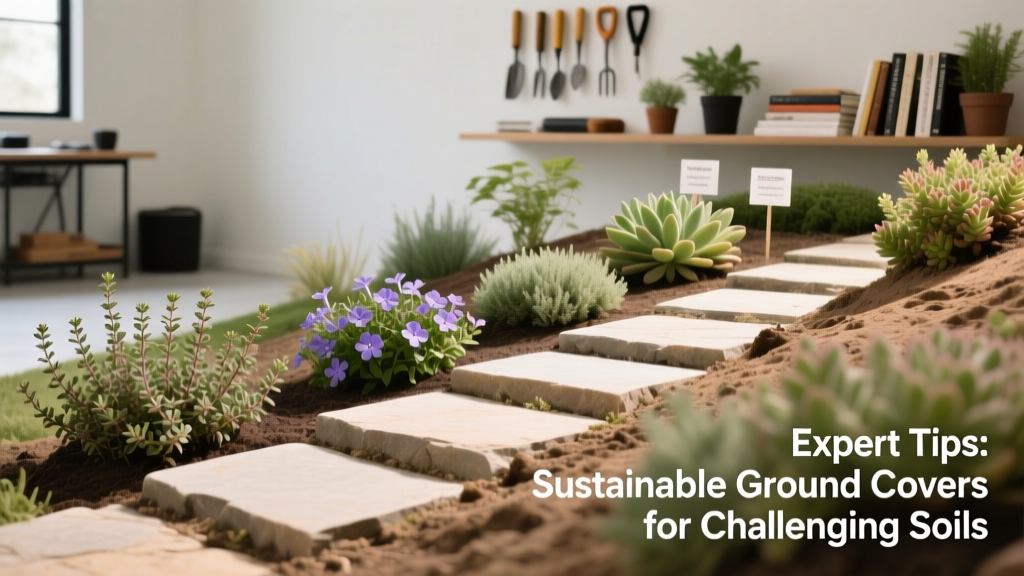
Grass won’t grow under your maple tree. Your hillside washes out every spring. Your soil stays parched despite weekly watering. If you’ve stared at bare, weedy, or eroding patches and thought, “There has to be a better way than mulch or sod,” you’re right — and the solution isn’t just ‘more grass.’ Real-world landscape pros have moved on from monoculture lawns for good reason: 72% of residential water use goes to outdoor irrigation (U.S. EPA, 2022), and turfgrass accounts for over half of that.
Shade-Tolerant Ground Cover Alternatives
Under mature trees, light drops below 20% full sun — too little for most grasses but perfect for resilient, low-growing perennials. Avoid planting anything with aggressive surface roots near shallow-rooted maples or oaks; instead, choose species that coexist without competing.
- Creeping Jenny (Lysimachia nummularia): Spreads fast in partial shade, tolerates clay, and forms a dense, glossy mat. Trim edges twice yearly to keep it in bounds.
- Barrenwort (Epimedium spp.): Drought-tolerant once established, deer-resistant, and blooms tiny flowers in early spring. ‘Sulphureum’ handles dry shade better than most cultivars.
- Allegheny Spurge (Pachysandra procumbens): Native to eastern woodlands, supports local pollinators, and slowly fills gaps without choking out ferns or wild ginger.
Tip: Always remove existing grass and compacted soil layers before planting — spurge and epimedium need 3–4 inches of amended, well-draining soil to root deeply.
Dry, Rocky, or Sandy Soil Solutions
When irrigation is limited or soil drains too fast, many traditional ground covers fail within one season. The key is matching plant physiology to site stress — not forcing moisture-hungry species into arid conditions.
- Woolly Thyme (Thymus pseudolanuginosus): Forms tight, silvery mats that reflect heat and reduce evaporation. Walkable, fragrant when stepped on, and thrives in gravel paths or rock walls.
- Blue Chalksticks (Senecio serpens): Succulent foliage stores water; needs zero supplemental irrigation after first-year establishment in full sun. Avoid heavy clay — it rots in wet winters.
- Rockrose (Cistus spp.): Evergreen shrublet (18–24" tall) with papery pink or white flowers. Tolerates wind, salt spray, and lean soils — ideal for coastal or roadside slopes.
According to the Xeriscape Council of New Mexico’s 2021 trial data, woolly thyme reduced summer irrigation needs by 86% compared to traditional creeping juniper on south-facing slopes.
Erosion Control on Steep Slopes
Gravity doesn’t care about your mulch budget. On grades over 3:1 (18°), loose bark or straw washes away in the first rain. You need living root systems — deep, fibrous, and fast-establishing — anchored into subsoil.
Best Perennial Anchors
- Creeping Phlox (Phlox stolonifera): Spreads via stolons that knit into topsoil; holds slope during heavy downpours. Prefers acidic, organic-rich loam.
- Japanese Spurge (Polygonatum odoratum ‘Variegatum’): Rhizomatous, shade-tolerant, and forms dense colonies in 2–3 years. Use on north-facing banks where foot traffic is low.
- Native Sedges (Carex spp.): Carex vulpinoidea (fox sedge) and Carex pensylvanica (Pennsylvania sedge) hold soil with dense, vertical roots — no mowing needed.
For immediate stabilization while plants establish, lay biodegradable coir netting over seeded areas. It degrades in 9–12 months and adds organic matter as it breaks down.
Quick Reference Checklist
| Site Challenge | Top 2 Plant Options | Key Prep Step |
|---|---|---|
| Heavy shade + dry soil | Allegheny spurge, Barrenwort | Remove leaf litter layer; amend with composted oak leaves |
| Full sun + sandy soil | Woolly thyme, Blue chalksticks | Top-dress with 1" decomposed granite to improve heat reflection |
| Steep slope + clay soil | Carex vulpinoidea, Creeping phlox | Install 2"-deep terraced trenches every 4 ft for water capture |
| Deer pressure + part shade | Barrenwort, Wild ginger (Asarum canadense) | Plant in late fall to avoid summer transplant shock |
Common Mistakes to Avoid
Even experienced gardeners misstep when switching from turf to alternatives — usually because they treat them like grass. Here’s what derails success:
- Skipping soil prep: Most alternatives need better drainage than lawn grass, not worse. Dig down 6 inches and mix in 30% coarse sand or perlite for succulents; add leaf mold for woodland species.
- Overwatering newly planted zones: Woolly thyme and sedges drown faster than they dry out. Water deeply once at planting, then wait until top 2 inches are dry before watering again.
- Ignoring spacing: Planting creeping phlox 12" apart instead of 6" delays full coverage by 18 months — and gives weeds a 2-year head start.
- Choosing invasive non-natives: English ivy and periwinkle (Vinca minor) escape into woodlands in 27 U.S. states (USDA PLANTS Database, 2023). Stick to regionally native or sterile cultivars.
Can I use ground cover alternatives in high-traffic areas?
Yes — but only select species. Woolly thyme, dwarf mondo grass (Ophiopogon japonicus ‘Nana’), and certain sedges tolerate light foot traffic. Avoid fragile options like barrenwort or foamflower in walkways. For patios or pathways, consider interplanting thyme with stepping stones — it softens edges and releases scent with each step. See our low-traffic ground covers guide for tested combos.
How long does it take for alternatives to fill in?
Most take 12–24 months to form full coverage — slower than sod but far more resilient long-term. Creeping jenny fills fastest (6–8 months in ideal conditions); sedges and epimedium take 18–24 months. Space plants at 6–9" intervals to speed coverage without overcrowding.
Do ground cover alternatives need fertilizer?
Rarely — and never synthetic nitrogen. Over-fertilizing triggers leggy growth and weakens disease resistance. A single spring application of compost tea or 1/4" aged compost is sufficient for most. Native sedges and thymes thrive on neglect; feeding them invites pests.
Will these options choke out my existing perennials?
Not if you choose carefully. Avoid known spreaders like ajuga or bishop’s weed unless contained by edging or pavement. Instead, opt for clump-forming or slow-stoloniferous types: Allegheny spurge expands ~3" per year; Pennsylvania sedge spreads by seed, not runners. Monitor for 2 growing seasons before assuming compatibility. For companion planting ideas, check our native plant combinations resource.
Are there fire-resistant options for wildfire-prone zones?
Absolutely. Rockrose, woolly thyme, and creeping phlox all have high moisture content in foliage and low volatile oil concentration — making them Class A fire-resistant per CAL FIRE’s 2022 Landscape Fire Hazard Rating System. Avoid junipers, lavender, and rosemary in defensible space zones; they ignite easily.
What’s the best time to plant ground cover alternatives?
Fall (mid-September to mid-October) is optimal across most USDA zones. Cooler temps reduce transplant shock, soil retains moisture longer, and roots develop before spring growth surges. In mild-winter zones (8–10), early spring works — but avoid summer planting unless you can hand-water daily for 6 weeks. See our seasonal planting calendar for zone-specific timing.
Switching from turf to thoughtful ground cover alternatives isn’t about giving up on beauty — it’s about aligning your yard with reality: your soil, your light, your rainfall, and your time. The plants that thrive without constant intervention are the ones that’ll still look intentional ten years from now — not like a compromise, but like a choice you made with confidence.
“The most successful ground covers aren’t the fastest-spreading — they’re the ones that match the site’s hydrology, biology, and maintenance capacity. We see far more failures from mismatched expectations than mismatched species.” — Dr. Lena Torres, UC Berkeley Cooperative Extension, 2020