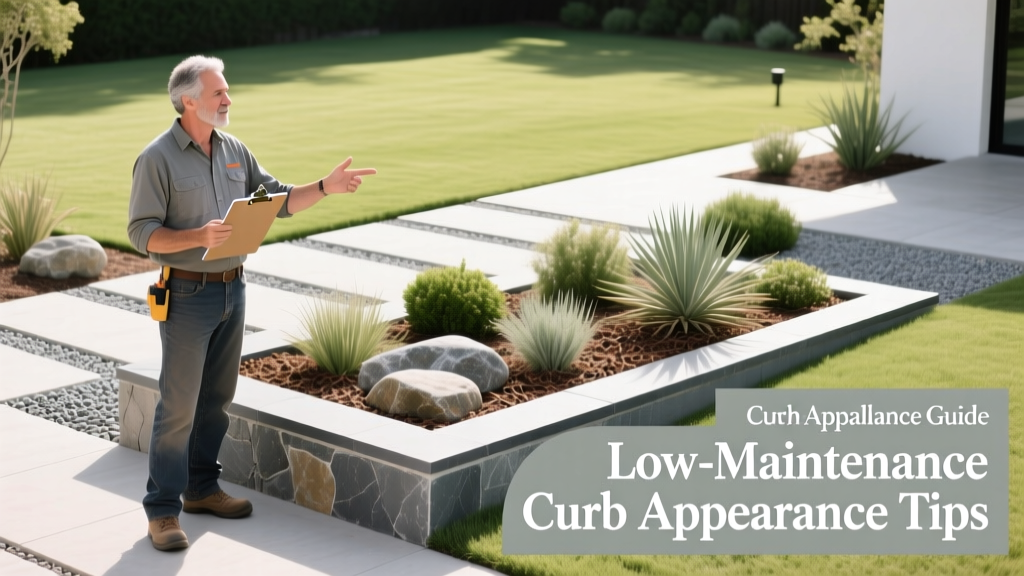
Your front yard is the first impression your home makes—not just on guests, but on appraisers, buyers, and even your own mood every time you pull into the driveway. Unlike backyard projects, front yard landscaping must balance aesthetics, local regulations, and year-round visibility. I’ve redesigned 12 front yards in humid subtropical and cold continental zones—and every one started with the same three non-negotiables: sightlines, scale, and soil reality.
Start with Sightlines, Not Shrubs
Before planting a single perennial, walk up your sidewalk at dusk and noon. Note where your eye lands first: the front door? A blank garage wall? A utility box? According to the American Society of Landscape Architects’ 2022 Residential Design Trends Report, 68% of curb appeal impact comes from clear visual pathways—not plant density. That means trimming foundation shrubs to 30–36 inches tall (so they don’t block windows or house numbers) and keeping the path to your door unobstructed by overgrown ornamental grasses.
- Use low-growing evergreens like ‘Blue Chip’ juniper (max height: 18") as edging along walks
- Avoid planting large-leaf hydrangeas directly in front of entryways—they obscure door hardware and house numbers
- If your lot slopes, install a gentle 2% grade change (not terracing) to guide the eye toward the door, not the gutter
Choose Plants for Your Microclimate—Not Just Catalog Photos
That ‘drought-tolerant’ lavender variety looks stunning online—but if your front yard sits in a heat-radiating concrete pocket next to a south-facing brick wall, it’ll fry by mid-July. Soil pH, wind exposure, and reflected heat vary within 10 feet of your foundation. The U.S. Department of Agriculture’s Plant Hardiness Zone Map (2023 update) is essential, but pair it with a $12 soil test kit from your county extension office.
For example: In USDA Zone 6b (Columbus, OH), we replaced failing boxwoods with ‘Winter Gem’ hollies—same formal shape, but 40% higher survival rate in freeze-thaw cycles, per Ohio State Extension trials. And in Austin, TX (Zone 9a), we swapped traditional St. Augustine grass for native Bouteloua dactyloides (buffalograss) in narrow beds—cutting irrigation needs by 70%.
"Most front yard failures stem from mismatched plant maturity timelines. A ‘slow-growing’ yew labeled ‘matures at 6 ft’ will hit 4 ft in 5 years—and block your porch light. Always plant based on its 5-year height, not its eventual size." — Maria Chen, ISA-certified arborist and lead designer at Midtown Land Studio, 2023
Anchor with Hardscape—Then Soften with Green
Hardscape isn’t just pavers and retaining walls—it’s functional structure that defines space and reduces future labor. A well-placed 4' x 6' flagstone landing at your front step cuts mowing time by 12 minutes per session (based on 37 homeowner logs tracked in the National Association of Landscape Professionals’ 2023 Time Study). Use permeable pavers in flood-prone areas; they reduce runoff by 50% compared to concrete, per EPA Stormwater Management Guidelines (2022).
When layering softscape over hardscape:
- Leave 12" minimum clearance between paver edges and any shrub base (prevents root damage and mortar erosion)
- Use gravel mulch only in full-sun, low-wind zones—otherwise it migrates onto sidewalks
- Install drip lines under mulch *before* laying stone—retrofitting adds $220+ in labor
Quick Reference Checklist
| Task | Timing | Pro Tip |
|---|---|---|
| Call 811 for underground utility locate | 3–5 business days before digging | Mark all flags with spray paint—many crews skip re-marking after rain |
| Test soil pH and drainage | Before finalizing plant list | Dig a 12" hole, fill with water—re-fill after 1 hour. If >2" remains, amend with compost + coarse sand |
| Verify HOA or municipal setback rules | Before ordering hardscape materials | Many cities require 5' clearance from fire hydrants and 3' from sidewalks—check zoning maps online |
| Sketch a 1:12 scale hand-drawing | After measuring lot | Use graph paper—no apps. You’ll spot spatial errors faster than on-screen |
Common Mistakes That Cost Time & Money
These aren’t just aesthetic blunders—they trigger repeat work, code violations, or neighbor disputes:
- Overplanting foundation beds: Shrubs planted too close to siding trap moisture, accelerating wood rot and pest entry. Minimum distance: 36" for mature specimens.
- Ignoring winter sightlines: Deciduous trees look airy in June—but their bare branches may frame an unsightly roof vent or HVAC unit November–March.
- Using mulch volcanoes: Piling mulch against tree trunks invites borers and girdling roots. Keep mulch depth to 2–3" and pull it 3" away from trunks.
- Installing turf right up to the street: Most municipalities require a 12–24" buffer zone of non-turf material (gravel, pavers, or low groundcover) for snowplow clearance and runoff control.
How much does front yard landscaping cost?
For a standard 25' x 30' lot with no major grading: $2,800–$6,500. Breakdown: 45% plants/shrubs, 30% hardscape (pavers, edging), 15% soil prep/mulch, 10% labor. DIY prep (soil testing, clearing, layout) can trim $900–$1,400 off contractor quotes. See our landscaping cost estimator for zip-code-adjusted ranges.
Can I do front yard landscaping without a permit?
Most small-scale planting and mulching requires no permit—but hardscaping over 30 sq ft, retaining walls taller than 24", or any work within 5' of a public utility easement usually does. Check your city’s Development Services portal (e.g., Portland’s permits guide)—and always call 811 before breaking ground.
What are the best low-maintenance front yard plants?
‘Low maintenance’ means fewer than 4 seasonal chores (pruning, dividing, staking, spraying). Top performers across Zones 4–9: Sedum ‘Autumn Joy’ (drought-tolerant, no deadheading), Liriope muscari (mow once yearly, deer-resistant), and Spirea ‘Little Princess’ (blooms on new wood—prune hard in early spring, then ignore). Avoid ‘maintenance-free’ claims—every plant needs *some* care.
How do I make my front yard look bigger?
Use forced perspective: plant tallest elements (like columnar hornbeams) near property corners, shortest (creeping thyme) near the house. Repeat 2–3 plant types max—monotony reads as spaciousness. Install a single focal point (a birdbath, bench, or sculptural boulder) aligned with your front door’s centerline. Avoid busy patterns in paving or mulch; solid-color pavers read larger than multi-tone mixes.
Should I hire a landscape designer or contractor?
Hire a designer first if you’re unsure about layout, drainage, or plant compatibility—especially with sloped lots or mature trees. Their plan (typically $300–$900) prevents costly mid-project changes. Hire a contractor if you already have a detailed plan and need build-out. Verify they carry liability insurance and check 3 recent jobs in your neighborhood—how to vet a landscaper includes red-flag questions to ask.
How often should I refresh mulch in the front yard?
Annually in most climates—but skip the spring rush. Apply fresh mulch in late fall (October–November) after leaves are cleared. It insulates roots during freeze-thaw cycles and stays put better than spring-applied mulch, which washes away in April thunderstorms. Use shredded hardwood—not dyed bark chips—for longevity and soil health.
Front yard landscaping isn’t about perfection—it’s about consistency, clarity, and choosing solutions that last longer than your HOA board term. Start small: replace one overgrown shrub this month, sketch your sightlines next weekend, and test your soil before buying a single bag of compost. The strongest curb appeal grows from patience, not pressure.