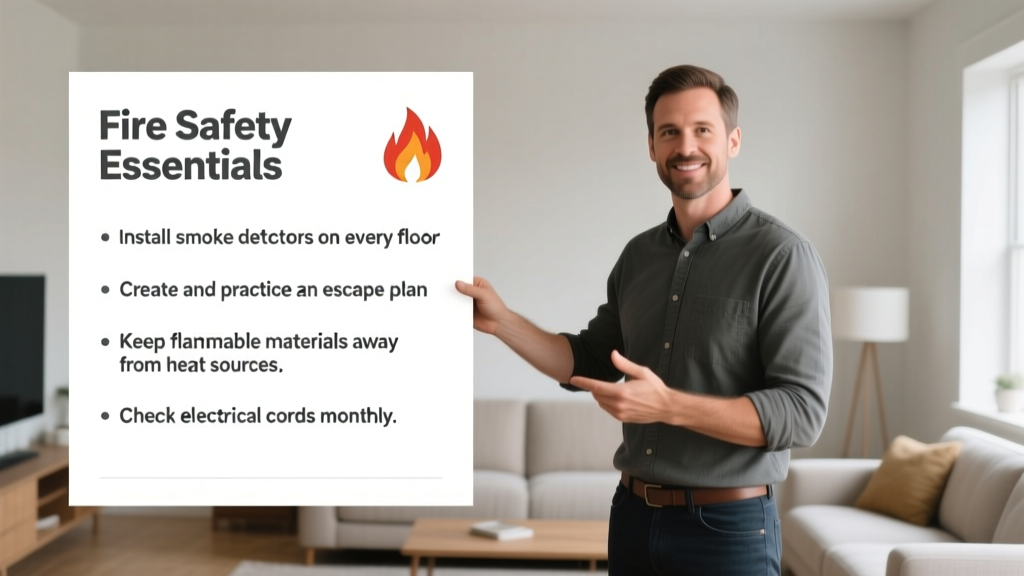
Most home fires start small—often from something as ordinary as a forgotten stove burner or an overloaded power strip—and escalate in under 3 minutes. That’s why prevention isn’t about luck; it’s about consistent, low-effort habits backed by real-world data.
Install and Maintain Smoke Alarms Correctly
Smoke alarms cut fire fatalities by nearly half—but only if they’re placed and maintained properly. Install units inside every bedroom, outside each sleeping area, and on every level—including basements and attics. Avoid corners (dead air spaces) and mount alarms high on ceilings or walls, 4–12 inches from the ceiling edge.
- Test alarms monthly using the test button—not just listening for chirps
- Replace batteries every 6 months (e.g., when you change clocks for Daylight Saving Time)
- Swap out entire units every 10 years—even if they seem fine (NFPA 72, 2023)
Hardwired alarms with battery backup are ideal for new construction or renovations. For renters, confirm your lease requires landlords to provide working units—and document their condition with photos at move-in.
Cooking Safety: The #1 Cause of Home Fires
Cooking accounts for 49% of reported home fires and 21% of fire deaths (U.S. Fire Administration, 2022). Most incidents happen during frying, grilling, or broiling—especially when unattended.
- Never leave the kitchen while oil is heating or food is frying—even for "just a minute"
- Keep oven mitts, lids, and baking soda within arm’s reach (not in a drawer across the room)
- Wipe grease buildup off stovetops and range hoods weekly—grease ignites at 600°F
If a pan catches fire, slide a metal lid over it and turn off the burner. Never use water—it causes explosive splatter. Keep a Class B:C fire extinguisher mounted near (but not above) the stove.
Electrical & Heating Hazards You Overlook
Space heaters cause 43% of fatal home heating fires—and 86% of those involve placement too close to combustibles (NFPA, 2023). Likewise, outdated wiring and daisy-chained power strips quietly overload circuits.
Check outlets and cords regularly: fraying, warmth, or discoloration means immediate replacement. Use only UL-listed extension cords rated for the device’s wattage—and never run them under rugs or furniture.
"A single overloaded outlet can reach 1,400°F internally before tripping a breaker—hot enough to ignite drywall paper." — NFPA Electrical Safety Specialist, 2022
Quick Reference Fire Prevention Checklist
| Task | Frequency | Notes |
|---|---|---|
| Test all smoke and CO alarms | Monthly | Press test button; replace battery if weak |
| Clean stove hood filter | Weekly | Soak in hot vinegar + baking soda solution |
| Inspect space heater clearance | Before each use | 3-foot radius clear of curtains, bedding, furniture |
| Check dryer vent for lint | After every 3 loads | Lint buildup causes 9,100 fires/year (UL, 2021) |
Common Mistakes That Increase Risk
People often think fire prevention is about big gestures—like buying an expensive extinguisher—but miss daily missteps that compound danger.
- Using candles near curtains or bedding: 17% of candle fires start this way (NFPA, 2023); switch to flameless LED versions in bedrooms and hallways
- Storing flammable liquids indoors: Gasoline, paint thinner, and aerosols should be kept in detached garages or sheds—not in laundry rooms or closets
- Ignoring dryer vent maintenance: Flexible plastic vents collapse and trap lint; replace with rigid aluminum ducts and clean quarterly
Also avoid using extension cords as permanent wiring. If you need one for more than 30 days, hire an electrician to install an additional outlet—a $150 fix that prevents hundreds of potential failures.
How often should I replace my smoke alarm?
Every 10 years—regardless of battery status or apparent function. Sensors degrade over time and lose sensitivity to smoldering fires. Look for the manufacture date stamped on the back; if it’s pre-2014, replace it now. Learn how to test and replace smoke alarms correctly.
Is it safe to charge phones overnight?
Yes—if you use manufacturer-approved chargers and avoid covering devices with blankets or pillows. Lithium-ion batteries rarely fail, but overheating during charging increases risk—especially with cheap knockoff cables. Unplug once fully charged, or use smart plugs with auto-shutoff timers.
What’s the safest way to dispose of fireplace ashes?
Let ashes cool for at least 72 hours in a metal container with a tight lid—never in cardboard, plastic, or near combustibles. Even "cold" ashes retain embers that reignite. Once cooled, dispose of them in non-combustible outdoor trash or mix into garden soil (ash is alkaline and boosts pH).
Do fire extinguishers expire?
Yes. Most ABC extinguishers last 12 years if undamaged and pressure-checked annually. Check the gauge monthly: the needle must stay in the green zone. If it dips—or if the unit shows rust, dents, or a cracked hose—replace it. See our full fire extinguisher maintenance guide.
Can I use water on a grease fire?
No—never. Water vaporizes instantly on contact with hot oil, expanding 1,700x and blasting flaming grease across the room. Instead, smother with a metal lid, slide a cookie sheet over the pan, or use baking soda (not flour—it’s combustible). For larger fires, evacuate and call 911 immediately.
Are lithium battery fires different from regular fires?
Yes. Lithium-ion fires burn hotter (over 1,100°F), reignite easily, and release toxic hydrogen fluoride gas. Keep damaged or swollen batteries in a ceramic bowl filled with sand—not in drawers or bags. For e-bikes or scooters, store and charge on non-combustible floors away from exits. Read our lithium battery safety checklist.
Fire prevention isn’t about perfection—it’s about consistency. One monthly habit, like testing alarms or cleaning the dryer vent, builds resilience over time. Start with one tip from this list this week. Then add another next month. Small actions, repeated, keep people and homes safe far longer than any emergency response ever could.