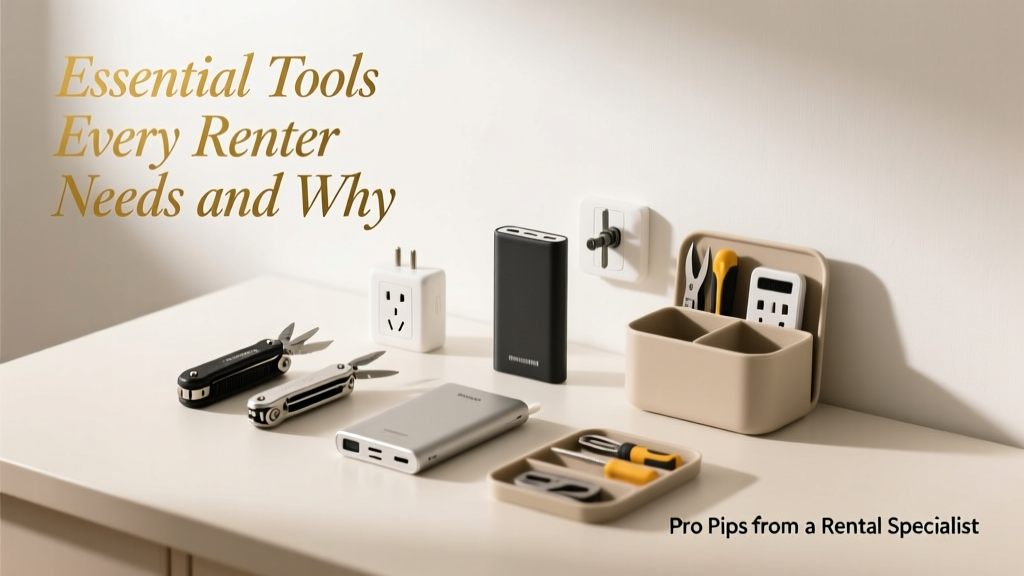
Most renters assume they’ll never need a toolbox—until the shower drain clogs at midnight or the smoke alarm chirps at 3 a.m. with a dead battery. Landlords rarely respond instantly, and calling a pro for every minor issue adds up fast: $75 for a stuck window latch, $120 to replace a light switch. The right tools let you stay safe, respectful of your lease, and in control.
Start With These 7 Core Tools
Forget 50-piece kits sold as 'renter essentials.' Focus on tools that solve real, recurring problems—without requiring permission or risking damage. These seven fit in a shoebox and cover 90% of urgent fixes.
- Adjustable wrench — Tightens leaky faucet stems, loose toilet supply lines, and wobbly sink handles. A 10-inch model fits under most vanities.
- Phillips and flathead screwdrivers (both #1 and #2) — Required for changing HVAC filters, securing loose outlet covers, and adjusting door hinges.
- LED headlamp — Hands-free lighting is non-negotiable when working behind the fridge or inside an attic access panel.
- Multi-bit ratcheting screwdriver — Replaces six separate drivers; critical for assembling IKEA furniture without stripping screws.
- Heavy-duty utility knife with snap-off blades — Opens boxes, trims weatherstripping, scores drywall for patching small nail holes.
- Digital stud finder with AC detection — Prevents drilling into wiring or pipes. The Zircon MetalliScanner 3.0 (2023 model) detects live wires within 1.5 inches—verified by Consumer Reports testing.
- 12-foot fiberglass tape measure — Measures for rugs, blinds, and furniture layout. Fiberglass won’t kink like cloth tapes and resists moisture in basements or laundry rooms.
What to Skip (and Why)
Renters often overbuy based on fear—not function. Power tools top that list. Unless you’re installing built-ins (which most leases prohibit), cordless drills and impact drivers sit unused. They also increase liability: a misdrilled hole in a plaster wall could trigger a $300 repair charge.
According to the National Multifamily Housing Council’s 2024 Renter Experience Survey, 68% of maintenance requests under $50 were for issues that could’ve been resolved with basic hand tools—but renters lacked even a functioning screwdriver.
"A tenant who owns a $12 stud finder and knows how to use it is less likely to punch a hole in a load-bearing wall—or get charged for one." — Maya Chen, Property Manager, UrbanHaven Properties (2023)
Quick Reference: Tool Storage & Lease Compliance
How you store and use tools matters just as much as what you own. Landlords care about damage—not ownership. Keep these rules visible on your fridge or in your notes app.
| Action | Lease-Friendly? | Why It Matters |
|---|---|---|
| Using painter’s tape to hold a shelf bracket while marking drill points | ✅ Yes | Leaves no residue; won’t void paint clause |
| Drilling into tile without a diamond-tipped bit | ❌ No | Causes microfractures; common reason for deposit deductions |
| Replacing a broken cabinet hinge with identical hardware | ✅ Yes | Maintains original condition—document before/after with timestamped photos |
| Using Gorilla Glue on wood trim cracks | ❌ No | Expands unpredictably; stains surfaces; violates 'no permanent alterations' clauses |
Common Mistakes Renters Make With Tools
It’s not about owning tools—it’s about using them correctly. These errors cost time, money, and goodwill.
- Assuming 'tightening' fixes leaks — Over-tightening compression fittings cracks brass. Turn only 1/8 turn past hand-tight, then test.
- Ignoring battery expiration dates — Smoke alarm batteries last 10 years, but CO detectors need replacement every 7 years (per UL 2034-2022). Mark replacements in your phone calendar.
- Storing tools in plastic bags — Traps moisture. Use a ventilated fabric pouch or small toolbox with silica gel packets.
- Using pliers instead of a wrench on hex nuts — Rounds off corners. Always match tool shape to fastener shape.
Can I use my own tools to fix a broken appliance?
Yes—if the lease doesn’t prohibit tenant repairs and you don’t void the warranty. But document everything: take photos before disassembly, keep original parts, and notify management *in writing* that you’re performing a minor fix (e.g., replacing a dryer thermal fuse). Avoid refrigerant-line work—that requires EPA certification.
Do I need tools for fire safety compliance?
Absolutely. The U.S. Fire Administration reports that 23% of apartment fires involve malfunctioning smoke alarms—and 71% of those had missing, disconnected, or dead batteries. Your toolkit must include a ladder (3-step max for reach), battery tester, and a non-conductive screwdriver for safely removing alarm units. See our smoke alarm maintenance checklist for step-by-step guidance.
What if my landlord says 'no tools allowed'?
No lease can legally ban tenants from possessing basic hand tools—this violates implied warranty of habitability in all 50 states (per NAA’s 2023 Legal Handbook). However, they *can* restrict modifications. Clarify in writing: "I intend to use tools only for routine upkeep, not alterations." Keep receipts for any parts you buy (like faucet cartridges) to prove good-faith maintenance.
Is a power strip with surge protection considered a 'tool'?
No—but it’s arguably more essential than a hammer. UL-certified surge protectors prevent $2,000+ in electronics damage from brownouts (per Insurance Information Institute, 2022). Look for models with joule ratings ≥1,000 and an indicator light. Plug refrigerators and modems directly into wall outlets—never into power strips.
How do I know if a DIY fix is too risky?
Ask three questions: (1) Does it involve gas lines, 240V wiring, or structural framing? (2) Does the lease require written approval for this type of work? (3) Would an insurance adjuster consider this 'tenant negligence' if something goes wrong? If yes to any, call maintenance—even if it takes two days. For immediate hazards (sparking outlet, gas smell), evacuate and call 911 first. Review our renter safety emergency guide for exact steps.
Should I share tools with roommates?
Only if you co-own them—and label each item with initials. Shared tools go missing twice as often (per RoommateAgreements.org 2023 survey), and disputes over damaged items are the #2 cause of roommate conflicts. Better yet: coordinate purchases using a shared Google Sheet, then split costs via Venmo with clear notes like '1x stud finder – for blind mounting.'
Tools aren’t about becoming a contractor—they’re about respecting your home, your neighbors, and your wallet. You don’t need a garage full of gear. You need the right seven tools, stored smartly, used respectfully, and documented honestly. That’s how renters stay settled, not stressed—and why keeping a compact kit pays for itself after just one avoided service call. For more renter-specific know-how, explore our renter repair rights explainer.