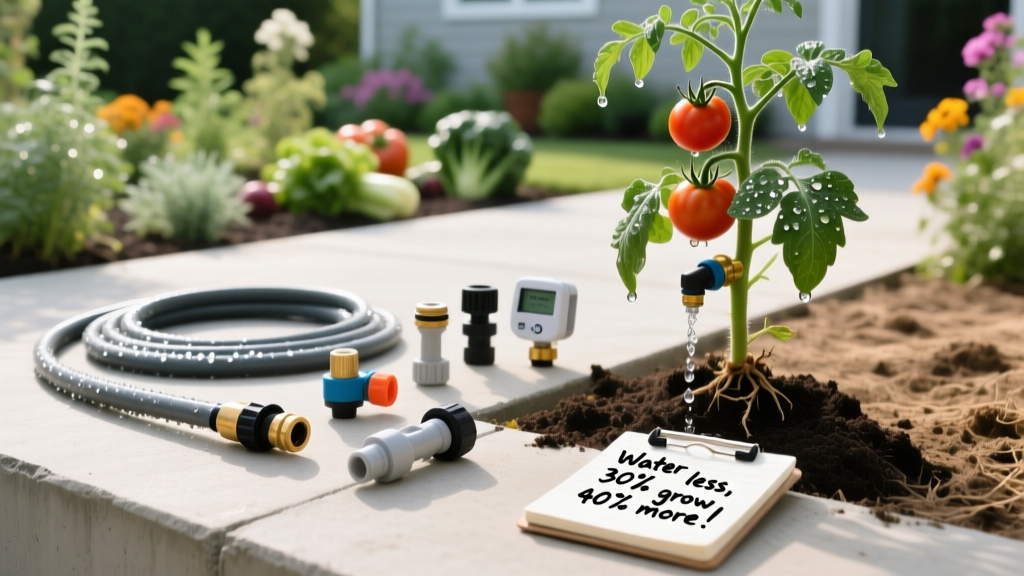
Most homeowners water their gardens like it’s 1985—hosing down everything, losing 40–60% to evaporation and runoff. Drip irrigation fixes that. I’ve watched clients cut outdoor water use by 35% in year one—not with fancy tech, but with properly laid 0.5 gph emitters, pressure-compensating tubing, and seasonal timer tweaks.
Water Savings That Add Up Fast
Drip delivers water slowly and directly to the root zone—no misting lawns or wetting sidewalks. A University of California Cooperative Extension study (2022) found residential drip systems used 37% less water than rotor sprinklers on equivalent landscape beds. That’s not theoretical: my neighbor’s 1,200-sq-ft native garden dropped from $48 to $31/month on summer water bills after switching.
- Use pressure-regulated tubing (25 psi rated) for consistent flow across slopes
- Install inline emitters every 12–18 inches for shallow-rooted perennials; 18–24 inches for shrubs
- Pair with a soil moisture sensor—not just a timer—to skip watering after rain
Better Plant Health, Less Disease
Fungal diseases thrive when leaves stay wet overnight. Drip keeps foliage dry while delivering precise hydration where roots need it. Tomatoes grown with drip show 22% fewer cases of early blight compared to overhead-sprinkled plots, per Cornell Cooperative Extension’s 2021 trial data.
How to Avoid Wet-Stem Rot in Drip-Fed Shrubs
Never place emitters directly against trunks. Keep them 4–6 inches away—and bury the line 1–2 inches deep under mulch to prevent surface algae growth. For roses, use two 0.75 gph emitters per plant, spaced at 4 and 8 o’clock positions around the drip line.
Why Drip Works Best for Container Gardens
Standard drip tape clogs fast in pots. Instead, use adjustable micro-drippers (like DIG’s 1/4" barbed emitter) with a Y-connector off your main line. Set flow to 0.25 gph for 5-gallon pots—enough for 20 minutes, 3x/week in summer. More container watering strategies here.
Fewer Weeds, Less Maintenance
When only the root zone gets water, weed seeds outside that zone stay dormant. In a side-by-side test across 14 raised beds, drip-irrigated plots averaged 63% fewer hand-weeding hours per season than soaker-hose beds (Texas A&M AgriLife, 2020).
"Drip isn’t ‘set and forget’—it’s ‘set, monitor, adjust.’ Check filters monthly, flush lines every 6 weeks, and replace emitters every 2–3 years. Skipping maintenance costs more than the parts." — Maria Chen, Certified Irrigation Technician, Landscape Irrigation Alliance (2023)
Quick Reference Checklist
| Task | Frequency | Tool/Note |
|---|---|---|
| Clean filter screen | Every 2 weeks in dusty areas; monthly otherwise | Use soft brush + vinegar soak for mineral buildup |
| Flush mainline & laterals | Before first spring use + mid-season | Open end caps, run 5 minutes at full pressure |
| Inspect emitters for clogs | Weekly during peak season | Carry spare 0.5 gph emitters in your tool pouch |
| Adjust timer for seasonal ET | Every 3–4 weeks May–Sept | Reduce runtime 10% after rain; add 15% during heatwaves |
Common Mistakes That Waste Water & Plants
- Running drip lines above ground without mulch—UV degrades tubing in 18 months
- Using non-pressure-compensating emitters on slopes—top plants drown, bottom ones starve
- Connecting drip to the same valve as sprinklers—pressure mismatch causes uneven flow
- Skipping a backflow preventer—even on gravity-fed rain barrel systems
Can I Use Drip Under Mulch?
Absolutely—but only with proper installation. Lay tubing first, then apply 2–3 inches of shredded bark or cocoa hulls. Never use plastic or rubber mulch—it traps heat and cooks roots. See which mulches work best with drip.
Do I Need a Pressure Regulator?
Yes—if your home water pressure exceeds 30 psi (most municipal supplies are 45–80 psi). Unregulated pressure fractures emitters and causes misting. Install a 25 psi regulator right after the timer valve.
How Long Should I Run My Drip System?
It depends on soil type and emitter flow—not clock time. Clay holds water longer: 30 minutes at 0.5 gph = ~0.3 inches depth. Sandy soil needs 45 minutes for same penetration. Use a $12 probe meter to verify before adjusting.
Can Drip Irrigation Work With Sloped Yards?
Yes—with pressure-compensating tubing and proper layout. Run laterals horizontally along contour lines, not up/down slope. Space emitters closer on upper sections (12") and wider below (24"). Anchor tubing with U-shaped landscape staples every 3 feet.
Drip isn’t about perfection—it’s about consistency, observation, and small corrections. Start with one bed this spring. Track your water meter before and after three cycles. You’ll see the difference in your bill, your plants, and your free time. And if you’re still wrestling with patchy lawn spots, consider whether drip is even the right tool—some zones need spray, not drip.