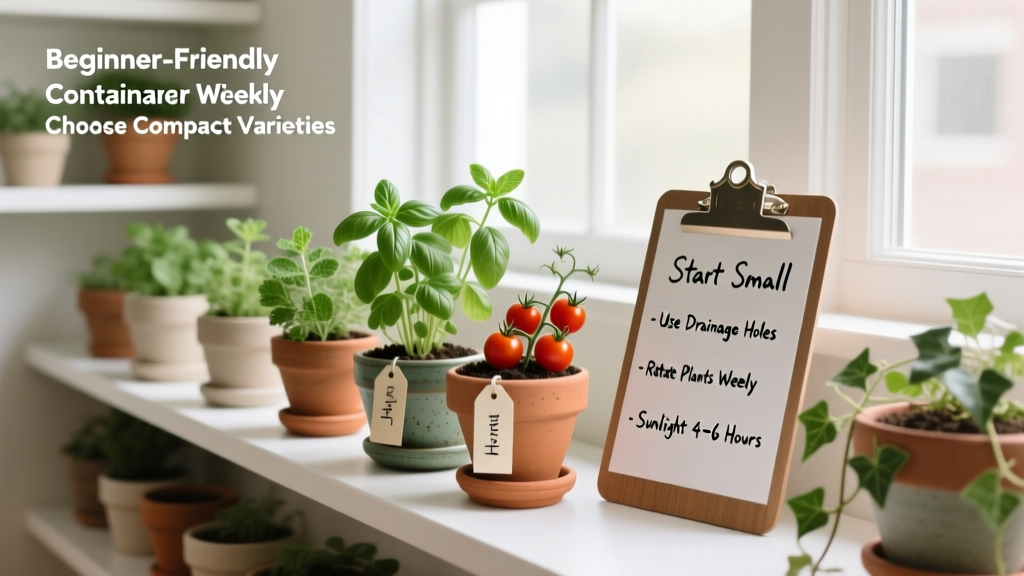
Five years ago, I grew cherry tomatoes on a 4-foot balcony using only three 5-gallon buckets—and harvested 127 fruits before frost. Container gardening isn’t a compromise; it’s precision horticulture. You control the soil, water, pests, and microclimate. But get one variable wrong—like drainage or pot size—and your basil turns yellow by day five.
Choose the Right Container—Size Matters More Than Material
Most beginners pick cute ceramic pots or repurposed buckets without checking root depth requirements. A tomato plant needs at least 5 gallons (and ideally 10) of volume to thrive. Shallow-rooted herbs like thyme or parsley do fine in 1–2 gallon containers—but only if they’re at least 8 inches deep. Terracotta breathes well but dries out fast; plastic holds moisture but can overheat in full sun. For balconies with afternoon sun exposure, choose light-colored polypropylene or fabric grow bags—they regulate temperature better than dark plastic.
- Tomatoes, peppers, eggplants: minimum 5 gallons (12-inch diameter × 12-inch depth)
- Lettuce, spinach, chard: 3–5 gallons (shallow but wide)
- Basil, mint, oregano: 2–3 gallons (mint must be isolated—it spreads aggressively)
Soil Isn’t Dirt—Use a Purpose-Built Mix
Garden soil compacts in containers, suffocating roots and pooling water. Skip the backyard shovel. Instead, use a lightweight, porous blend: 1 part compost, 1 part coconut coir or peat moss, and 1 part perlite or coarse vermiculite. Avoid generic "potting soil" bags labeled “moisture control”—they often contain water-retaining gels that rot roots in hot weather. According to the University of Florida IFAS Extension’s 2022 Container Gardening Handbook, 68% of failed container crops trace back to poor soil structure—not lack of sun or fertilizer.
“If your potting mix forms a dense ball when squeezed—and doesn’t crumble easily—it’s too heavy for containers.” — Dr. Sarah Lin, UF/IFAS Horticulture Specialist, 2022
Water Like a Scientist, Not a Sprinkler
Containers dry out faster than in-ground beds—especially on concrete patios or windy rooftops. But overwatering is the #1 killer. Stick your finger 1 inch down: if it’s dry, water slowly until liquid runs from the drainage holes. Morning is best—reduces fungal risk and evaporation loss. In 90°F+ heat, check daily. Use drip emitters or self-watering inserts for consistent delivery; they cut water waste by up to 30% compared to overhead watering (U.S. EPA WaterSense Program, 2023).
Quick Reference Checklist
| Task | Frequency | Notes |
|---|---|---|
| Check drainage holes | Before planting & monthly | Clogged holes cause 72% of root rot cases (Penn State Extension, 2021) |
| Refresh top 2 inches of soil | Every 4–6 weeks | Add compost or worm castings—not synthetic fertilizer alone |
| Rotate pots 90° | Twice weekly | Ensures even sun exposure for balanced growth |
| Inspect for pests | Every 3 days | Look under leaves for aphids, spider mites, whiteflies |
Common Mistakes That Kill Your Plants
People assume container gardening is low-effort. It’s not—it’s high-leverage. The most frequent missteps? Using saucers that stay filled with water (causing root drowning), planting multiple aggressive growers (like mint + lemon balm + oregano) in one pot, and fertilizing weekly with high-nitrogen formulas—which boosts leafy growth but slashes fruit set. Also, skipping winter cleanup: old soil harbors fungi and nematodes. Empty, scrub, and sun-dry all containers before reuse.
- Overcrowding: One pepper plant per 5-gallon pot—not three
- Ignoring wind exposure: Unstaked tomatoes snap in gusts above 15 mph
- Using unglazed clay in freezing climates: Cracks form after 2–3 freeze-thaw cycles
How often should I fertilize container plants?
Every 7–10 days during active growth (spring–early fall), using a balanced 5-5-5 organic granular or liquid fish/kelp blend. Reduce to once monthly in cooler months. Skip synthetic spikes—they leach unevenly and build up salts. For leafy greens, add extra nitrogen; for tomatoes and peppers, switch to a 3-8-10 formula at flowering.
Can I reuse potting soil from last season?
Yes—but only if the prior crop was disease-free. Remove roots, sift out debris, and mix 1:1 with fresh compost and perlite. Never reuse soil after tomatoes, peppers, or potatoes—those crops host verticillium wilt and fusarium, which persist for years. Learn more about soil health tips for safe recycling.
What vegetables grow best in small containers?
Dwarf varieties dominate here: ‘Patio Snacker’ cucumbers (needs trellis), ‘Littl’ Bites’ cherry tomatoes, ‘Salad Bowl’ lettuce, ‘Red Ace’ beets, and ‘Paris Market’ carrots (round type fits shallow pots). All succeed in 3–5 gallon containers with 8+ hours of sun. For shady spots, try ‘Black Seeded Simpson’ lettuce or ‘Bull’s Blood’ beet—both tolerate 4–6 hours.
Do I need special tools for container gardening?
A 12-inch trowel, moisture meter (see our tool guide), and a pair of bypass pruners are enough. Skip expensive irrigation timers unless you’re managing 15+ pots. A $12 drip kit with adjustable emitters works better than smart systems for most home growers.
How do I prevent soil from washing out of drainage holes?
Line the bottom with a coffee filter, broken pottery shard, or landscape fabric—not gravel. Gravel reduces usable soil volume and creates a perched water table. Coffee filters hold soil in while allowing full drainage. Replace them each season.
Can I grow fruit trees in containers?
Absolutely—if you choose dwarf or semi-dwarf rootstocks. ‘Honeycrisp’ apple on G.11 or ‘Improved Meyer’ lemon on Flying Dragon rootstock thrive in 15–25 gallon pots. Rotate weekly, prune annually in late winter, and protect from temps below 20°F. Expect first fruit in year 3. See our dwarf fruit trees guide for spacing and feeding schedules.
Container gardening rewards attention—not acres. Start with three pots: one tomato, one basil, one marigold (natural pest deterrent). Observe daily. Adjust weekly. Within six weeks, you’ll know your microclimate better than your neighbors know theirs. And when that first sun-warmed cherry tomato bursts in your mouth? That’s not just flavor—that’s feedback from a system you designed, tuned, and trusted.