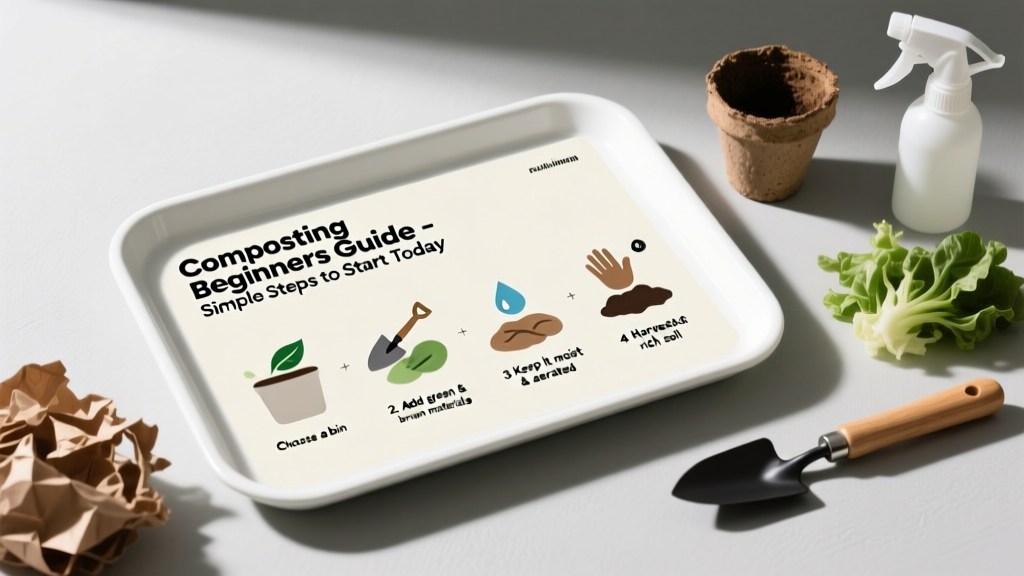
Most beginners think composting means backyard piles, worms, and mystery odors—but it’s really just controlled decomposition. I started with a $12 lidded bucket under my kitchen sink and had usable compost in 6 weeks. You don’t need space, expertise, or perfect conditions—just consistency and the right balance.
Start Small, Scale Smart
Jumping straight into a 4-ft tumbler overwhelms new composters. Begin with what fits your lifestyle: a 5-gallon bucket for apartments, a 3-bin system for suburban yards, or even a countertop electric composter if time is tight. The key is matching scale to your waste output. Track your food scraps for three days—you’ll likely find you generate 1.5–2.5 lbs per person weekly (U.S. EPA, 2022). That fits neatly in a 10-gallon bin.
- Apartments: Use a Bokashi bucket + outdoor drop-off (many cities offer free compost collection)
- Townhouses: Try a dual-chamber tumbler—fill one side while the other cures
- Backyards: Build a 3x3x3 ft wire-mesh bin; turns fastest when sized right
Master the Green-to-Brown Ratio
Forget exact measurements—think texture and moisture. Greens (nitrogen-rich) are wet and soft: fruit peels, coffee grounds, fresh grass clippings. Browns (carbon-rich) are dry and crunchy: shredded cardboard, dried leaves, sawdust from untreated wood. Aim for roughly 2 parts brown to 1 part green by volume—not weight. Too many greens? Smells sour and gets slimy. Too many browns? Stalls completely.
Here’s what works daily in a 10-gallon bin:
| Material Type | Examples | Max Daily Volume |
|---|---|---|
| Greens | Coffee grounds, veggie scraps, tea bags (no staples) | 1 cup |
| Browns | Shredded egg cartons, torn paper napkins, dry yard waste | 2 cups |
| Avoid | Dairy, meat, oily foods, pet waste, glossy paper | Zero |
Aerate Without the Drama
Turning isn’t optional—it’s oxygen delivery. But you don’t need a pitchfork and gym membership. A simple 12-inch compost aerator ($8 on Amazon) lets you poke deep holes twice weekly. Or use the ‘layer-and-stir’ method: every time you add scraps, bury them under 2 inches of browns, then stir the top 6 inches with a garden fork. According to Rodale Institute’s 2021 Composting Field Trials, bins turned twice weekly reach 135°F (ideal pathogen-killing temp) in 11 days—versus 27 days for static piles.
"If your pile smells like ammonia, it’s starving for carbon. If it’s soggy and silent, it’s suffocating. Turn it—and add dry shredded paper immediately." — Dr. Elaine Ingham, Soil Microbiologist, 2020
Quick Reference Checklist
Print this or save it as a phone note. Tick off each step before adding scraps:
- ✅ Is the bin covered? (Prevents pests & retains heat)
- ✅ Did I add 2x browns to greens by volume?
- ✅ Is the mix damp like a wrung-out sponge—not dripping or dusty?
- ✅ Have I stirred or turned within the last 3 days?
- ✅ Are all scraps buried under ≥2" of browns?
Common Mistakes That Stall Success
New composters often misdiagnose problems—or worse, quit too soon. Here’s what actually derails progress:
- Overwatering: Leads to anaerobic rot. Fix: Toss in dry shredded cardboard and turn immediately.
- Ignoring particle size: Whole corn cobs or avocado pits take 6+ months. Chop scraps >1" or blend them first.
- Skipping browns: Even coffee grounds need carbon. Keep a small bag of shredded paper next to your bin.
- Adding weeds with seeds: Only hot compost (135°F+ for 3+ days) kills them. When in doubt, skip dandelions and crabgrass.
How long until I get usable compost?
With consistent turning and proper ratios, you’ll see dark, crumbly compost in 4–8 weeks in warm weather. Winter slows it down—expect 12–16 weeks. Test readiness: grab a handful, squeeze—if water drips, it’s too wet. If it crumbles cleanly and smells earthy, it’s ready. Learn more about how to test compost maturity.
Can I compost in winter?
Absolutely—just insulate. Wrap your bin in a moving blanket or surround it with hay bales. Keep adding scraps (they’ll freeze, then thaw and decompose in spring). A covered tumbler stays active down to 20°F. For indoor options, check our guide on indoor composting systems.
What if it smells bad?
Foul odor = imbalance. Rotten-egg stink? Too wet + not enough air → add dry browns and turn. Sour or ammonia smell? Too many greens → bury fresh scraps deeper and add shredded newspaper. Always cover new additions—never leave food exposed.
Do I need worms?
No—vermicomposting is a separate system. Traditional backyard compost relies on bacteria, fungi, and insects. Worms will move in naturally once the pile cools and stabilizes. Don’t buy them for hot piles—they’ll flee or die above 95°F.
Is compost safe for vegetable gardens?
Yes—if it’s fully matured. Finished compost should be cool, dark, and uniform in texture. Never use unfinished compost around seedlings—it can tie up nitrogen and stunt growth. For safety, apply finished compost 2–4 weeks before planting. See our compost food safety guidelines for detailed timing.
Composting isn’t about perfection—it’s about participation. Every banana peel you divert from landfill keeps methane out of the air and builds soil that grows better tomatoes next season. Start tonight with one clean bucket and a roll of shredded paper. Your future garden—and your garbage bill—will thank you.