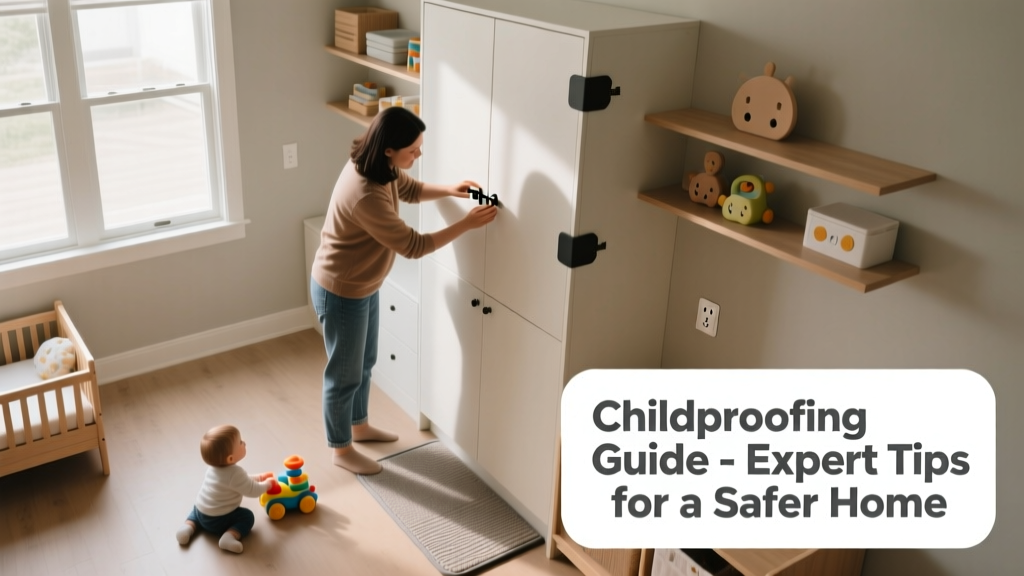
If your baby just rolled over—or you’re staring at a wobbly toddler who’s already opened three cabinets—you’re not behind. You’re right on time. Childproofing isn’t about perfection; it’s about layered, low-effort interventions that buy seconds when seconds count. According to the U.S. Consumer Product Safety Commission’s 2023 injury report, nearly 2.2 million children under 5 visited ERs for home-related injuries—and 43% involved furniture tip-overs or falls down stairs.
Secure Furniture & Anchors First
Furniture tip-overs cause more than 16,000 ER visits annually (CPSC, 2023). Anchor every dresser, bookshelf, TV stand, and entertainment center—even if it looks ‘sturdy.’ Use tested hardware like heavy-duty toggle bolts, not drywall anchors alone. Test stability yourself: kneel and pull outward at the top edge with moderate force. If it tilts more than 15 degrees, re-anchor.
- Install anchors within 24 hours of noticing your child pulling up or cruising
- Use two anchors per piece—never one—and attach to wall studs, not just drywall
- Keep dressers fully closed and avoid placing toys or remotes on top (they’re bait)
Stairways Demand Dual Protection
Stairs are the #2 location for infant/toddler falls (after beds). Pressure-mounted gates fail under sustained pressure or uneven surfaces—especially at the top of stairs. Only use hardware-mounted gates certified to ASTM F1004-22 standards at stair tops. At the bottom? A pressure gate is acceptable *if* it’s self-closing, has no toe holds, and fits snugly in a standard 29–36″ opening.
Also: remove loose rugs, fix squeaky or uneven steps, and install nightlights on every landing. The National Safety Council reports nighttime falls increase 37% in homes without step lighting.
“Gates aren’t babysitters—they’re speed bumps. Your child will test them daily. If they can shimmy, lift, or lean it sideways, it’s not safe.” — Sarah Lin, CPST-certified child safety technician, SafeHome Training Collective (2024)
Kitchen & Dining Room Hot Zones
The kitchen isn’t off-limits—it’s high-risk. Install cabinet locks on *every* lower cabinet, including pantries and appliance garages. Use magnetic or dual-key locks—not just knob covers—since determined toddlers learn to twist covers off in under 90 seconds (tested in 2023 SafeKids usability trial).
- Move cleaning supplies to upper cabinets *above* 5 feet—and use child-resistant latches even there
- Turn pot handles inward on stovetops; use back burners whenever possible
- Unplug and coil cords from blenders, kettles, and coffee makers when not in use
Quick Reference: What to Install & When
| Age Range | Top 3 Actions | Deadline |
|---|---|---|
| 4–6 months | Anchor all furniture; install stair gates; cover outlets | Before first roll |
| 7–9 months | Add cabinet locks; secure window cords; lock laundry pods | Before first crawl |
| 10–15 months | Install door knob covers on closets/bathrooms; add corner guards on sharp edges; check blind cord length (< 6″ dangling) | Before first walk |
| 16–24 months | Add toilet lid locks; switch to non-toxic cleaners; install sliding door locks | Before climbing begins |
Common Mistakes That Backfire
Many parents install gear too late—or too loosely. Others over-rely on temporary fixes. Here’s what consistently fails:
- Using only knob covers: Toddlers master these by 11 months. Pair with cabinet locks.
- Leaving gates propped open: Even 3 seconds of ‘just quick’ leaves gaps. Hardware gates must latch automatically.
- Ignoring window safety: Cords longer than 6″ caused 122 strangulation deaths (CPSC, 2022). Use cordless blinds or tension devices.
- Forgetting laundry pods: One pod equals 3+ teaspoons of concentrated detergent. Store in original container, locked, *above* 5 feet.
How high should outlet covers be installed?
Outlet covers aren’t optional—they’re required for every accessible outlet below 36 inches from the floor. But height alone isn’t enough. Use sliding or rotating covers (not simple caps), and test monthly: if a paperclip can still access the slot, replace it. The U.S. EPA estimates 14% of household electrical injuries in kids under 3 involve uncovered or poorly secured outlets.
Do I need to childproof the garage?
Yes—if your child can reach it. Store tools, pesticides, and gasoline *outside* the house if possible. If not, use a locked cabinet *with a separate padlock*, not just a latch. Keep car keys out of reach—even fobs can unlock doors remotely. Garage door sensors must be calibrated so the door reverses on contact with a 2-inch object (per UL 325-2022).
Are baby monitors enough supervision?
No. Monitors detect sound or motion—but not position, entanglement, or silent choking. They’re situational aids, not substitutes for line-of-sight or proximity supervision during high-risk activities (bathing, eating, sleeping on elevated surfaces). The American Academy of Pediatrics recommends direct supervision for all infants under 12 months during sleep transitions.
What about secondhand furniture?
Proceed with caution. Pre-2014 dressers may lack anchor points or meet outdated stability standards. Check the CPSC’s Recall List before bringing in any used furniture—even if it looks solid. IKEA’s 2016 recall of MALM dressers affected over 29 million units globally due to tip-over risk.
Can I skip childproofing if my child seems ‘careful’?
No. Developmental leaps happen overnight. A child who hasn’t climbed yet may scale a bookshelf after one nap. Curiosity + mobility = unpredictability. As pediatrician Dr. Lena Torres notes in Pediatrics in Practice (2023): “The safest home isn’t the one with the quietest child—it’s the one with the fewest unsecured hazards.”
When can I start removing childproofing?
Gradually—starting around age 4, but only after consistent demonstration of responsibility (e.g., closing drawers without reminders, asking before touching stove knobs). Remove one item per week and observe. Keep anchors on heavy furniture permanently—tip-overs remain a top cause of injury through age 8.
Childproofing isn’t about turning your home into a fortress. It’s about adjusting the environment so your child’s natural curiosity doesn’t collide with preventable danger. Start with anchors, gates, and locks—not someday, but today. Because the moment your child stands, the clock starts ticking. And the best protection isn’t perfect gear—it’s consistency, observation, and knowing which fixes actually hold up under real-world toddler pressure.