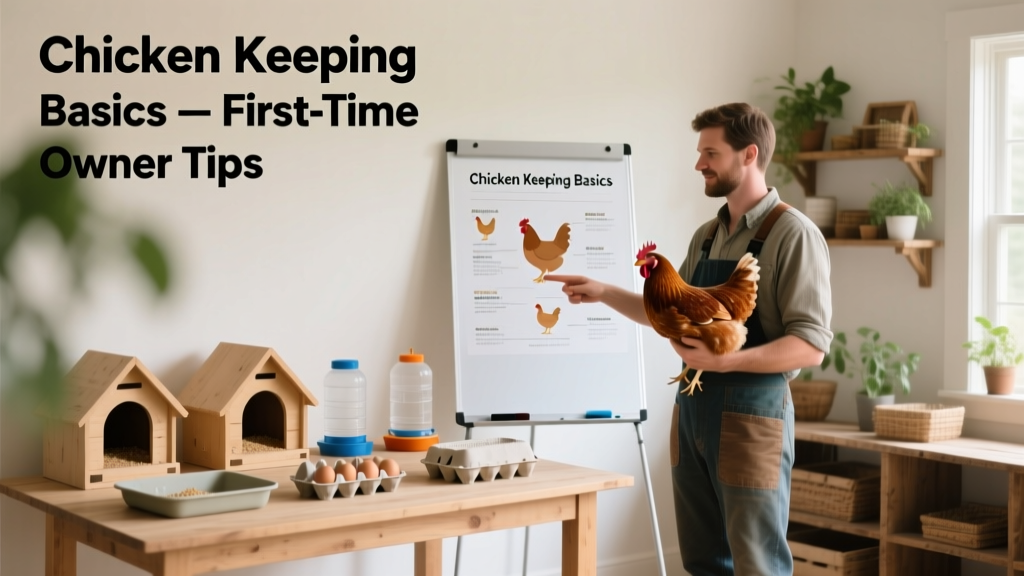
Starting with chickens feels like stepping into a gentle, feathered rhythm—until you realize how much hinges on the first 72 hours. I’ve watched new keepers lose birds to preventable stress, predators, or poor nutrition because no one told them about the 3-foot rule for roost spacing or that chicks need grit before day 5. This isn’t theory—it’s what worked (and what didn’t) across three coops and 42 hens over eight years.
Coop Design That Actually Works
A good coop isn’t about square footage—it’s about airflow, security, and ease of cleaning. The U.S. Department of Agriculture’s Poultry Housing Handbook (2022) recommends at least 4 sq ft per bird inside the coop and 10 sq ft per bird in the run. But those numbers fail if ventilation sits only at roof level: ammonia buildup causes respiratory issues in under a week.
- Install adjustable vents along the upper walls—not just the roof—to create cross-breeze without drafts
- Use ½-inch hardware cloth (not chicken wire) buried 12 inches deep and angled outward to stop diggers
- Build roosts at varying heights (12”, 24”, 36”) so dominant hens don’t block access for shy ones
One neighbor lost six hens to raccoons after using zip-tied chicken wire—raccoons peeled it back like foil. Hardware cloth, secured with screws and washers, held up through two fox seasons.
Feeding & Nutrition Essentials
Chick starter (18–20% protein) is non-negotiable for chicks under 8 weeks—but switching too early to layer feed can cause kidney damage. And scratch grains? They’re treats, not meals: feeding more than 10% of daily intake dilutes calcium and triggers soft-shelled eggs.
According to the American Association of Avian Veterinarians’ 2023 flock health survey, 68% of egg quality complaints traced back to inconsistent calcium supplementation—not genetics or age.
“If your hens are eating oyster shell but still laying thin-shelled eggs, check their water temperature. Below 40°F, intake drops 30%—and calcium absorption plummets.” — Dr. Lena Cho, Avian Health Extension, UC Davis (2022)
- Offer free-choice oyster shell in a separate container starting at 16 weeks
- Keep feeders elevated 6 inches off the floor to reduce contamination and waste
- Rotate pasture access weekly to break parasite cycles—don’t let birds graze the same patch longer than 5 days
Daily & Weekly Routines
Your time investment peaks early but settles fast. Days 1–3 demand 15 minutes twice daily (check heat lamp safety, water temp, chick behavior). By week 3, it’s 8 minutes total: refill waterer, top feed, collect eggs, scan for droppings or lethargy.
Track this in a simple log—paper or app—and note patterns. One reader spotted mite infestation three days earlier than neighbors because she logged a 12% drop in morning egg count and slight feather-picking on the left shoulder.
| Task | Frequency | Time Required |
|---|---|---|
| Clean waterer & refill | Daily | 2 min |
| Collect eggs | Twice daily (AM/PM) | 3 min |
| Check for injuries or illness signs | Daily | 4 min |
| Deep-clean coop bedding | Weekly (or every 5–7 days) | 20–30 min |
| Inspect hardware cloth & door latches | Weekly | 7 min |
Common Mistakes New Keepers Make
Mistakes aren’t failures—they’re data points. These five show up in nearly every first-year flock:
- Buying chicks in February in Zone 5 without a brooder heater rated for sub-zero ambient temps
- Using cedar shavings as bedding (toxic phenols damage respiratory tracts—use pine or aspen instead)
- Introducing new birds directly into an established flock (quarantine for 30 days minimum)
- Assuming all breeds tolerate heat equally (Sicilian Buttercups collapse at 85°F; Orpingtons handle 95°F fine)
- Skipping footbath disinfection when entering the coop during wet spring months (spreads coccidia fast)
That last one cost me 11 pullets in 2021. A $12 footbath tray and diluted bleach solution now lives beside my coop gate year-round.
How many chickens should I start with?
Five is the sweet spot—not four (one may get picked on), not six (feed waste spikes, space tightens). Five gives social stability, enough eggs for a family of four, and room to replace a hen if needed. See our choosing chicken breeds guide for temperament match-ups.
Do I need a rooster for eggs?
No. Hens lay unfertilized eggs without a rooster—same size, taste, and shelf life. Roosters add noise, aggression risk, and local ordinance complications. Skip unless you plan to hatch chicks or preserve heritage lines.
What’s the safest way to introduce new chickens?
Use the ‘see-but-no-touch’ method: place newcomers in a wire crate inside the main run for 3–4 days. Then open the crate door at dusk so they enter the coop together overnight. Monitor closely for 72 hours—intervene only if blood draws.
How often should I clean the nesting boxes?
Spot-clean straw or hemp bedding every 2–3 days. Replace fully every 7–10 days—or immediately after a hen molts heavily or has diarrhea. Nesting box cleanliness directly correlates with eggshell cleanliness and salmonella risk (per FDA Poultry Safety Guidelines, 2023).
Can chickens stay outside in winter?
Yes—if they’re cold-hardy (e.g., Wyandottes, Rhode Island Reds) and have dry, draft-free shelter. Their feet won’t freeze if roosts are wide (2”+), covered in sand, and they can tuck toes under bodies. No heat lamp needed unless temps dip below -20°F—and then only with a ceramic bulb, not incandescent.
Why do my hens stop laying in fall?
It’s natural. Decreasing daylight triggers hormonal shifts. Most hens pause for 6–10 weeks during molt. Supplemental light (14–16 hrs/day) can maintain lay—but only if hens are healthy and fed properly. Don’t force it on stressed or underweight birds. For seasonal patterns, see our chicken egg production calendar.
Chickens reward consistency—not perfection. You’ll misjudge feed amounts, forget to lock the pop door once, and still wake to warm eggs and quiet clucks. What matters is showing up, watching closely, and adjusting faster than the weather changes. Start small, track what works, and trust your instincts more than any forum thread. Your first flock will teach you more than any book—and they’ll probably steal your socks, too.