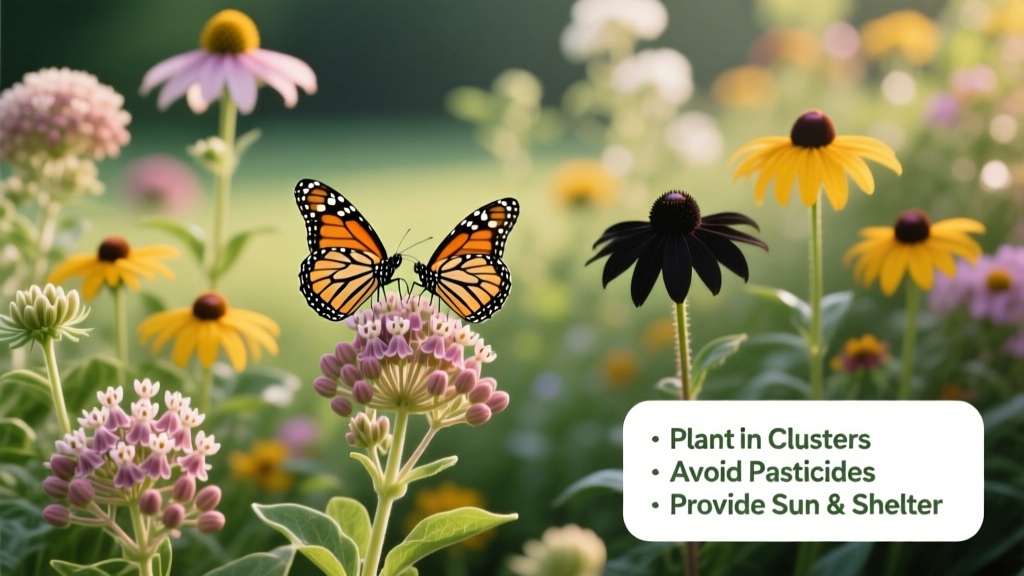
Watching monarchs sip from purple coneflowers or painted ladies flutter over parsley leaves isn’t magic—it’s design. A thriving butterfly garden starts with understanding what butterflies need at every life stage: nectar for adults, specific host plants for caterpillars, shelter from wind and predators, and pesticide-free soil. I’ve tracked butterfly counts in my 12' x 15' suburban plot for six seasons—and the biggest gains came not from adding more flowers, but from fixing three overlooked gaps.
Plant Native Nectar Sources in Succession
Butterflies don’t migrate on your schedule. They need bloom overlap—not just peak summer color. Prioritize native perennials that flower across months, not weeks. For example, in USDA Zones 5–8, pair early-blooming Phlox maculata (May–June), midseason Eutrochium fistulosum (Joe-Pye weed, July–September), and late-season Asclepias tuberosa (butterfly weed, June–October). Avoid double-flowered cultivars—they often produce little or no nectar.
- Zone 4–6: Wild bergamot (Monarda fistulosa), New England aster (Symphyotrichum novae-angliae)
- Zone 7–9: Purple coneflower (Echinacea purpurea), black-eyed Susan (Rudbeckia hirta)
- Zone 10–11: Lantana (Lantana camara), firebush (Hamelia patens)
Add Host Plants—Not Just Pretty Flowers
Adult butterflies lay eggs only on species their caterpillars can eat. Without host plants, you’ll see visiting adults—but no next-generation residents. Milkweed (Asclepias spp.) is non-negotiable for monarchs, but don’t stop there. Pipevine swallowtails need Aristolochia; black swallowtails require parsley, dill, or fennel; Gulf fritillaries thrive on passionflower (Passiflora incarnata).
According to the Xerces Society’s 2022 Native Plant Guide, gardens with ≥3 host plant species support 3.2× more butterfly species than those with only nectar plants.
"Caterpillars are picky eaters—monarch larvae won’t touch zinnias, no matter how many adults visit. If you want eggs, you must grow their food." — Dr. Karen Oberhauser, Monarch Joint Venture, 2021
Create Microclimates for Rest and Warmth
Butterflies are cold-blooded. They need sun-warmed surfaces to raise body temperature before flight. Place flat stones (slate or flagstone) in full morning sun, and position shrubs like Spirea japonica or Viburnum dentatum to buffer afternoon winds. Add a shallow puddling area: fill a terra-cotta saucer with sand, bury it level with soil, and keep it damp—males gather here for sodium and minerals.
Why puddling matters
Males extract dissolved salts and amino acids from moist soil—a behavior called “puddling.” It fuels mating flights and increases reproductive success. Skip the birdbath: butterflies avoid deep water and slippery surfaces.
Shelter beyond shrubs
Leave leaf litter under shrubs through early spring—overwintering anglewing and comma butterflies hide there. Delay spring cleanup until soil hits 50°F (10°C) for two consecutive weeks.
Quick Reference Checklist
| Element | Minimum Quantity | Example Species |
|---|---|---|
| Nectar plants (bloom overlap) | 5+ species | Echinacea, Asclepias, Buddleja davidii (non-invasive cultivar) |
| Host plants | 3+ species | Asclepias syriaca, Passiflora incarnata, Foeniculum vulgare |
| Shelter structures | 2+ types | Deciduous shrubs + flat sunning stones |
| Puddling site | 1 active zone | Sand-filled saucer, kept damp May–Sept |
Common Mistakes That Kill Caterpillars
Even well-intentioned gardeners accidentally sabotage their efforts. Here’s what trips people up:
- Using systemic neonicotinoid-treated nursery stock—these insecticides persist in nectar and pollen for months. A 2023 Cornell study found neonics reduced monarch larval survival by 62% even when applied to unrelated plants nearby.
- Cleaning up too early—removing stems and leaf litter before mid-May destroys overwintering eggs and pupae of species like mourning cloaks and commas.
- Planting invasive species—butterfly bush (Buddleja davidii) escapes in 22 states and outcompetes natives. Choose sterile cultivars like 'Blue Chip' or native alternatives like buttonbush (Cephalanthus occidentalis).
How much space do I need?
You need as little as 4' x 6'. Focus on density and diversity—not square footage. A single 3' patch of milkweed + coneflower + dill + stone + puddler attracts 12+ species in most Midwest and Mid-Atlantic yards. See our small-space pollinator gardens guide for layout sketches.
Do I need to water daily?
No—but newly planted natives need consistent moisture for first 6 weeks. After establishment, most require zero supplemental water except during droughts exceeding 3 weeks. Overwatering encourages fungal disease in milkweed and reduces nectar concentration in coneflowers.
Can I use compost instead of fertilizer?
Yes—and you should. Butterflies thrive in low-to-moderate fertility soils. High-nitrogen fertilizers promote lush foliage at the expense of flowers and nectar. Top-dress with ½" of screened compost each spring, then mulch with shredded bark—not dyed wood chips.
What time of year should I plant?
Early fall (mid-September to first frost) is ideal for perennials in Zones 4–8. Roots establish while tops go dormant, leading to earlier blooms next spring. Spring planting works, but delay sowing milkweed seeds until soil hits 65°F—you’ll get stronger germination.
Are there deer-resistant options?
Absolutely. Try purple coneflower, blazing star (Liatris spicata), goldenrod (Solidago rugosa), and all milkweeds except Asclepias incarnata. Deer avoid the latex sap and bitter compounds in these plants.
How do I know if a plant is truly native?
Check your state’s native plant society database or use the USDA PLANTS Database (plants.usda.gov). Avoid cultivars labeled “selection” or “variety”—many lack the chemical cues caterpillars need. Stick to straight species names like Asclepias tuberosa, not ‘Hello Yellow’.
A butterfly garden isn’t about perfection—it’s about patience and pattern recognition. Watch where females hover, note which leaves show tiny white eggs, and resist the urge to “tidy” every chewed leaf. Those holes mean your garden is working. For deeper seasonal planning, explore our native perennial planting calendar—it maps bloom windows and soil prep by month.