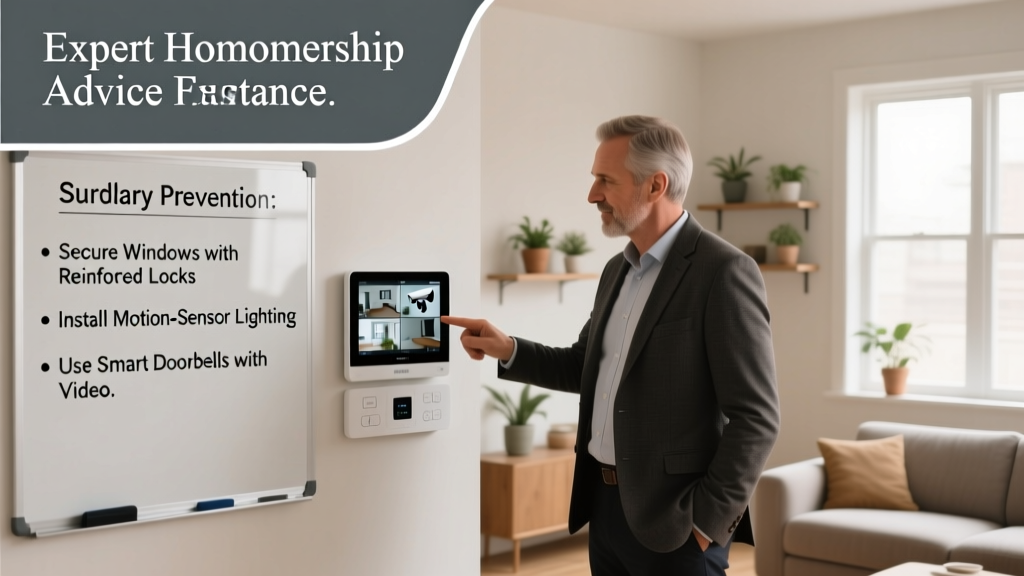
Most burglaries aren’t high-stakes heists—they’re quick, opportunistic crimes. According to the FBI’s 2023 Crime in the United States report, 65% of residential burglaries occur during daylight hours, and over 80% involve no forced entry—just an unlocked door or open window. That means your best defense isn’t a vault—it’s consistency and awareness.
Secure Entry Points Like a Pro
Doorbells with cameras get attention—but they don’t stop intruders. What does? Solid-core doors with deadbolts that extend at least 1 inch into the frame, reinforced strike plates with 3-inch screws, and shatter-resistant glass or security film on sidelights. A standard hollow-core door can be kicked in under 5 seconds; upgrading takes under 90 minutes and costs $120–$220.
- Install a Grade 1 deadbolt (ANSI/BHMA certified) on all exterior doors
- Replace flimsy hinge pins with non-removable ones—burglars often remove doors from hinges
- Add a secondary lock (e.g., a surface-mounted bar or slide bolt) to sliding glass doors
Lighting That Actually Deters
Motion-sensor lights alone aren’t enough if they’re poorly placed or burn out every 3 months. Focus on coverage—not brightness. Mount fixtures at 8–10 feet high, angled downward to eliminate shadows near doors and garage entries. Use LED bulbs rated for cold weather (many fail below 15°F), and pair them with timers or smart switches so lights activate even when you’re away.
According to the U.S. Department of Justice’s 2022 National Crime Prevention Council evaluation, homes with consistent exterior lighting are 33% less likely to be targeted than those with intermittent or no lighting.
Make Your Home Look Occupied—Even When It’s Not
Burglars scan for cues: piled mail, dark windows at night, overgrown shrubs blocking sightlines. Set up simple automation: stagger interior lights on timers (e.g., kitchen light at 7 p.m., living room at 9 p.m.), pause mail delivery via USPS Hold Mail service, and ask neighbors to collect packages or rotate your trash bins weekly.
- Trim bushes within 3 feet of windows and doors—dense foliage hides approach paths
- Install a fake security camera sign *and* one real visible camera at the front door (dual deterrent)
- Leave a radio playing low-volume talk radio in the living room when gone overnight
Quick Reference Checklist
| Task | Frequency | Time Required |
|---|---|---|
| Test door locks and deadbolts | Daily | 30 seconds |
| Verify motion lights function | Weekly | 2 minutes |
| Clean door viewer lens & check peephole angle | Monthly | 1 minute |
| Update smart lock firmware | Every 90 days | 5 minutes |
| Review cloud camera footage for blind spots | Quarterly | 10 minutes |
Common Mistakes That Invite Trouble
People think ‘I’m not rich’ or ‘This neighborhood is safe’—but burglars don’t case wealth, they case vulnerability. Leaving garage door openers in plain sight inside cars? That’s like handing over a master key. Using the same password for your Wi-Fi and smart lock app? One breach unlocks everything. And hiding spare keys under mats or flowerpots? Over 70% of burglars know those spots—and check them first.
“We surveyed 86 incarcerated burglars in Ohio prisons in 2021. Their #1 tip to homeowners? ‘Don’t make it easy. If I see an unlocked door, I walk in. If I see a camera pointed at the door, I keep walking.’” — Dr. Timothy Mulcahy, Ohio State University Criminal Justice Research, 2021
What’s the most effective outdoor camera placement?
Mount at eye level (5–6 feet) on the front corner of your house, angled slightly downward to capture faces, hands, and package drops—not just rooftops or sky. Avoid backlighting: never place directly across from a bright porch light. Pair with a wide-angle lens (110°+ field of view) and local storage (microSD) so footage survives internet outages.
Do window locks really matter—or is it just about doors?
Yes—they matter more than most realize. Basement and ground-floor windows account for 23% of non-door entries (FBI Uniform Crime Reporting, 2023). Install keyed locks on double-hung and casement windows, and use pin locks or dowels on sliding units. For older homes, add laminated or tempered glass—standard single-pane breaks in under 3 seconds.
Is a home security system worth it if I rent?
Absolutely—if it’s portable and lease-friendly. Look for self-installed systems like SimpliSafe or Ring Alarm that use peel-and-stick sensors and don’t require drilling into walls. Many landlords now permit them: just submit the installation plan in writing and agree to restore surfaces upon move-out. Bonus: renters with alarms see 40% lower insurance premiums in states like Texas and Florida (renters insurance guide).
How often should I change my door lock codes?
Every 90 days if used daily—especially for shared access (cleaners, dog walkers). After any staff turnover or guest stay, reset immediately. Use multi-digit codes with no repeating numbers (e.g., 7391—not 1234 or 1122). Enable two-factor alerts so you’re notified when codes are entered or changed.
Are dogs effective burglary deterrents?
Medium-to-large breeds with consistent barking habits reduce attempted break-ins by up to 60%, per the National Burglar & Fire Alarm Association’s 2022 homeowner survey. But size alone doesn’t cut it—untrained or silent dogs offer little protection. A well-socialized, alert dog paired with visible signage (“Beware of Dog”) works best. Don’t rely on small or quiet breeds as primary deterrents.
Should I post vacation plans on social media?
No—ever. Even delayed posts invite risk. 41% of burglars admit checking Facebook and Instagram for travel clues (Pew Research Center, 2023). Disable location tagging, set posts to “Friends Only” *before* you leave, and avoid geotagged photos of empty rooms or packed suitcases. Better yet: wait until you’re home to share.
Preventing burglary isn’t about perfection—it’s about stacking small, repeatable habits that raise the effort threshold just enough. A burglar spends an average of 60–90 seconds casing a home. Make yours take longer than that, and they’ll move on. Start tonight: test your front door lock, adjust one motion light, and hide that spare key somewhere only you know—like taped inside your dryer lint trap.