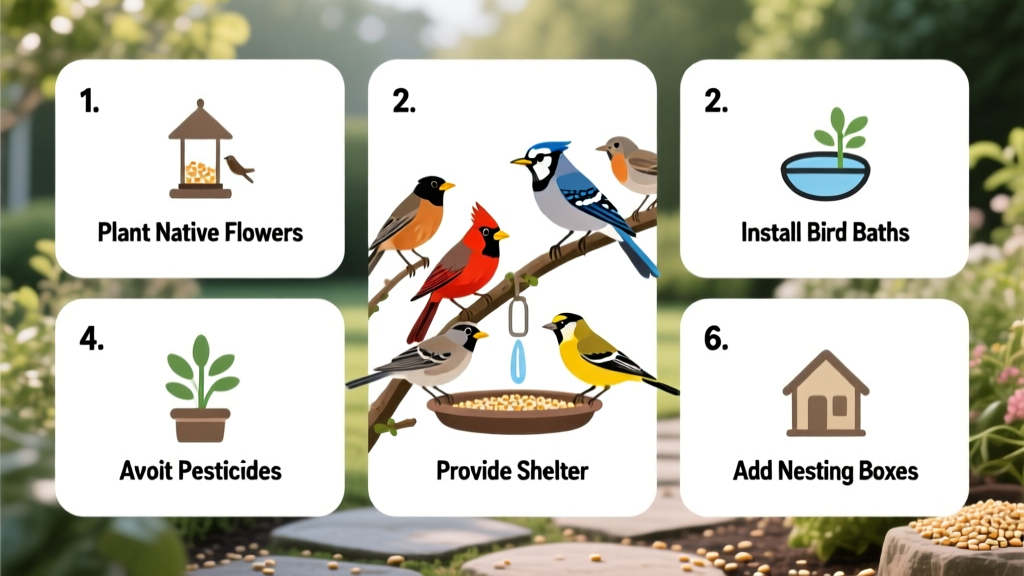
Most backyards lose up to 70% of their native bird visits within a decade of conventional landscaping—often without the homeowner realizing it. You don’t need acres of land or expensive gear to reverse that trend. A truly bird-friendly yard starts with intention, not aesthetics.
Plant Native Species—Not Just Any Shrubs
Native plants support 35x more caterpillar species than non-natives—critical food for nestlings (National Wildlife Federation, 2022). Focus on layered vegetation: groundcovers like wild ginger, mid-height shrubs such as serviceberry (Amelanchier), and canopy trees like oak or eastern red cedar.
- Oak trees host over 500 species of moth and butterfly larvae—the #1 protein source for baby birds
- Winterberry holly (Ilex verticillata) provides bright red berries through February, feeding cedar waxwings and robins when food is scarce
- Avoid invasive species like burning bush or Japanese barberry—they offer little nutritional value and crowd out native understory
Eliminate Pesticides—Even 'Natural' Ones
Spraying broad-spectrum insecticides doesn’t just kill pests—it collapses the food web birds depend on. Even so-called 'organic' options like spinosad or neem oil harm beneficial insects indiscriminately when applied during bloom times.
Instead, encourage natural pest control:
- Install nesting boxes for bluebirds and tree swallows—they eat 6,000+ insects per season
- Leave leaf litter under shrubs: 95% of terrestrial bird species feed fledglings insects found in decomposing leaves (Cornell Lab of Ornithology, 2021)
- Plant goldenrod and milkweed—not just for butterflies, but as aphid magnets that draw in insectivorous warblers and flycatchers
Add Safe Water—Year-Round and Shallow
Birds need water daily for drinking and preening—but shallow, moving water deters mosquitoes and prevents drowning. A birdbath deeper than 2 inches puts small birds at risk; stagnant water breeds disease.
"A birdbath with a gentle drip or solar fountain increases visitation by 400% compared to still water—especially among shy species like thrushes and vireos." — Dr. Margaret Rubega, UConn Avian Ecologist, 2020
Place baths on level ground, within 3 feet of shrub cover (so birds can flee predators), and clean weekly with vinegar—not bleach—to avoid harmful residue.
Quick Reference Checklist
| Action | Do | Avoid |
|---|---|---|
| Plants | At least 70% native species; include evergreens for winter shelter | Invasive exotics, sterile cultivars (e.g., 'Blue Ice' juniper—no berries) |
| Water | Shallow basin (1–2" deep) with rough surface; refreshed every 2–3 days | Deep fountains, concrete ponds without sloped edges |
| Windows | Apply ABC BirdTape or feather-safe decals spaced ≤2" apart | Single hawk silhouette or unbroken UV-reflective film |
| Cats | Keep indoors or use Birdsbesafe collar covers (proven 47% reduction in kills) | Unsupervised outdoor time—even with bells |
Common Mistakes That Backfire
Well-meaning efforts often miss the mark. Here’s what undermines your work:
- Over-pruning in late summer: Removing seed heads from coneflowers or goldenrod eliminates winter food for finches and sparrows
- Using mulch volcanoes: Piling mulch against tree trunks invites voles—which chew bark and destabilize habitat
- Installing ‘bird hotels’: Most are too large, poorly ventilated, and harbor mites—stick to single-species boxes with proper ventilation and clean-out ports
How far should I place feeders from windows?
Either within 3 feet (so birds can’t build fatal speed) or beyond 30 feet (so they see the glass as a barrier). The window collision prevention guide explains why intermediate distances are deadliest.
Do I need a feeder to help birds?
No—and in spring/summer, feeders can distract parents from feeding young natural foods. Focus first on native plants and water. Use feeders only in late fall through early spring, and always clean them weekly with 10% vinegar solution.
What’s the best native grass for ground-feeding birds?
Little bluestem (Schizachyrium scoparium)—its dense clumping habit shelters sparrows and juncos, while its seeds persist into winter. Avoid Kentucky bluegrass: it forms impenetrable sod that blocks access to soil-dwelling insects.
Can I use my compost pile to attract birds?
Yes—if managed right. Keep it covered with wire mesh (to deter raccoons) and turn it weekly. Robins and towhees scratch through warm, active piles for beetles and grubs. Just avoid meat, dairy, or oily foods that attract rats.
Are solar lights safe for night-migrating birds?
Only if fully shielded and pointed downward. Unshielded amber LEDs (2700K color temp) reduce disorientation by 83% versus white/blue lights (Fatal Light Awareness Program, 2023). Pair with motion sensors to limit runtime.
How do I know if my yard is actually helping local species?
Track visits using eBird’s backyard bird count template. Note which species nest—not just visit. If you see chickadees carrying caterpillars or cardinals building nests in your hawthorn, you’ve built functional habitat—not just decoration.
Building a bird-friendly yard isn’t about perfection. It’s about replacing one non-native shrub with serviceberry this spring. Leaving last year’s aster stalks standing through March. Turning off the patio light an hour earlier. Small, consistent actions compound—within two seasons, you’ll hear more dawn chorus, spot fledglings hopping across the lawn, and recognize returning pairs by their calls. That’s how habitat grows.