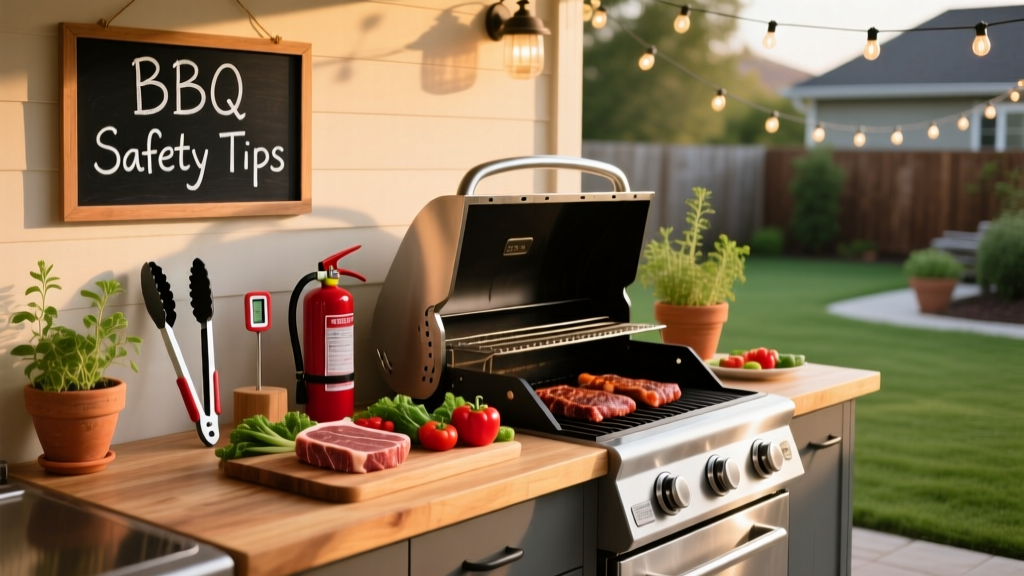
Every summer, an average of 10,600 home fires start from grills — 90% outdoors, and over half involve gas-fueled units (NFPA, 2023). Whether you’re lighting a charcoal chimney or checking propane tank seals, small oversights turn joyful cookouts into emergencies.
Set Up Your Grill in a Safe Zone
Grills belong on level, non-combustible surfaces — at least 10 feet from deck railings, siding, eaves, and overhanging branches. Never use a grill on a screened porch, balcony with combustible flooring, or inside a garage, even with the door open. Asphalt driveways? Fine. Wooden decks? Place a fire-resistant mat rated for 1,200°F underneath — not just a rubber doormat.
- Clear a 3-foot 'no-kid-no-pet' zone around the grill while in use
- Keep patio umbrellas fully retracted and away from heat plumes
- If using a built-in grill island, verify ventilation meets ICC-IRC Section R105.2 standards
Handle Fuel Like a Pro
Lighter fluid is the #1 cause of grill-related burns — mostly from re-igniting soaked coals or pouring fluid onto hot coals. Use a chimney starter instead: it lights evenly in 15–20 minutes and eliminates volatile liquids entirely. For propane, always check connections with soapy water before lighting: bubbles mean leaks. Tighten fittings by hand only — over-torquing cracks brass valves.
According to the U.S. Consumer Product Safety Commission’s 2022 injury data, 4,900 ER visits involved lighter fluid misuse — nearly all preventable with a chimney starter and strict 'no pour-on-hot-coals' rules.
"Never add fuel to a lit or warm grill — wait until coals are completely cold (12+ hours) or gas burners are fully off and cooled." — National Fire Protection Association, Grill Safety Fact Sheet 2023
Propane Tank Storage
Store tanks upright, outdoors, and shaded — never in garages, trunks, or basements. A full 20-lb tank holds ~4.7 gallons of liquid propane; if leaked indoors, it pools near floors and can ignite from a water heater pilot light.
Charcoal Disposal Protocol
Let coals cool for at least 48 hours in a metal bucket with lid — don’t douse with water (creates steam burns and warps grates). Once cold, dispose in non-combustible trash only. Ashes retain heat longer than most people expect.
Prevent Cross-Contamination & Undercooking
Raw meat juices carry E. coli and salmonella — and they cling to tongs, cutting boards, and countertops. Use color-coded tools: red for raw beef/pork, blue for seafood, green for veggies. Never place cooked burgers back on the same plate that held raw ones. Invest in a probe thermometer: burgers need 160°F internal temp, chicken breasts 165°F, and steaks 145°F (with 3-minute rest).
- Clean grill grates pre-heat with a brass-bristle brush (check for loose bristles — they’re a choking hazard)
- Wash hands for 20 seconds with soap and warm water after handling raw meat — no exceptions
- Marinate meats in the fridge, never on the counter — and discard used marinade unless boiled for 1 minute first
Quick Reference Safety Checklist
| Action | Frequency | Why It Matters |
|---|---|---|
| Check propane hose for cracks or brittleness | Before each use | Prevents invisible leaks that ignite explosively |
| Verify chimney starter is clean and unblocked | Weekly during peak season | Blocked air vents cause uneven burns and flare-ups |
| Test grill thermometer calibration in ice water (32°F) and boiling water (212°F) | Monthly | Uncalibrated probes lead to undercooked poultry |
| Inspect fire extinguisher pressure gauge (ABC-rated, 5-lb minimum) | Quarterly | Grill fires double flame height in under 30 seconds — you need immediate access |
Common Mistakes That Cause Most Incidents
People skip steps they assume are ‘obvious’ — until something goes wrong. The top four missteps we see on incident reports:
- Leaving the grill unattended for ‘just one minute’ — 63% of grill fires start when no one is watching (NFPA, 2023)
- Using gasoline or alcohol-based starters instead of approved lighter fluid or electric starters
- Placing the grill too close to vinyl siding — which can warp, melt, or ignite at 165°F
- Ignoring grease buildup: 1/4 inch of old grease under grates ignites at 392°F and spreads flame up the vent stack
Can I use my grill under a covered patio?
Only if it’s fully open-sided with a minimum 9-foot ceiling and no combustible materials within 3 feet horizontally. Enclosed or screened patios trap carbon monoxide and grease vapors — both deadly. Check your local fire code; many municipalities ban grilling under any roof structure.
How often should I clean the grease tray?
Empty it before every cookout. A full tray holds up to 2 cups of grease — enough to flash-fire if it hits 600°F. Scrape residue with a putty knife, then wipe with paper towels soaked in vinegar-water (1:1), not flammable solvents.
Is it safe to leave the propane tank attached when not in use?
Yes — but only if the valve is fully closed and the regulator remains connected. Disconnecting/reconnecting wears out the seal. Just shut the tank valve clockwise until tight, then turn off all burner knobs. This prevents slow leaks from vibration or temperature shifts.
What’s the safest way to extinguish a grease fire on the grill?
Close the lid and shut all vents — starving the fire of oxygen. Never use water (it vaporizes instantly and splatters burning grease). Keep a box of baking soda or a Class B fire extinguisher nearby. Salt works in a pinch, but you’ll need at least 2 cups poured slowly — not tossed.
Do electric grills have fewer safety risks?
They eliminate open flame and fuel storage hazards — but introduce electrical risks. Use only outdoor-rated GFCI outlets, never extension cords unless rated for 14 AWG and labeled “For Outdoor Use.” Keep cords elevated and away from grease drips. Electric grill surface temps still exceed 500°F — same burn risk as gas or charcoal.
Grilling safely isn’t about perfection — it’s about consistency with a few key habits. Swap the lighter fluid for a chimney starter. Wipe down the grease tray before lighting. Keep kids and pets outside the 3-foot zone. These aren’t ‘extra steps’ — they’re the baseline. For more on outdoor cooking prep, see our grill cleaning schedule and propane tank safety checklist. When your grill fires up without drama, that’s the sound of smart habits paying off.