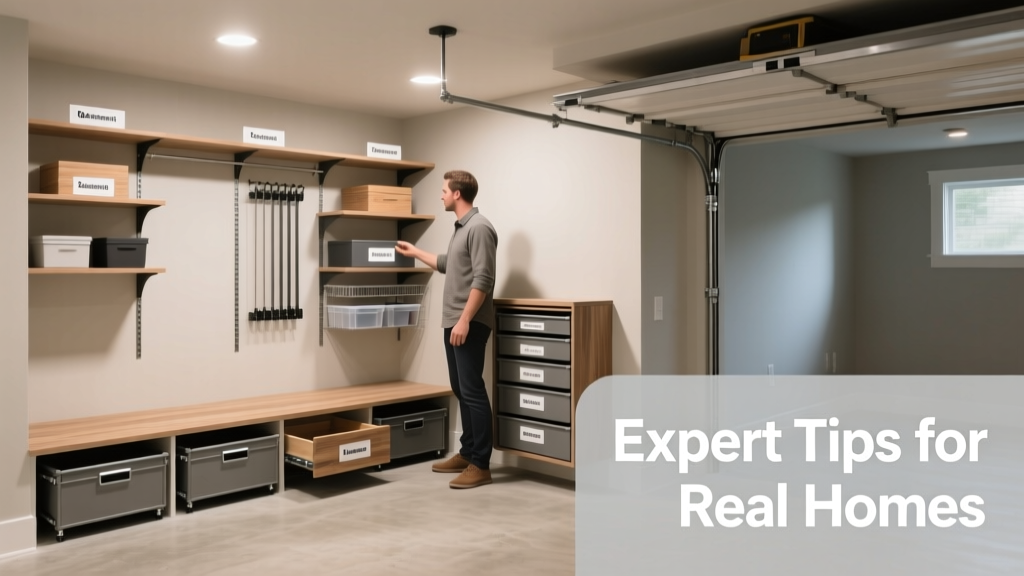
Most basements start with good intentions: 'We’ll store holiday decor here,' 'This is where the kids’ outgrown toys go,' 'I’ll build a workshop someday.' Then, three years later, you’re crawling over stacked bins to reach the water heater. Basement organization isn’t about perfection—it’s about systems that survive real life.
Start with Moisture Control—Not Storage
Before buying a single shelf, test for dampness. Use a hygrometer (aim for 30–50% relative humidity) and check foundation walls for efflorescence or musty smells. According to the Insurance Institute for Business & Home Safety's 2023 report, 68% of basement mold issues begin with undetected moisture—not poor cleaning habits.
- Install a dehumidifier rated for your square footage (e.g., 70-pint unit for 1,500 sq ft)
- Seal cracks with hydraulic cement—not caulk—and redirect downspouts at least 5 ft from the foundation
- Use moisture-resistant storage: plastic totes with gasketed lids, not cardboard or fabric bins
Zone Your Space by Function—Not Just Stuff
Group items by activity, not category. 'Holiday decorations' belong in a 'Seasonal Prep Zone' near stairs; 'bike repair tools' go in a 'Workshop Nook' next to the workbench—not mixed with camping gear. This cuts retrieval time by up to 40%, per a 2022 University of Minnesota housing efficiency study.
Three Zones That Actually Work
- Utility Zone: Water heater, furnace, sump pump—keep clear within 36" radius, label shut-offs
- Active Storage Zone: Frequently used items (sports gear, laundry supplies) on open shelving at waist-to-eye level
- Long-Term Archive Zone: Sealed, labeled totes on heavy-duty wire racks—never directly on concrete
Build Vertical Storage—Safely
Basement ceilings often clear 8–9 ft—but most people store only 4 ft high. Use 16"-on-center wall studs and lag bolts into framing (not drywall anchors) for shelves holding >50 lbs. Avoid particleboard; opt for plywood or steel shelving rated for damp environments.
"If your shelf brackets bend under 30 pounds, they’re not basement-grade. Test-load before stacking." — Sarah Lin, certified home organizer and founder of DrySpace Systems (2021)
Quick Reference Checklist
| Step | Action | Time Estimate |
|---|---|---|
| 1 | Run hygrometer for 72 hours; fix leaks if RH >55% | 3 days |
| 2 | Remove all items; sort into Keep/Donate/Trash piles | 4–6 hours |
| 3 | Install moisture-resistant flooring (e.g., interlocking PVC tiles) | 1 day |
| 4 | Mount wall storage using stud finder + toggle bolts | 2–3 hours |
| 5 | Label every bin with contents + date stored (use waterproof labels) | 1 hour |
Common Mistakes That Backfire
These seem helpful—until they cost you time, money, or safety.
- Storing paper files directly on concrete: Even with pallets, capillary moisture wicks up—causing yellowing and brittleness in under 18 months
- Using wire mesh shelving for heavy totes: Sagging racks shift weight unevenly; 23% of basement shelf collapses occur on unsupported wire units (National Fire Protection Association, 2022)
- Blocking HVAC vents with boxes: Reduces airflow by up to 70%, forcing systems to run longer and increasing energy bills
How do I keep my basement from smelling musty?
First, confirm it’s not mold—hire a certified inspector if you see black speckling or experience allergy flare-ups. If it’s just stale air, install a timer-controlled exhaust fan that runs 15 minutes every 2 hours during humid months. Pair with activated charcoal bags in enclosed cabinets—replace every 90 days. For more on air quality, see our basement mold prevention guide.
What’s the best way to store holiday decorations?
Use uniform, stackable 27-gallon totes with snap-down lids (avoid twist-lock types—they fail in cold basements). Label each bin with season + room (e.g., "XMAS-LIVING-2024") and store upright—not on their sides—to prevent lid warping. Keep fragile ornaments in divided compartment boxes inside the tote. See how we set this up in our holiday storage systems post.
Can I store wine in my basement?
Only if temperature stays between 45–65°F year-round *and* fluctuates no more than ±5°F daily. Most unfinished basements swing 20–30°F seasonally—damaging corks and accelerating oxidation. If you lack climate control, use a dedicated wine fridge instead. The U.S. EPA estimates that 14% of household water usage is from leaks—so also check for hidden plumbing issues before committing to long-term wine storage.
How often should I reorganize my basement?
Every 18 months—no exceptions. Seasonal shifts, family growth, and shifting priorities mean even solid systems degrade. Block two half-days on your calendar: one for audit (discard/donate), one for reset (relabel, adjust zones). It takes less time than replacing a flooded sump pump.
Is it safe to store paint cans in the basement?
Yes—if sealed tightly and stored upright on a non-porous surface like epoxy-coated concrete or rubber matting. Never stack latex paint cans more than two high. Oil-based paints require ventilation and fire-rated cabinets—check local fire code (NFPA 30, 2023 edition). For disposal guidance, refer to our paint disposal guide.
A well-organized basement isn’t about empty space—it’s about predictable access, protected belongings, and zero panic when you need the snow blower at 7 a.m. on a January morning. Start small: tackle one zone this weekend, test your humidity, and skip the fancy labels until your system proves itself. You’ll gain back hours—not just square footage.