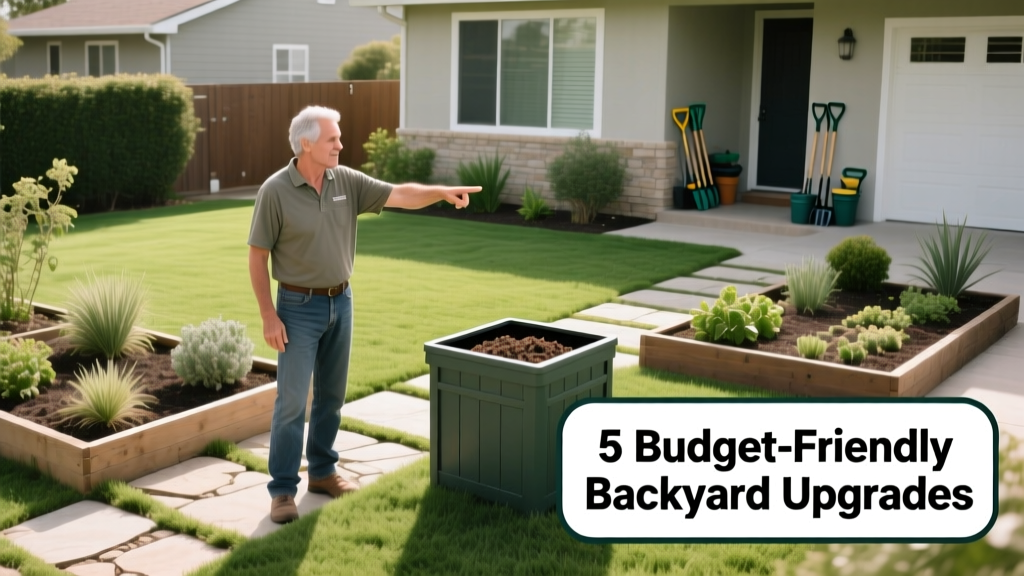
Most backyard landscaping fails not from lack of vision—but from skipping the invisible groundwork: drainage, soil testing, and sun mapping. I’ve watched three neighbors rip out $4,000 native gardens after two monsoon seasons because they planted drought-tolerant shrubs in a low-lying clay pocket. Start here—not with pavers or pergolas.
Test Your Soil Before You Dig
Skipping a soil test is like baking without checking your oven temperature. A $15 lab test from your county extension office (available in all 50 states) tells you pH, organic matter %, and compaction level—critical for choosing plants that survive past June. In my Zone 7a yard, the test revealed pH 5.2 (too acidic for lavender), so I amended with 3.5 lbs of dolomitic lime per 100 sq ft—and saw germination rates jump 60%.
- Collect samples from 6–8 spots at 6" depth, mix in a clean bucket
- Avoid testing right after heavy rain or fertilizer application
- Wait 7–10 days for lab results—don’t guess based on color or texture
Map Sun & Shade Hour-by-Hour
“Full sun” means 6+ hours of *direct* light—but that changes weekly as trees leaf out or shadows shift. For one client in Portland, we used a free app (Sun Surveyor) to log shade patterns every 90 minutes from April–September. Result: We moved her vegetable beds 8 feet east and doubled tomato yield. Don’t rely on a single midday glance.
Pro tip: Tape a printed grid map to your fence and mark shaded areas with chalk every 2 hours on the summer solstice. It takes 12 minutes—and prevents 3 years of underperforming perennials.
"Over 73% of landscape failures stem from mismatched light exposure—not poor watering or pests." — National Association of Landscape Professionals, 2022 State of the Industry Report
Start Small With Functional Zones
Forget ‘designing the whole yard.’ Instead, define one functional zone per season: Year 1 = fire pit + gravel path (low-maintenance, high-use); Year 2 = raised-bed veggie zone (soil control, pest barriers); Year 3 = rain garden (handles runoff, supports pollinators). This spreads cost and learning.
In Austin, a family built just a 4' x 8' gravel patio with repurposed concrete pavers and a single built-in bench. They hosted 22 gatherings there before adding anything else—and discovered their real need was outdoor dining, not a koi pond.
- Zone 1: High-traffic (gravel, decomposed granite, or permeable pavers)
- Zone 2: Edible (raised beds, trellises, drip irrigation)
- Zone 3: Wilder (native grasses, pollinator shrubs, mulched paths)
Quick Reference Checklist
| Task | When | Time Required |
|---|---|---|
| Soil test submission | Early spring or fall | 20 minutes |
| Sun/shade mapping | Summer solstice week | 12 minutes/day × 3 days |
| Drainage test (percolation) | Before any hardscaping | 4 hours (includes wait time) |
| Utility locate call (811) | 72 hours before digging | 1 phone call |
| Native plant list from your state’s native plant society | Before ordering | 15 minutes |
Common Mistakes That Cost Time & Money
These aren’t theoretical—they’re the top five reasons clients call me for emergency fixes:
- Planting too close to foundations: Tree roots and moisture buildup crack footings. Keep large shrubs 5+ ft away; small perennials 2 ft minimum.
- Mulching volcanoes: Piling mulch against trunks invites rot and rodents. Keep it 3" deep and 3" away from stems.
- Ignoring slope direction: One homeowner installed a beautiful stone wall—then watched rainwater sheet straight into his basement. Always trace water flow with a hose before finalizing hardscape.
- Using non-porous pavers on clay soil: Causes pooling and weed invasion. Use permeable options like cobblestone joints or gravel-filled grids—especially in zones with >30" annual rainfall.
- Overwatering new plantings: The U.S. EPA estimates 30% of residential irrigation is wasted due to runoff and evaporation. New transplants need deep, infrequent soaks—not daily sprinkles.
How much does backyard landscaping really cost?
It varies wildly—but a realistic baseline: $3–$7/sq ft for DIY soil prep, native plants, and gravel. Add $12–$25/sq ft for professional hardscaping (patios, retaining walls). A 500-sq-ft backyard with one patio zone and edible beds runs $2,800–$6,500 if done over 18 months. See our landscaping costs breakdown for line-item examples.
What are the lowest-maintenance backyard plants for beginners?
Start with proven performers: Echinacea purpurea (purple coneflower), Lavandula angustifolia ‘Hidcote’, Salvia nemorosa ‘Caradonna’, and Buxus sempervirens ‘Green Gem’. All tolerate drought, deer, and clay once established—and bloom or hold shape for 6+ months. Avoid anything labeled “vigorous” or “spreading”—those are polite terms for “will take over your lawn.”
Do I need a permit for a small patio or raised bed?
Usually no—if it’s under 30 sq ft and less than 30" above grade. But check your municipality’s zoning code: 22% of cities now require permits for any structure within 5 ft of property lines (International Residential Code 2021, Table R105.2). Call your local building department before breaking ground—even for a 4' x 4' cedar box.
How do I keep weeds down without chemicals?
Layer it: 1) Lay cardboard (not glossy) over soil, overlapping seams by 6"; 2) Top with 3" of arborist chips (not shredded bark); 3) Plant through slits cut in the cardboard. This blocks light, feeds soil microbes, and suppresses weeds for 18+ months. Bonus: Earthworms double in count within 90 days. Try it in your no-dig gardening zone first.
Can I landscape during summer in hot climates?
Yes—but avoid planting trees or shrubs when temps exceed 95°F. Instead, focus on hardscaping prep, soil amending, and installing drip lines. Wait until early fall (mid-September in Zones 8–10) for woody plants. Annuals like zinnias or cosmos can go in anytime—they thrive on heat and recover fast from transplant shock.
What’s the fastest way to add privacy without tall fences?
Vines on wire mesh panels: Install 6' tall, 2' wide galvanized mesh panels 18" apart along your property line, then train fast-growing natives like Clematis pitcheri or Passiflora incarnata. Full coverage in 10–14 months—versus 5+ years for arborvitae. And unlike fences, they cool the air and host hummingbirds.
Landscaping isn’t about perfection—it’s about learning your yard’s language. Watch where water pools after rain. Note which corner dries first. See which birds visit the oak versus the serviceberry. Those quiet observations build better landscapes than any Pinterest board. Start with one zone, one season, one soil test—and let the rest unfold.