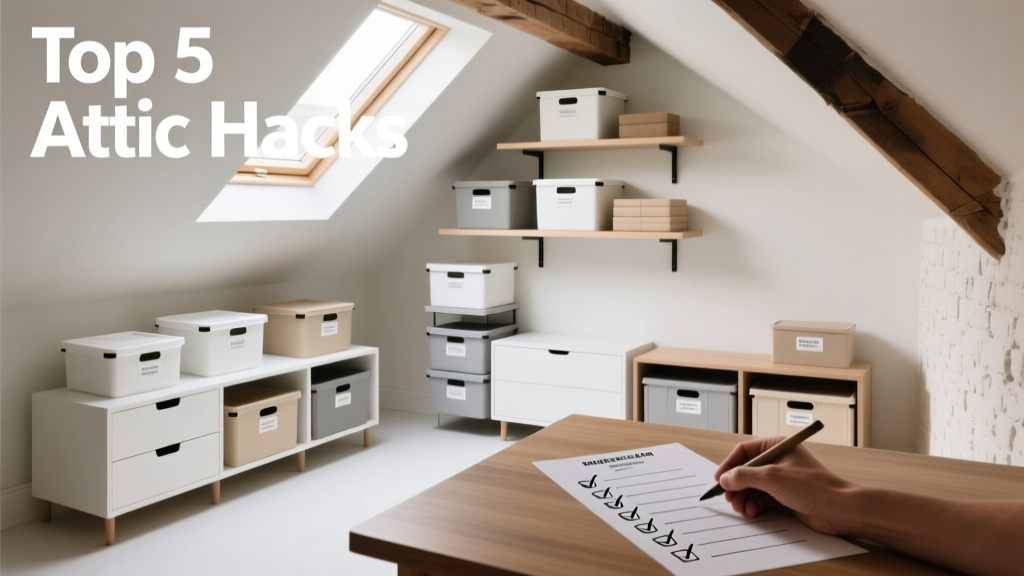
Most attics aren’t designed for storage—but that’s where 68% of homeowners stash seasonal gear, holiday decor, and decades of ‘maybe later’ boxes (National Association of Home Builders, 2022). Without a plan, those spaces become clutter traps that waste square footage, invite pests, and hide fire hazards.
Start With a Full Inventory & Sort Strategy
Don’t just haul boxes up the ladder. Pull everything down first—even if it’s temporary. Use three labeled bins: Keep, Donate/Sell, and Trash/Recycle. Be ruthless: if you haven’t used it in 24 months—or can’t name its purpose without opening the box—it’s not worth attic real estate.
- Label every bin with contents AND date stored (e.g., “Winter Sweaters – Dec 2023”)
- Photograph fragile or high-value items before boxing (for insurance and quick ID)
- Set a 90-minute timer for each sorting session—fatigue leads to poor decisions
Choose Climate-Safe, Stackable Containers
Plastic totes with gasketed lids outperform cardboard in temperature swings and humidity. Avoid clear bins unless they’re UV-resistant—the sun through roof vents yellows plastic and fades labels within 18 months. Stick to 27-gallon totes: they’re sturdy enough to stack four high but light enough (<25 lbs when full) for safe handling on pull-down stairs.
According to the Insurance Institute for Business & Home Safety's 2023 report, improperly stored paper documents in attics suffer 3x higher degradation rates than those in climate-controlled basements.
“Never store leather, vinyl records, or photo albums in an attic—even with desiccants. Surface temperatures routinely exceed 130°F in summer, permanently warping materials.” — Sarah Lin, Preservation Specialist, Library of Congress, 2021
What to Store (and What to Never Store)
- Safe to store: Plastic holiday decor, sealed metal tools, ceramic dishware (in padded totes), empty luggage
- Avoid entirely: Paint cans (vapors expand and leak), mattresses (traps dust mites), cardboard boxes (attracts silverfish), lithium batteries (fire risk above 60°C)
Maximize Vertical Space—Safely
Install 2×4 ledger boards along ceiling joists—not drywall or plaster—to anchor shelving. Use adjustable metal brackets rated for 150 lbs per shelf. Leave 12 inches between the top shelf and roof decking for airflow—critical for preventing condensation buildup.
| Shelf Material | Max Load | Notes |
|---|---|---|
| ¾" plywood | 85 lbs | Requires 16" on-center joist support |
| 1" pine board | 60 lbs | Warp-prone above 70°F; inspect quarterly |
| Heavy-duty steel rack | 220 lbs | Must be bolted to joists—not nails |
Quick Reference: Attic Storage Checklist
- ✅ Inspect roof ventilation before storing anything
- ✅ Seal all totes with silicone tape at seams (not duct tape)
- ✅ Install battery-powered LED motion lights along walkways
- ✅ Place silica gel packs inside every tote holding fabric or paper
- ✅ Mark floor joists with chalk lines before mounting shelves
Common Mistakes That Backfire
People assume ‘out of sight’ means ‘out of mind’—but attic neglect costs money. Overloading pull-down stairs causes spring failure (32% of service calls, according to Home Depot’s 2023 Pro Services data). Stacking bins directly on insulation compresses R-value by up to 40%, raising cooling bills.
- Using old suitcases as storage—they crack, spill, and attract moths
- Storing electronics without anti-static bags (humidity spikes fry circuitry)
- Blocking soffit vents with boxes (traps moisture, rots eaves)
How often should I check my attic storage?
Twice yearly—once before summer heat peaks and once after winter. Look for musty smells, warped totes, or rodent droppings near insulation edges. Replace silica gel every 6 months. For guidance on detecting early moisture issues, see our attic ventilation checklist.
Can I store furniture in the attic?
Only solid wood pieces with no veneer or particleboard—and only if the attic stays below 75°F year-round. Upholstered items absorb humidity and harbor dust mites. If you must store a dining table, disassemble it, wrap legs separately in breathable cotton covers, and elevate on 2×4 skids—not cardboard.
What’s the best way to label attic bins?
Use a laser printer and waterproof label stock—not inkjet or masking tape. Print two identical labels: one on the lid’s top surface, one on the front-facing side. Include weight (e.g., “18 lbs”) so others know lifting limits. For heirloom items, add a QR code linking to a Google Doc with photos and provenance notes—see our digital inventory system guide.
Do I need attic flooring to store safely?
Yes—if you’re placing anything heavier than 10 lbs per square foot. OSB or plywood laid across joists (not insulation!) supports weight and prevents accidental falls through drywall ceilings. Skip particleboard: it swells if damp. For low-budget builds, use interlocking rubber garage tiles—they’re non-slip and easy to remove.
How do I keep pests out of stored items?
Mice enter through gaps as small as ¼ inch. Seal all attic entry points with copper mesh + caulk—not steel wool alone (they chew through it). Store food-related items (camping gear, picnic sets) in metal lockboxes. Place ultrasonic repellents near eaves—but test first: some models interfere with smoke alarms.
Organizing your attic isn’t about perfection—it’s about making space work for you, not against you. A well-organized attic saves hours each season, protects valuables, and adds resale value. Start small: clear one corner this weekend, label five totes, and install one motion light. Then build from there. For related help, explore our garage organization tips—many principles transfer seamlessly.