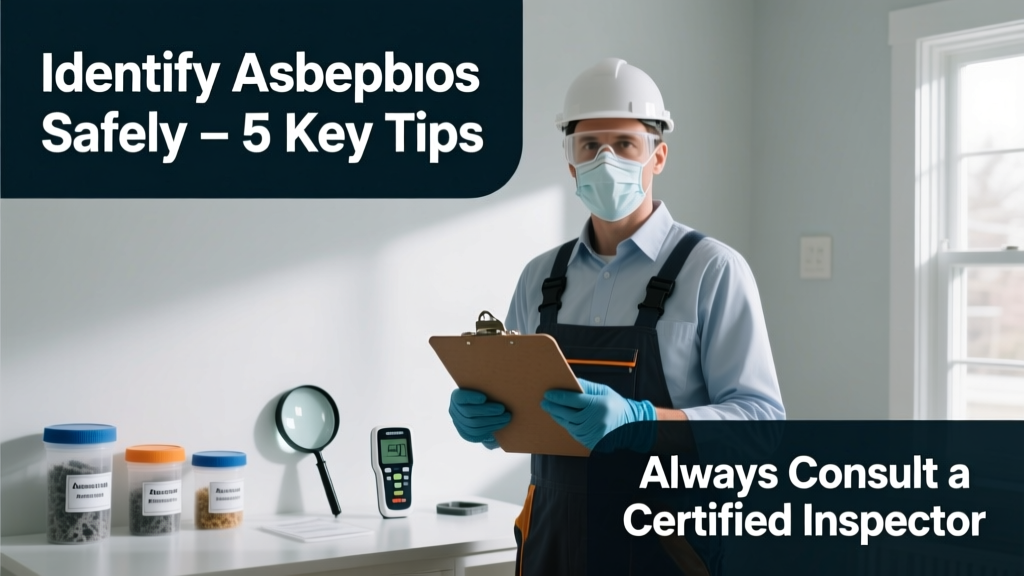
If your home was built before 1989 — especially between 1940 and 1975 — odds are it contains asbestos in at least one material. But here’s the hard truth: you cannot confirm asbestos by sight, smell, or touch. What you *can* do is recognize high-risk materials and locations, know when to pause, and avoid creating airborne fibers during inspections or renovations.
Know Where Asbestos Hides
Asbestos wasn’t used randomly. It clustered in specific applications where heat resistance, durability, or sound dampening mattered most. Focus your attention on these five zones:
- Popcorn ceilings installed before 1980 (especially in homes built 1955–1978)
- Vinyl floor tiles (9×9″ or 12×12″) and the black adhesive beneath them
- Insulation wrapped around pipes, ducts, and boilers — often gray-white, fibrous, and crumbling
- Cement board siding and shingles (look for dimpled or textured surfaces)
- Textured wall coatings like ‘sand paint’ or ‘acoustic plaster’ in basements and utility rooms
According to the U.S. EPA’s Asbestos Building Inspectors Manual (2022), over 67% of confirmed residential asbestos samples came from pipe insulation and vinyl flooring adhesives — not the more obvious popcorn ceilings.
Use the ‘No-Disturbance’ Visual Clue System
Instead of guessing composition, train your eyes to spot warning signs that a material *might* contain asbestos — and whether it’s currently hazardous:
- Age + texture match: Is it pre-1980 and looks fibrous, crumbly, or layered like cardboard?
- No visible damage: Intact material poses low risk — but don’t sand, drill, or scrape it.
- Water staining or mold growth: Dampness weakens binders; aged, wet insulation is far more likely to release fibers.
- Labeling or documentation: Check old renovation permits, builder specs, or HVAC service logs — some contractors noted asbestos use as early as the 1970s.
Never rely on color: asbestos-containing materials range from off-white and gray to brown, green, or even pinkish-beige depending on binders and age.
When to Call a Certified Inspector — Not a Contractor
A licensed asbestos inspector (not just a general contractor or abatement company) must collect samples using wet-wipe methods, chain-of-custody protocols, and TEM or PLM lab analysis. Skipping this step risks false negatives — and violates EPA and OSHA rules for homes undergoing renovation.
According to the National Institute for Occupational Safety and Health (NIOSH, 2021), 41% of ‘asbestos-free’ verbal assurances given to homeowners during pre-renovation walk-throughs were later disproven by lab testing.
“Visual identification is a red flag, not a verdict. If it looks like it *could* be asbestos and it’s pre-1980, treat it as if it is — until certified lab results say otherwise.” — Dr. Lena Cho, Industrial Hygienist, AIHA Asbestos Committee (2023)
Quick Reference: High-Risk Materials & Years
| Material | Years Commonly Used | Key Visual Cues |
|---|---|---|
| Pipe insulation | 1930–1975 | Fibrous, white-to-gray wrap; often covered in canvas or aluminum jacketing |
| Vinyl floor tiles & mastic | 1950–1983 | 9×9″ or 12×12″ tiles; thick black or dark gray adhesive that smells like tar when scraped |
| Attic & wall insulation | 1930–1950 | Loose-fill vermiculite (often labeled Zonolite®); granular, pebble-like, light-brown |
| Siding & roofing | 1920–1980 | Cementitious boards with fine dimples; brittle shingles that flake at edges |
Common Mistakes That Increase Risk
Well-intentioned homeowners often make decisions that raise exposure risk — sometimes unknowingly:
- Using a shop vacuum (even HEPA-filtered) to clean up suspected debris — static charge can aerosolize fibers
- Assuming “it’s only in one room” — asbestos dust travels through HVAC ducts and wall cavities
- Removing popcorn ceilings with dry scraping or sanding — creates massive airborne fiber loads
- Trusting a single negative test from one area — asbestos distribution is uneven; multiple samples per material type are required
If you’ve already disturbed material, seal off the area with plastic sheeting and duct tape, shut off HVAC, and contact a state-certified abatement firm immediately. Don’t attempt cleanup yourself — see our guide on asbestos abatement safety procedures.
Can I test for asbestos with a home kit?
No. Consumer test kits sold online lack chain-of-custody documentation, proper sampling tools, and accredited lab analysis. The American Lung Association advises against them, citing a 2020 study showing 62% of kit-based results failed reproducibility testing (American Journal of Industrial Medicine). Use only labs approved by the AIHA LAP program.
Does intact asbestos pose immediate danger?
Not usually — but it becomes hazardous when damaged, deteriorated, or disturbed. A 2023 report from the California Department of Public Health found that 89% of elevated indoor air asbestos levels occurred after DIY demolition work, not from aging undisturbed material.
What if my house has vermiculite insulation?
Assume it contains asbestos unless proven otherwise. Zonolite® (the most common brand) tested positive for tremolite asbestos in 70% of samples from Libby, Montana mines (EPA, 2022). Never enter an attic with loose-fill vermiculite without PPE and professional oversight.
Are newer homes completely safe?
Mostly — but not guaranteed. Asbestos is still legal in limited applications in the U.S., including some vehicle brakes, gaskets, and roof coatings. Homes built after 1990 rarely contain structural asbestos, but imported materials (e.g., certain tiles or insulation from overseas suppliers) may carry risk. Always verify material SDS sheets when renovating.
How much does professional testing cost?
Expect $250–$600 for a standard residential survey covering 3–5 suspect materials. Some firms offer same-day lab turnaround for an added fee. Compare quotes using the asbestos inspector checklist to avoid unlicensed operators.
Where can I find certified inspectors in my state?
Each state maintains a list through its environmental or occupational safety agency. Start with the EPA’s Accredited Asbestos Professional Locator, then verify credentials with your state’s asbestos licensing board — requirements vary widely. In Texas and Florida, for example, inspectors must complete 120 hours of training; in Oregon, it’s only 40.
Identifying asbestos isn’t about certainty — it’s about managing uncertainty safely. When in doubt, stop, seal the area, and call a certified professional. Your lungs don’t regenerate, but a careful, informed approach gives you control without compromise. For next steps, review our asbestos removal costs breakdown and early asbestos exposure symptoms to stay proactive.