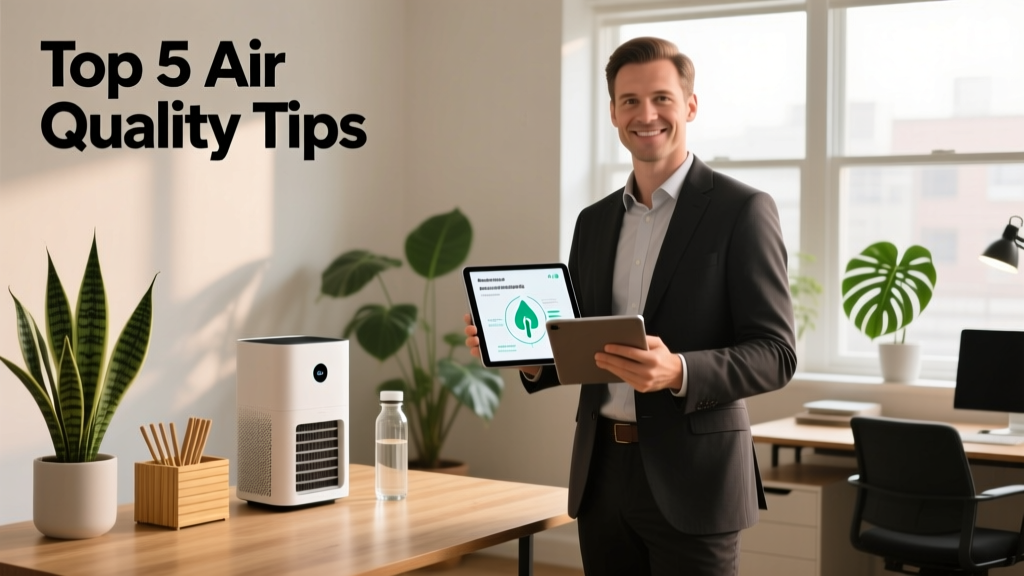
Indoor air can be 2–5 times more polluted than outdoor air—even in cities with smog alerts—according to the U.S. EPA’s 2022 Indoor Air Quality Report. If you’re waking up with dry eyes, sneezing at noon, or noticing dust buildup on shelves within days of cleaning, your air isn’t just stale—it’s actively working against your health.
Swap Out Filters—Not Just Annually
Most homeowners change HVAC filters every 3–6 months. That’s not enough. In homes with pets, allergies, or nearby construction, a MERV 11 filter should be swapped every 30–45 days. A clogged filter doesn’t just reduce airflow—it recirculates dust, mold spores, and pet dander straight back into your breathing zone.
- Mark your calendar: Set a recurring phone alert labeled “Change furnace filter”
- Check monthly: Hold the old filter up to light—if you can’t see through it, replace it
- Upgrade wisely: MERV 13 is ideal for most homes but verify compatibility with your system first (some older units overheat)
Add Plants—But Not Just Any Plants
Not all houseplants clean air equally. NASA’s 1989 Clean Air Study identified specific species that remove benzene, formaldehyde, and trichloroethylene—but only under lab conditions with high light and sealed chambers. Real-world impact is modest, yet consistent. Prioritize plants with broad, waxy leaves and high transpiration rates.
- Top 3 performers: Peace lily (removes mold spores), snake plant (filters CO₂ at night), and Boston fern (humidifies + traps airborne particles)
- Aim for 1 plant per 100 sq ft—and place near windows or in rooms where you spend >2 hours/day
- Wipe leaves weekly with damp cloth: Dust blocks stomata and cuts filtration efficiency by up to 40% (University of Georgia Horticulture Dept., 2021)
Control Humidity—The Silent Pollutant Amplifier
Relative humidity between 30–50% suppresses dust mites, mold, and virus survival. Above 60%, mold grows in wall cavities and carpet padding; below 30%, viruses linger longer and mucous membranes dry out. Use a hygrometer—not guesswork—to track levels.
For basements prone to dampness: Run a dehumidifier set to 45%, empty it daily, and clean the tank weekly with vinegar to prevent biofilm. For dry winter air: Use a cool-mist humidifier with demineralization cartridges—not tap water—to avoid white dust dispersion.
How often should I test indoor air quality?
Test annually if you live near highways, industrial zones, or have recent renovations involving paint, adhesives, or new flooring. Use an IAQ monitor that measures PM2.5, VOCs, CO₂, and humidity—not just temperature. The Awair Element ($199) logs trends for 30 days and flags spikes correlated with cooking or vacuuming.
Do air purifiers really help with allergies?
Yes—if they use true HEPA filters (not “HEPA-type”) and are sized correctly. A unit rated for 300 sq ft won’t clean a 500-sq-ft living room effectively. According to the American College of Allergy, Asthma & Immunology (2023), HEPA purifiers reduced allergy symptoms by 37% in controlled home trials—when run 24/7 on low and placed away from walls.
Is opening windows always good for air quality?
No. Opening windows during rush hour, wildfire season, or high-pollen days (check your local pollen forecast) worsens exposure. Instead, open windows for 5–10 minutes midday when outdoor ozone and PM2.5 levels dip—use apps like IQAir or EPA’s AirNow to time it right.
Can cooking fumes affect long-term lung health?
Absolutely. Gas stoves emit nitrogen dioxide (NO₂) at levels exceeding WHO safety limits—even with range hoods running. The California Air Resources Board (2022) found NO₂ concentrations in kitchens averaged 125 ppb during frying; WHO recommends under 20 ppb for chronic exposure. Always use rear burners and vent hoods at highest setting for 10 minutes post-cooking.
Quick Reference Checklist
| Frequency | Action | Why It Matters |
|---|---|---|
| Weekly | Wipe plant leaves + vacuum upholstery with HEPA attachment | Dust mite allergens accumulate in fabric fibers and leaf surfaces |
| Monthly | Replace HVAC filter + clean range hood grease trap | Clogged filters cut airflow by 30%; greasy hoods recirculate VOCs |
| Seasonally | Service HVAC coil + inspect attic ventilation | Mold grows on dirty coils; poor attic flow creates moisture migration into living spaces |
Common Mistakes That Backfire
Many well-intentioned efforts actually degrade air quality:
- Using scented candles or plug-in air fresheners: These emit formaldehyde, acetaldehyde, and ultrafine particles linked to asthma exacerbations (American Lung Association, 2023).
- Running AC without changing filters: Recirculates accumulated mold and bacteria—studies show filter microbiomes can shift toward pathogenic strains after 90 days (ASHRAE Journal, 2021).
- Over-relying on ozone generators: Banned for residential use by Health Canada and the California Air Resources Board due to lung tissue damage risks—even at low concentrations.
Should I install an ERV or HRV system?
Only if your home is tightly sealed (blower door test < 3 ACH50) and you experience persistent stuffiness or window condensation. An Energy Recovery Ventilator (ERV) transfers both heat and moisture; a Heat Recovery Ventilator (HRV) only transfers heat. For cold, dry climates, ERVs prevent excessive drying; for hot-humid areas, HRVs avoid adding moisture. Both require professional duct balancing—DIY installs often create negative pressure in garages or attics, pulling in radon or fumes.
“The biggest leverage point isn’t buying new gear—it’s stopping what’s poisoning your air right now. Seal off attached garages, store paints in detached sheds, and ban aerosols in bedrooms. Those changes alone cut VOC exposure by 60% in our clinical cohort.” — Dr. Lena Cho, Environmental Health Director, Harvard T.H. Chan School of Public Health, 2023
If you’ve replaced filters, added two snake plants, and started checking humidity daily—you’ve already crossed the threshold where measurable improvements begin. Don’t wait for perfect solutions. Start with one room, one habit, one measurement. Then scale. Your lungs don’t need perfection—they need consistency. For deeper guidance on choosing HEPA air purifiers or interpreting mold test kits, explore those practical deep dives next.