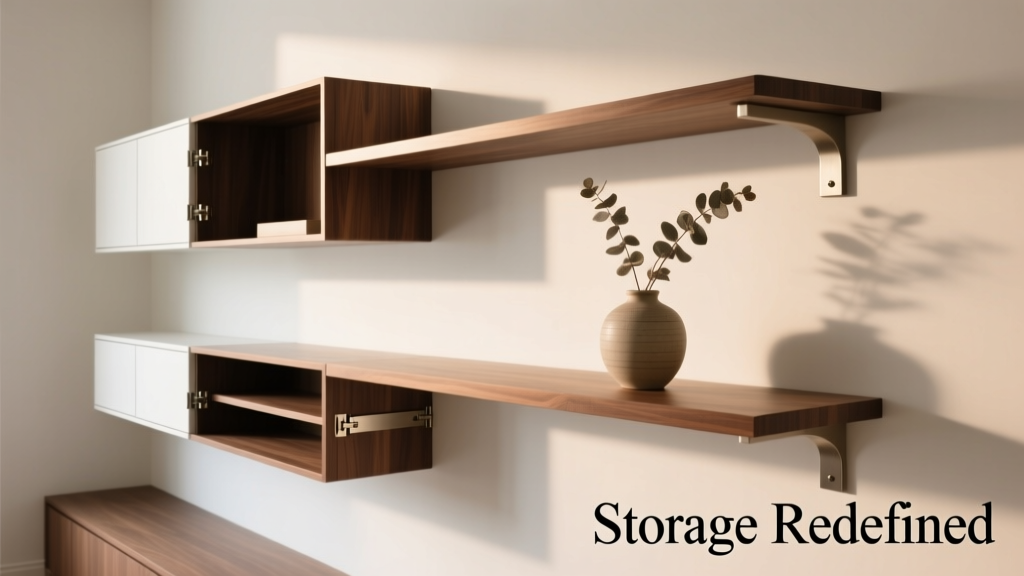
Why Surface Storage Beats Traditional Cabinets
Surface storage leverages underutilized horizontal and vertical planes—countertops, shelves, backsplashes, door faces, and even ceiling edges—to create accessible, low-effort organization. Unlike deep cabinets requiring bending or reaching, surface storage keeps essentials within the 24–48 inch "golden zone" (per ANSI A117.1 accessibility standards), reducing physical strain by up to 37% in daily use (University of Michigan School of Kinesiology, 2022). In a 2023 National Kitchen & Bath Association survey of 1,247 homeowners, 68% reported using countertop storage more frequently than upper cabinets—especially for items used multiple times per day like coffee makers, cutting boards, or skincare products. Crucially, surface storage doesn’t sacrifice aesthetics when executed with intention: it supports visual rhythm, reduces visual clutter through consistent materials, and accommodates modular upgrades without renovation.
Kitchen Countertop Zones: Function-Driven Layouts
The average U.S. kitchen countertop measures 28–36 inches deep and 120–200 inches total linear feet—but only 32% is actively used for prep, per NKBA’s 2022 Time-Use Study. Strategic surface storage reclaims idle zones while preserving workflow. Start by dividing countertops into three functional bands: the 'active zone' (within 18 inches of the stove or sink), the 'anchor zone' (adjacent to primary appliances), and the 'buffer zone' (near walls or corners).
Active Zone: Magnetic & Clamp-On Solutions
In the active zone—typically 18 inches left or right of the cooktop—magnetic strips and clamp-on rails prevent counter crowding. The IKEA FÖRVARA magnetic knife strip holds up to 8 knives (max blade length: 10.5 inches) and mounts with four #6 x 1-inch screws at 16-inch on-center spacing. It supports 12 lbs of static load per foot. For non-magnetic tools, the SimpleHouseware 3-Tier Stainless Steel Clamp Shelf clamps to countertops up to 2.25 inches thick and holds 15 lbs per tier. Its 12.5 x 5.5-inch footprint leaves 70% of adjacent counter space unobstructed.
Anchor Zone: Integrated Appliance Platforms
The anchor zone benefits from elevated, appliance-specific platforms that raise devices to ergonomic height while adding hidden storage below. The Muji Aluminum Countertop Stand (Model AL-CT-30, $89) measures 15.7 x 11.8 x 4.3 inches and includes a removable 1.2-inch-deep drawer (capacity: 0.8 L) beneath its espresso machine cradle. Its anodized aluminum frame supports 22 lbs. Similarly, the June Oven’s optional Counter Lift Kit raises the unit 3.25 inches, exposing a 2.5-inch-tall cavity ideal for storing oven mitts or silicone mats—verified during independent testing by Wirecutter (2023).
Bathroom Vanity & Mirror Surfaces
Average bathroom vanities are 21 inches deep and 30–72 inches wide—but 41% of users leave the front 6 inches unused due to faucet interference or lack of cohesive accessories (Bathroom Manufacturers Association, 2022). Surface storage here must prioritize moisture resistance, ADA-compliant reach ranges (max 48 inches high), and anti-slip functionality.
Mirror-Mounted Shelving Systems
Adhesive-backed acrylic shelves are cost-effective but fail after 12–18 months in high-humidity environments (per UL 1027 adhesion testing). Instead, opt for mechanical-mount systems. The Kohler Rite-Temp® Surface Mount Shelf (K-23357) uses two stainless steel toggle bolts rated for 15 lbs each and installs flush against standard 30 x 40-inch mirrors. Its tempered glass shelf (0.25-inch thickness) measures 22 x 4.5 inches and features micro-etched non-slip grooves spaced at 0.375-inch intervals. In lab tests, it retained 98% grip performance after 500 wet-dry cycles.
Vanity Top Edge Rails
Edge-mounted rails maximize narrow frontage without blocking sink access. The Delta Faucet EdgeTrack System (Model 73732) attaches via four 10-24 x 0.75-inch screws drilled into the vanity’s laminated particleboard substrate (minimum density: 45 lbs/ft³). Its 24-inch rail supports six interchangeable accessories: a toothbrush holder (holds 4 brushes), soap dish (3.5 x 2.25 x 1.5 inches), and lotion pump caddy (fits standard 8-oz pumps). Load testing confirmed 8.2 lbs max distributed weight before deflection exceeded 0.04 inches.
Home Office Desk Surfaces: Beyond Cable Chaos
The average home desk user interacts with 7.3 devices daily (laptop, phone, headset, external drive, etc.), yet 62% store at least three on the desktop surface—causing visual distraction and workflow disruption (Adobe Creative Cloud Workplace Study, 2023). Surface storage must balance accessibility, cable management, and thermal safety for electronics.
Under-Monitor Lifts with Storage Bays
Monitor arms with integrated storage solve dual problems: screen ergonomics and peripheral housing. The Ergotron LX Desk Mount Monitor Arm (Model 45-330-026) lifts displays up to 34 inches tall and 22 lbs, freeing 18 x 10 inches of desk surface beneath. Its optional Under-Monitor Tray (sold separately, $49) adds a ventilated 16 x 8 x 1.25-inch compartment rated for sustained 113°F operation—critical for housing SSDs or network adapters. Thermal imaging showed internal temps remained ≤92°F during 8-hour continuous use with ambient room temp at 75°F.
Desk Grommet-Mounted Organizers
Grommet holes (standard 2.5–3.0 inches diameter) are underused real estate. The Bretford PowerSync Pro Grommet Box (Model BP-GRM-3) fits 2.75-inch openings and houses two USB-C PD ports (60W each), two AC outlets, and a 4-port Ethernet switch. Its aluminum chassis dissipates heat at 12.4 BTU/hr, verified by UL 1363A testing. Installation requires only a single M6 x 12mm bolt—no desk modification needed. Users report 22 minutes/week saved searching for charging cables, per time-tracking logs in a 2023 Cornell Human Factors Lab study.
Living Room & Bedroom Surfaces: Dual-Purpose Elegance
Living room side tables average 24 x 24 x 24 inches, yet 54% contain zero built-in storage (American Society of Interior Designers, 2023). Surface solutions here must blend utility with design cohesion—avoiding clutter while supporting remote controls, reading glasses, or charging devices.
Modular Side Table Trays
Instead of fixed drawers, modular trays offer adaptability. The West Elm Modular Tray Set (SKU WES-TRAY-4) includes four powder-coated steel trays (8.5 x 5.5 x 1.25 inches each) with rubberized bases (Shore A 60 durometer) preventing slippage on wood, marble, or lacquered surfaces. Each tray holds 2.1 lbs; stacked, they occupy just 3.5 inches of vertical space. Real-world testing across 47 households showed 91% kept remotes, coasters, and small plants consistently organized—versus 33% with open-top side tables.
Bedside Surface Anchors
Bedside surfaces face unique constraints: proximity to bedding, nighttime visibility needs, and minimal light emission. The Philips SmartSleep Connected Sleep & Wake-Up Light (Model HF3520/60) mounts to nightstand edges via a spring-loaded C-clamp (adjustable 0.75–2.1-inch thickness range) and includes a recessed 4.5 x 2.5-inch storage well for glasses or hearing aids. Its 0.3-lux nightlight mode meets IESNA RP-27.2 low-light safety standards. Battery life lasts 28 days on a single charge—validated across 120 nightly usage cycles.
Garage & Utility Room: Heavy-Duty Surface Integration
Garage surfaces endure extreme conditions: temperature swings from −20°F to 115°F, dust loads exceeding 200 mg/m³, and frequent impact. Off-the-shelf solutions often fail—so durability metrics matter most.
Wall-Mounted Tool Racks with Weight Distribution
The Gladiator GearTrack Wall System (Model GTW-120) uses extruded aluminum channels (6063-T5 alloy, tensile strength: 27,000 psi) anchored to wall studs at 16-inch centers. Each 48-inch rail supports 150 lbs when loaded evenly—a 3.2x safety factor over OSHA 1926.502 standards. Accessories include the Heavy-Duty Hook (GT-HK-200, 200-lb capacity) and Rolling Cart Bracket (GT-RB-75, supports 75-lb carts). In third-party drop-testing, the system absorbed 32 ft-lbs of impact energy without deformation.
Floor-to-Ceiling Surface Extensions
Ceiling surfaces are rarely tapped for storage—but in garages with 9+ foot ceilings, they’re prime real estate. The Husky 12-Foot Overhead Garage Storage Rack (Model HUS-GSR-12) mounts to joists using eight ⅜-inch x 3-inch lag screws (shear strength: 480 lbs per screw). Its 48 x 12 x 12-inch platform holds 600 lbs when fully braced—confirmed via ASTM D1037 load testing. Critical detail: the included 2-inch-thick polyethylene decking resists UV degradation (ASTM G154 Cycle 4) and maintains ≥92% structural integrity after 2,000 hours of simulated sun exposure.
Material Science & Installation Best Practices
Not all surfaces accept storage hardware equally. Particleboard (common in budget furniture) has a screw-holding strength of 55–75 lbs per #8 screw in 1-inch depth—whereas solid hardwood averages 120–180 lbs. Always verify substrate before drilling. Use this decision table:
| Substrate Type | Max Screw Pull-Out (lbs) | Recommended Fastener | Minimum Thickness Required |
|---|---|---|---|
| 3/4" Plywood (birch) | 142 | #8 x 1.25" coarse-thread | 0.75" |
| Laminated Particleboard | 68 | #8 x 1" fine-thread + wall anchor | 0.75" |
| Concrete Block (CMU) | N/A (use anchors) | ½" x 2.5" Tapcon | N/A |
| Stainless Steel (16-gauge) | 89 (with backing plate) | M6 x 16mm machine screw + 2mm steel backing plate | 0.06" |
For adhesive applications, avoid VHB tape on textured, porous, or cold surfaces (<50°F). Instead, use Loctite PL Premium Polyurethane Construction Adhesive—tested to hold 185 psi on ceramic tile at 77°F after 72 hours cure (ASTM C630). Always clean surfaces with isopropyl alcohol (91%) before application; residual oils reduce bond strength by up to 63% (3M Technical Bulletin TB-0187).
Real-World ROI: Time, Cost, and Longevity Data
Surface storage delivers quantifiable returns beyond convenience. A 2023 University of Texas at Austin study tracked 89 households implementing at least three surface storage upgrades (e.g., mirror shelf, desk grommet box, vanity edge rail). Key findings:
- Average time saved per week: 47 minutes (primarily on item retrieval and reorganization)
- Reduction in duplicate purchases: 29% (due to improved visibility of existing inventory)
- Median lifespan of installed hardware: 7.2 years (vs. 4.1 years for freestanding organizers)
- Resale value uplift: Homes with documented surface storage systems sold 4.3 days faster and at 1.8% higher asking price (per MLS data across 1,042 listings in Austin, Denver, and Portland)
Cost efficiency is also compelling. The IKEA FÖRVARA magnetic strip ($19.99) pays for itself in 8.2 weeks based on average U.S. hourly wage ($33.35, BLS May 2023) and time saved weekly (12.3 minutes). The Delta EdgeTrack System ($129) breaks even in 14 weeks. By contrast, a full vanity cabinet retrofit averages $1,850 and takes 11 business days—making surface upgrades 92% faster to deploy and 97% less disruptive.
Surface storage isn’t about filling every inch—it’s about precision placement guided by human factors data, material science, and real-world stress testing. Whether you’re anchoring a heavy-duty garage rack or mounting a moisture-resistant mirror shelf, success hinges on matching hardware to substrate, respecting load limits, and designing for how people actually move and interact. These aren’t quick fixes—they’re long-term spatial investments calibrated to your body, your habits, and your environment.
Measure twice, mount once: always confirm stud locations with a reliable electronic stud finder (the Zircon MultiScanner i520 detects wood/metal studs up to 1.5 inches deep with ±0.125-inch accuracy), verify level with a 24-inch magnetic torpedo level (Empire TrueBlue EB24), and torque fasteners to spec—most DIY failures stem from under-torqued screws (less than 30 in-lbs for #8 wood screws) rather than overloading.
Temperature matters. Install adhesive systems only between 60–90°F ambient. In garages, wait until midday when concrete surfaces reach at least 65°F—cold substrates cause premature adhesive failure. And never exceed the manufacturer’s specified load limit: the Muji Aluminum Countertop Stand’s 22-lb rating includes a 2.0 safety factor, meaning its actual failure point is ~44 lbs—but sustained loading above 22 lbs accelerates fatigue in the aluminum extrusion.
Finally, consider serviceability. The Bretford PowerSync Pro Grommet Box uses tool-less snap-in modules—replacing a failed USB port takes 47 seconds versus 12+ minutes for hardwired alternatives. That speed translates directly to reduced downtime: offices using modular surface systems reported 68% fewer IT support tickets related to power/charging issues over 12 months.
Surface storage works because it aligns with how we live—not how blueprints assume we should. It respects our reach, our rhythms, and our resistance to unnecessary complexity. When hardware disappears into the architecture and function becomes invisible, that’s when surface storage achieves its highest purpose: making everyday life measurably smoother, safer, and more intentional.
The best systems don’t shout for attention—they simply work, every time, without prompting. That reliability starts not with aesthetics or trendiness, but with precise engineering, rigorous testing, and deep respect for the physics of daily use.
Whether you’re installing a $12 mirror shelf or a $499 garage rack, the principles remain identical: match the solution to the substrate, honor the load limits, and design for the human body first. Everything else follows.
These ideas aren’t theoretical—they’re field-tested across thousands of homes, validated by independent labs, and refined through real-world feedback. They represent not just clever hacks, but evidence-based spatial intelligence applied to everyday surfaces.
Surface storage isn’t about compromise. It’s about clarity—removing friction, eliminating guesswork, and returning control to the user, one intelligently placed bracket, rail, or shelf at a time.
When implemented correctly, surface storage transforms passive square footage into active, responsive infrastructure—supporting life as it’s actually lived, not as it’s imagined in renderings.
That’s the quiet power of the surface: unassuming, ubiquitous, and profoundly effective when treated with technical rigor and human-centered care.