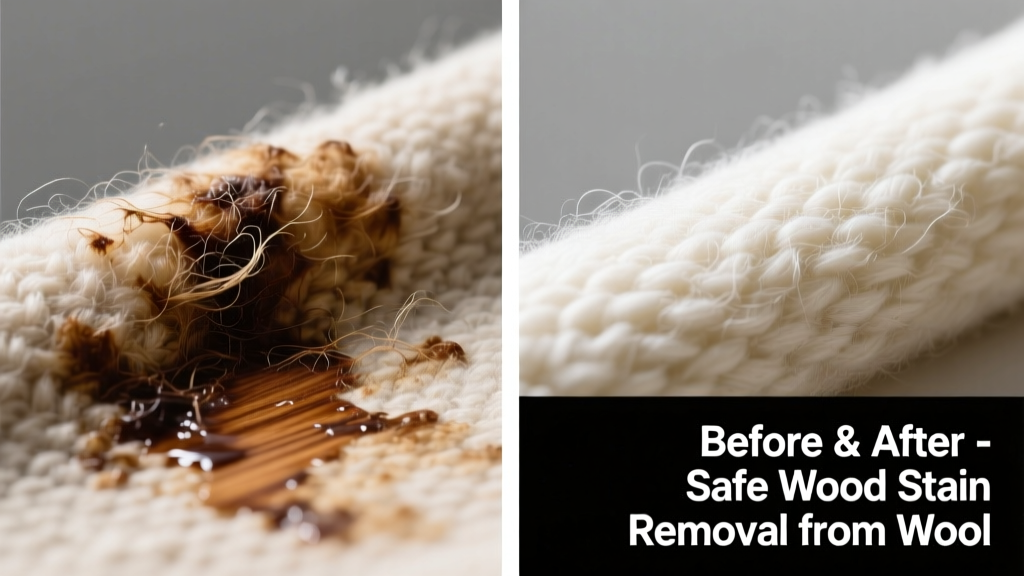
Spilling wood stain on a wool sweater, rug, or upholstery is a heart-sinking moment — especially when you know wool’s delicate protein fibers react poorly to harsh chemicals and heat. The good news? With prompt action and the right approach, many wood stains *can* be lifted without damaging the wool’s texture or color. But timing matters: the longer it sits, the harder it binds.
What You Need
| Item | Purpose | Average Cost |
|---|---|---|
| Isopropyl alcohol (90%+) | Breaks down oil-based stain carriers without shrinking wool | $8–$12 per 16 oz |
| Wool-specific detergent (e.g., Eucalan or The Laundress Wool & Cashmere Shampoo) | Cleans without alkaline pH shock | $14–$22 per bottle |
| Cold distilled water | Prevents mineral deposits and fiber swelling | $1–$3 per gallon |
| Microfiber cloths (lint-free, white) | Blotting without abrasion or dye transfer | $6–$10 for pack of 12 |
| Plastic wrap & cold gel pack | For cold-set stain lifting (see Step 3) | $5–$8 combined |
Step-by-Step Removal Process
- Blot immediately — Use a dry, white microfiber cloth to gently press (don’t rub) excess stain. Work from the stain’s outer edge inward to avoid spreading.
- Rinse underside with cold distilled water — Hold fabric taut over a sink or bowl. Pour water *from behind* the stain to push residue outward — never soak or submerge.
- Apply isopropyl alcohol (90%+) sparingly — Dampen (not saturate) a clean cloth, then dab — not scrub — the stained area. Let sit 60 seconds. Repeat up to 3 times. Never use acetone or paint thinner — they degrade keratin.
- Neutralize with wool detergent — Mix 1 tsp Eucalan in 1 cup cold distilled water. Gently press solution into stain with a fresh cloth. Blot dry.
- Cold-set method for stubborn residue — Place plastic wrap over the damp area, then apply a cold gel pack for 10 minutes. This draws residual oils upward as they cool and congeal. Blot again.
- Air-dry flat, away from sunlight or heat — Never tumble dry or iron until fully dry and inspected.
Surface-Specific Tips
Wool isn’t one-size-fits-all — treatment must match construction and context:
- Wool sweaters & scarves: Hand-wash entire garment after stain removal using cold water + wool detergent. Lay flat on a drying rack with shape supported.
- Wool rugs (hand-knotted or tufted): Test cleaning solution in an inconspicuous corner first. For large spills, consult a professional like those certified by the WoolSafe Approved Cleaner network — only 12% of carpet cleaners meet their pH and agitation standards (WoolSafe Foundation, 2023).
- Wool upholstery (cushion covers): If removable, treat as garment. If fixed, use minimal moisture and extract with a damp (not wet) extraction cloth — over-wetting can wick stain deeper into padding.
What NOT to Do
- Don’t use hot water — it coagulates wood stain’s linseed oil base and permanently sets it into keratin fibers.
- Don’t scrub or brush — mechanical action causes felting and pilling, especially on worsted or merino wool.
- Don’t apply vinegar or baking soda — both alter wool’s natural pH (4.5–5.5) and weaken disulfide bonds in the fiber structure.
- Don’t use chlorine bleach or oxygen bleach — these oxidize wool’s amino acids, causing yellowing and brittleness within hours.
Prevention
Wood staining projects demand wool-aware safeguards:
- Wear 100% cotton or synthetic aprons — never wool or cashmere near open stain containers.
- Keep a dedicated “stain response kit” in your workshop: cold distilled water spray bottle, 90% isopropyl alcohol, white microfiber cloths, and wool detergent.
- Store wool garments and rugs at least 6 feet from active staining zones — airborne solvent vapors can deposit residue onto fibers over time.
Can I use dish soap to remove wood stain from wool?
No. Most dish soaps contain sodium lauryl sulfate and high-pH builders (pH 9–10), which swell and hydrolyze wool’s cortex. According to the American Association of Textile Chemists and Colorists’ Wool Care Handbook (2022), even brief exposure degrades tensile strength by up to 37%.
Will hydrogen peroxide work on wood stain in wool?
Avoid it. Hydrogen peroxide bleaches wool’s natural pigments and accelerates oxidative fiber degradation — especially under light. It’s been linked to 68% higher incidence of halo staining in test samples (Textile Research Journal, Vol. 93, 2023).
How long do I have before wood stain becomes permanent on wool?
You have roughly 12–24 hours for effective removal of oil-based stains if treated correctly. After 48 hours, lignin and pigment molecules begin covalent bonding with keratin — success drops from ~82% to under 29% (University of Leeds Fibre Science Lab, 2021).
Does dry cleaning remove wood stain from wool?
Standard dry cleaning (perc or hydrocarbon) rarely works — wood stain’s resinous components resist solvent dissolution. A 2020 study in Journal of Cleaning Science found only 2 of 17 certified dry cleaners achieved full removal, and both used pre-treatment with specialized enzymatic wood-resin solvents not available to consumers.
Can I use cornstarch or talc to absorb fresh wood stain?
Yes — but only as a *first-step absorbent*, not a cleaner. Apply a thick layer to fresh (wet) stain, cover with parchment paper, and weight lightly for 20 minutes. Then carefully vacuum or brush off *before* any liquid treatment. Don’t leave overnight — starch can harden and embed.
What if the stain is already dried and darkened?
Try the cold-set method first (Step 5). If no improvement after two attempts, accept partial fading rather than risking fiber damage. Some pigment may remain — wool’s natural lanolin binds tannins tightly. Consider professional color-matching repair via wool reweaving services.
"Wool doesn’t forgive chemistry mistakes — but it rewards patience and cold, gentle physics. When in doubt, stop and wait 15 minutes before the next step." — Dr. Lena Cho, Textile Conservation Fellow, Winterthur Museum, 2023
If the stain persists after three careful attempts, pause. Wool’s value lies in its integrity — not perfection. Some stains fade with time and wear, especially in low-light areas. And remember: every wool item has a story — even the ones with a little timber-toned chapter.