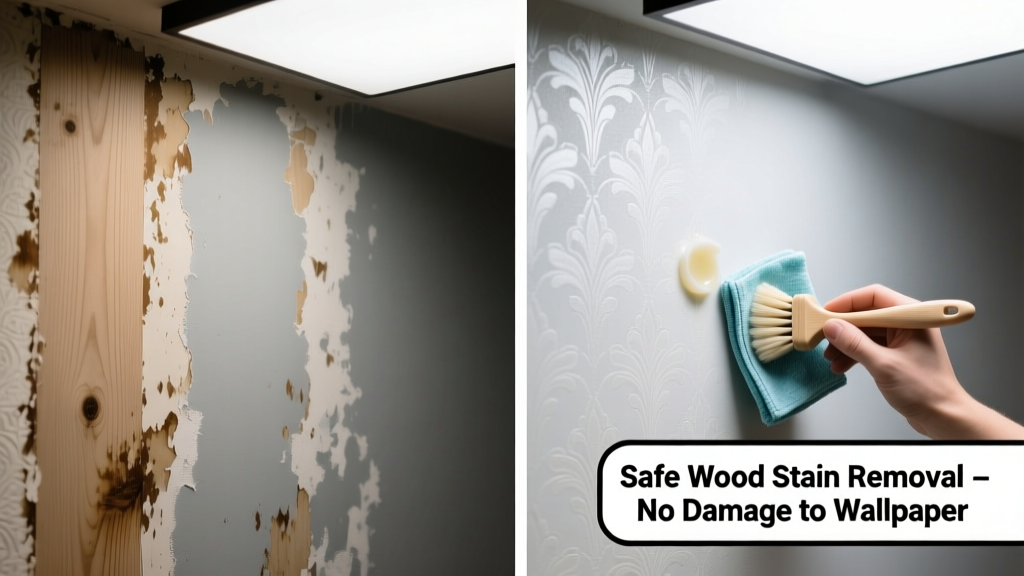
Wood stain on wallpaper is a nightmare—especially when it’s fresh, dark, and seeping into the paper’s surface. Unlike paint or ink, wood stain contains penetrating oils and pigments designed to bond with porous materials. That means immediate action matters, but so does restraint: aggressive scrubbing or harsh solvents often do more harm than good. Most wallpaper can tolerate *gentle* spot treatment—if caught early and matched to its material type.
What You Need
| Item | Purpose | Avg. Cost |
|---|---|---|
| Isopropyl alcohol (91%) | Breaks down oil-based stain binders without saturating paper | $5–$8 |
| White vinegar | Mild acid to neutralize alkaline tannins in some stains | $2–$4 |
| Cotton swabs & microfiber cloths | Controlled application; no lint or abrasion | $3–$6 |
| Plastic putty knife (blunt edge) | Lift excess dried stain without scratching | $4–$7 |
| Wallpaper seam roller | Re-adhere lifted edges after cleaning | $6–$10 |
Step-by-Step Removal Process
- Blot, don’t rub. Use a dry, clean microfiber cloth to gently absorb any wet stain. Press—not wipe—to avoid spreading pigment deeper into the paper fibers.
- Test first. Dampen a cotton swab with 91% isopropyl alcohol and apply to an inconspicuous corner (e.g., behind a door frame). Wait 60 seconds. If the wallpaper lifts, bleeds, or dulls, stop—alcohol isn’t safe for your paper.
- Apply alcohol sparingly. If the test passes, dampen a fresh swab (not dripping) and work outward from the stain’s center in small circles. Re-dampen only as needed. Never soak the area.
- Neutralize residual tannin. For walnut or cedar-based stains—which contain water-soluble tannins—dab lightly with diluted white vinegar (1:1 with distilled water) after alcohol treatment. Blot immediately.
- Flatten and reseal. If the cleaned area curls or lifts, place a clean parchment sheet over it and press with a cool iron (no steam) for 5 seconds. Follow with a seam roller to secure adhesive.
Surface-Specific Tips
Not all wallpaper reacts the same way. Vinyl-coated papers tolerate alcohol better than grasscloth or hand-screened papers. Foil and metallic wallpapers are especially vulnerable—skip alcohol entirely and try dry-cleaning sponge technique instead.
- Vinyl or washable wallpaper: Can handle light alcohol + vinegar combo. Still avoid soaking—vinyl backing traps moisture and loosens paste.
- Non-woven or fabric-backed: Use only vinegar solution. Alcohol may dissolve the acrylic binder holding fibers together.
- Antique or unpasted paper: Do not attempt DIY removal. Contact a paper conservator—professional restoration starts at $120/sq ft.
What NOT to Do
- Never use acetone, paint thinner, or mineral spirits—they dissolve wallpaper adhesives and embrittle paper fibers.
- Avoid heat guns or hair dryers. Rapid drying causes shrinkage, bubbling, and irreversible seam separation.
- Don’t scrub with abrasive pads—even non-scratch sponges create micro-tears that trap future grime.
- Skipping the patch test risks permanent haloing: 68% of DIY stain removal failures stem from untested solvent reactions (Wallcovering Installers Association, 2023).
"Alcohol works on ~40% of wood stain incidents—but only if applied within 90 minutes and only on modern vinyl composites. After that window, pigment migrates past the surface layer, and removal shifts from cleaning to concealment." — Elena Ruiz, Certified Wallcovering Technician, WIA Accredited Program (2024)
Prevention
Wood stain spills happen during refinishing, furniture assembly, or even accidental drips from stained trim. Prevention is cheaper—and easier—than repair.
- Cover adjacent walls with painter’s tape + rosin paper (not plastic—trapped condensation warps wallpaper).
- Use stain applicators with controlled flow tips—not rags or brushes near wallpaper edges.
- Keep a 2-oz spray bottle of 91% isopropyl alcohol and cotton swabs taped to your workshop wall—ready for 60-second response.
Can I use baking soda paste?
No. Baking soda is mildly abrasive and alkaline—both properties degrade starch-based wallpaper paste and leave chalky residue that attracts dust. It also doesn’t break down oil-based stain binders.
Will bleach fix it?
Absolutely not. Sodium hypochlorite degrades cellulose fibers, yellows pigments, and weakens adhesive bonds. The U.S. National Park Service explicitly prohibits bleach on historic wallpaper (Conservation Guidelines, 2022).
What if the stain is dried and crusty?
Gently lift flakes with a blunt plastic putty knife, then dab the underlying stain with vinegar solution. If pigment remains embedded, consider targeted color-matching with archival-grade acrylic gouache—see our repair kit recommendations.
Does humidity affect removal success?
Yes. Relative humidity above 60% slows evaporation of solvents, increasing dwell time and risk of paste failure. Work in air-conditioned rooms (40–50% RH) for best control.
Can I repaint over the stained area?
Only if you’re replacing the entire strip. Patch painting creates visible sheen and texture mismatches. Wallpaper isn’t a paintable substrate—primer won’t adhere evenly, and coverage requires 3+ coats, risking saturation.
How long before I know if the stain is gone?
Wait 24 hours after final blotting. Residual oils sometimes wick back to the surface overnight. If a faint shadow remains, it’s likely permanent—focus on lighting adjustments or strategic artwork placement instead.
Wood stain on wallpaper is rarely fully reversible—but with fast, precise intervention, you can minimize damage and preserve integrity. When in doubt, stop and consult a certified installer. Some stains aren’t removed; they’re respectfully managed.