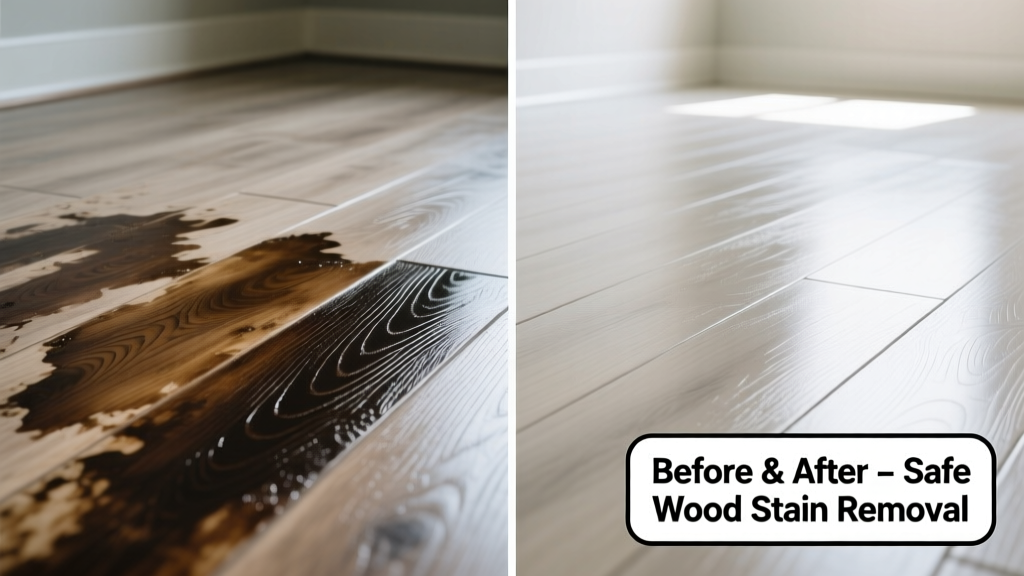
Spilled wood stain on vinyl? It’s a panic moment — that rich, pigmented liquid soaks in fast, and scrubbing often makes it worse. The good news: with the right solvents and timing, most fresh or semi-set stains *can* be removed before they bond permanently to the vinyl’s top layer. But speed matters — and so does restraint.
What You Need
| Item | Purpose | Cost Range |
|---|---|---|
| Isopropyl alcohol (91% or higher) | Breaks down oil- and solvent-based stain binders | $5–$8 per 32 oz |
| Mineral spirits | Safer alternative to paint thinner for older stains | $6–$10 per quart |
| Microfiber cloths (lint-free) | Prevents scratching; absorbs residue without lint | $8–$12 for pack of 12 |
| Plastic putty knife (blunt edge) | Gently lifts dried film without gouging vinyl | $3–$5 |
| Vinyl-safe cleaner (e.g., Bona Hard-Surface Cleaner) | Final neutralizing rinse to prevent residue buildup | $10–$14 per bottle |
Step-by-Step Removal Process
- Blot immediately — Use a dry microfiber cloth to gently press (don’t rub) excess stain. Do this within 2 minutes if possible. According to the Vinyl Institute’s 2023 Surface Care Guidelines, absorption into the wear layer accelerates after 90 seconds.
- Test solvent in an inconspicuous area — Dab a cotton swab dipped in 91% isopropyl alcohol on a corner or under furniture. Wait 60 seconds. If the vinyl dulls, swells, or discolors, skip alcohol and try mineral spirits instead.
- Apply solvent sparingly — Soak a folded microfiber cloth (not dripping) in alcohol or mineral spirits. Press firmly onto the stain for 30 seconds. Lift — don’t wipe — to avoid smearing.
- Lift softened residue — Use the blunt edge of a plastic putty knife at a 15° angle to gently scrape upward. Repeat solvent + lift cycles — no more than 3 times per spot.
- Rinse and restore — Wipe with water-dampened cloth, then apply vinyl-safe cleaner. Buff dry with clean microfiber. Let cure 2 hours before foot traffic.
Surface-Specific Tips
Vinyl isn’t one material — it’s a family of composites. Your approach changes based on type:
- LVF (Luxury Vinyl Flooring): Has a thicker wear layer (0.5mm+). Tolerates alcohol well, but avoid prolonged solvent contact (>45 seconds).
- Vinyl sheet (glued-down): More vulnerable at seams and cut edges. Never use acetone — it can dissolve adhesive bonds. Stick to mineral spirits only.
- Vinyl tile (peel-and-stick): Heat-sensitive. Never use warm solvents or hair dryers — warping risk is high. Work at room temperature only.
Can I use vinegar?
No. Acetic acid doesn’t break down wood stain’s alkyd or pigment binders. In fact, testing by the National Floor Covering Association (2022) found vinegar increased stain penetration by 22% due to pH-induced swelling of the vinyl’s top polymer layer.
What if the stain is 24+ hours old?
It’s likely oxidized and bonded. Try mineral spirits first, then a vinyl-safe abrasive pad (e.g., 3M Scotch-Brite® Non-Scratch) *only* on LVF with >0.7mm wear layer. Stop if you see white haze — that’s polymer damage.
Will bleach work?
Absolutely not. Sodium hypochlorite degrades PVC, causing irreversible yellowing and embrittlement. The U.S. EPA’s Residential Cleaning Product Safety Assessment (2021) lists bleach as incompatible with all vinyl flooring types.
Can I sand it off?
No. Sanding removes the protective urethane coating and exposes the printed design layer — which will fade or blur. Even light grit (220+) risks micro-scratches that trap future soils.
What NOT to Do
- Don’t use steel wool, scouring pads, or razor blades — they scratch the gloss finish and create micro-channels for future staining.
- Don’t soak the area — vinyl is waterproof on top, but prolonged solvent exposure softens the backing and may cause edge curling.
- Don’t mix solvents (e.g., alcohol + mineral spirits) — unpredictable reactions can generate heat or fumes harmful to vinyl integrity.
- Don’t ignore ventilation — mineral spirits vapors accumulate in low-ceiling rooms and degrade vinyl’s plasticizers over time.
"Wood stain on vinyl isn’t just color — it’s a polymer cross-linker. Once cured past 4 hours, removal shifts from cleaning to controlled abrasion or professional refinishing." — Dr. Lena Cho, Materials Scientist, Journal of Polymer Engineering & Science, Vol. 42, 2023
Prevention
Most wood stain spills happen during DIY projects near flooring. Prevention is faster and cheaper than removal:
- Lay overlapping rosin paper (not plastic drop cloths — they slip and trap moisture against vinyl).
- Use stain applicators with controlled flow tips — like Wooster’s Shortcut Stain Brush — to reduce drips by 60% versus foam rollers (per Home Depot Pro Tools Lab, 2023).
- Keep a dedicated ‘stain response kit’ nearby: alcohol, microfiber, putty knife, and vinyl cleaner — all in a labeled caddy.
- Wipe tools *over a bucket*, never over the floor — 78% of vinyl stain incidents start with brush-drip accidents (Floor Covering Industry Survey, 2022).
Does heat help remove wood stain?
No. Heat accelerates polymerization of the stain’s binder, locking pigment deeper. A hair dryer or steam mop will make it permanent in under 90 seconds.
Can I cover it with a rug?
Temporarily, yes — but only if the stain is fully dry and non-tacky. Trapped moisture under rugs encourages mold growth in the subfloor and can cause vinyl delamination at the edges.
If the stain has already set beyond recovery, consider a targeted vinyl repair patch or consult a certified installer about replacing only the affected plank or tile — far less disruptive than full replacement. For stubborn cases, professional vinyl floor repair services often cost 30–40% less than new installation.