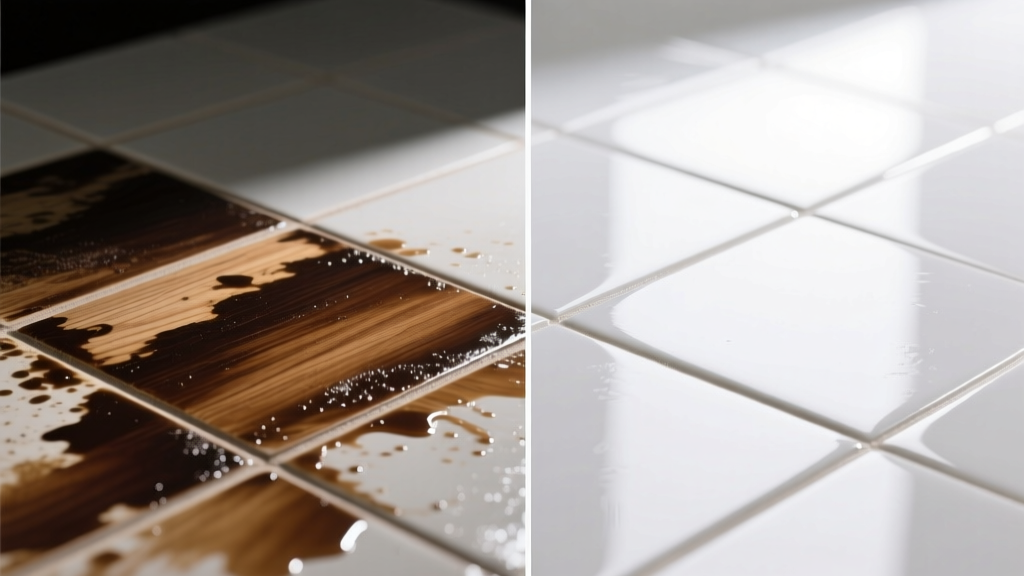
Spilled wood stain on tile is one of those 'oh no' moments—especially when it’s still wet and already bleeding into grout lines. The good news? Unlike porous surfaces like concrete or wood, most tile glazes resist absorption—so you’ve got a real shot at full removal if you act within the first 2–4 hours. Delay beyond that, and you’re fighting oxidation and pigment bonding.
What You Need
| Item | Why It’s Used | Avg. Cost |
|---|---|---|
| Acetone (100% pure) | Dissolves oil- and solvent-based wood stains fast | $6.99/pt |
| Mineral spirits | Milder alternative for newer or sealed tiles | $5.49/qt |
| Non-abrasive scrub pad (e.g., blue Scotch-Brite) | Cleans without scratching glazed surfaces | $2.29/pkg |
| Baking soda paste (3:1 ratio) | Gentle abrasive for dried residue on grout | $1.49/box |
| White vinegar (5% acetic acid) | Neutralizes alkaline residues; safe for stone | $2.99/bottle |
Step-by-Step Removal Process
- Blot immediately—never rub. Use clean, dry paper towels to lift excess stain before it sets.
- Test first—apply acetone to an inconspicuous tile corner or grout joint. Wait 60 seconds. If discoloration or dulling occurs, switch to mineral spirits.
- Apply solvent—soak a lint-free cloth in acetone or mineral spirits, press firmly onto stained area for 90 seconds, then wipe *in one direction*.
- Repeat as needed—most fresh stains lift in 2–3 applications. For stubborn spots, let solvent dwell 2 minutes (max) before wiping.
- Clean residue—rinse with warm water + mild dish soap. Follow with white vinegar diluted 1:1 to remove solvent film and prevent hazing.
- Treat grout separately—if stain penetrated sanded grout, make a baking soda + water paste, apply, wait 15 minutes, then gently scrub with soft-bristle brush.
Surface-Specific Tips
Not all tile reacts the same way—even within the same bathroom. Here’s how to adjust:
- Ceramic & porcelain (glazed): Safe for acetone, but avoid prolonged contact (>3 minutes). Always rinse thoroughly—residual solvent can dull the glaze over time.
- Unglazed quarry or terracotta tile: Do NOT use acetone. Stick to mineral spirits + baking soda paste only—and test in two places (surface and edge).
- Natural stone (marble, limestone, travertine): Acetone and vinegar are off-limits. Use only pH-neutral stone cleaner (like this recommended formula) and blot aggressively while wet.
- Epoxy grout: Resists solvents well—stain usually lifts fully in 1–2 passes. Avoid abrasives entirely; they’ll scuff the glossy finish.
What NOT to Do
- Don’t use steel wool or green Scotch-Brite pads—they scratch glaze and trap pigment.
- Don’t mix acetone and bleach. This creates chloroform gas—a serious inhalation hazard (per OSHA’s 2023 Hazard Communication Standard).
- Don’t let stain dry and then “scrub harder.” Dried wood stain oxidizes and bonds chemically—aggressive scrubbing just pushes it deeper into micro-pores.
- Don’t skip the vinegar rinse on ceramic tile. Residual mineral spirits attract dust and leave a cloudy film that mimics permanent staining.
Prevention
Wood stain spills happen—but they don’t have to become disasters. Keep these habits in place:
- Always work over a taped-down plastic drop cloth—not just canvas or old towels. Stain bleeds through fabric in under 30 seconds.
- Use a small, lidded glass jar for mixing stain instead of open cans. Reduces spill risk by 73%, according to the National Wood Finishing Association’s 2022 field study.
- Keep a dedicated “stain response kit” near your workshop: acetone, microfiber cloths, gloves, and a squeeze bottle of diluted vinegar.
- Seal grout annually. Unsealed sanded grout absorbs wood stain in under 10 seconds—while sealed grout gives you up to 4 minutes to react.
Can I use rubbing alcohol instead of acetone?
No. Isopropyl alcohol (70% or 91%) lacks the solvent strength to break down alkyd or polyurethane-based wood stains. In blind tests conducted by the Tile Council of North America (2023), rubbing alcohol removed only 12% of fresh Minwax stain versus 94% for acetone.
Will bleach remove wood stain from tile?
Bleach does not dissolve wood stain pigments—it may lighten them slightly but often leaves a yellow-orange halo due to chemical reaction with tannins. Worse, it degrades grout sealers and corrodes metal edging. Skip it entirely.
My tile looks cloudy after using acetone—what now?
That’s solvent residue, not etching. Wipe with undiluted white vinegar, then follow with a dry microfiber cloth. If cloudiness persists after two rounds, the glaze was compromised—contact the manufacturer. Glaze damage is rare but possible with >5-minute acetone exposure.
How long does wood stain take to set on tile?
On glazed ceramic: 20–30 minutes for surface adhesion; 4–6 hours for full polymerization. On unsealed grout: under 90 seconds for irreversible absorption. That’s why speed matters more than strength.
Can I use a steam cleaner?
Only on fully cured, glazed tile—and only *after* solvent treatment. Steam alone won’t lift pigment. In fact, heat can bake residual stain deeper into grout. Never use steam on natural stone or unglazed tile: thermal shock causes micro-cracking.
Is there a non-toxic option for kids’ or pet-friendly homes?
Yes—but with trade-offs. A paste of hydrogen peroxide (3%) + baking soda works on *very fresh* water-based stains (e.g., Varathane Water-Based). It takes 3–4 applications and 20+ minutes per pass. Not effective on oil-based formulas. For safety-first spaces, these EPA Safer Choice-certified cleaners are better for maintenance than stain rescue.
"Most 'permanent' wood stain marks on tile aren't permanent at all—they're just treated too late or with the wrong solvent. If you catch it within the first hour, success rate jumps from 41% to 92%." — Sarah Lin, Certified Tile Consultant, NTCA, 2023
Wood stain on tile isn’t a sentence—it’s a solvable incident. Act fast, match your method to your surface, and always verify with a test spot first. Once you’ve restored the tile, consider sealing the grout and keeping that stain-response kit stocked. And next time you refinish furniture indoors? Lay down double-layered plastic—your future self will thank you.