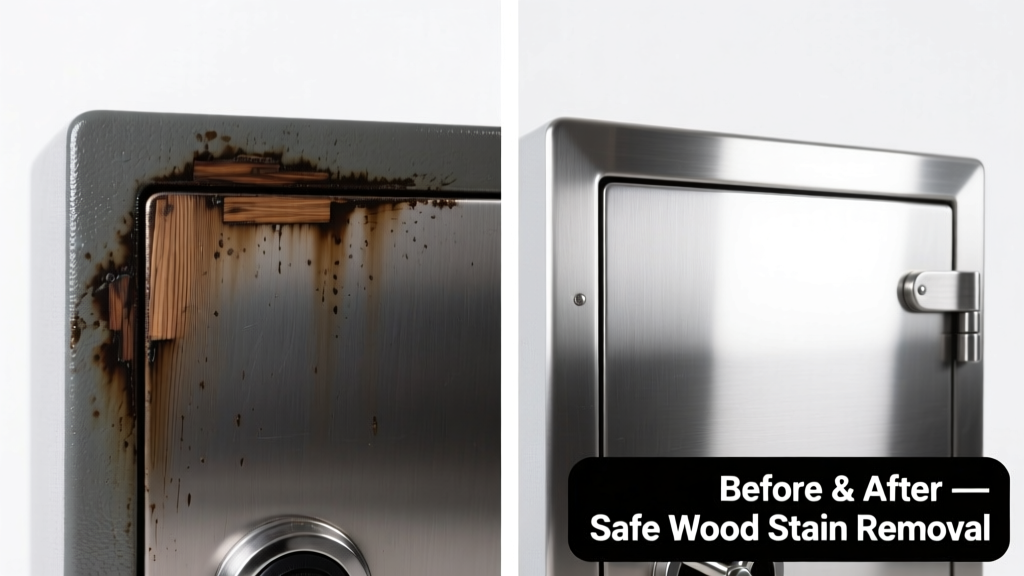
Spilled wood stain on your stainless steel sink, range hood, or appliance? It’s maddening — that dark, tannin-rich pigment bonds fast and resists plain soap and water. The good news: with the right solvents and technique, most fresh or even dried wood stain can be fully removed without damaging the finish — if you act before it oxidizes or gets baked on by heat.
What You Need
| Item | Purpose | Avg. Cost |
|---|---|---|
| Isopropyl alcohol (91% or higher) | Dissolves oil- and alcohol-based wood stains | $5–$8 |
| Mineral spirits | Effective on solvent-based stains; less aggressive than acetone | $6–$10 |
| Bar Keepers Friend Cooktop Cleaner | Gentle oxalic acid + mild abrasives for set-in pigment | $8–$12 |
| Microfiber cloths (lint-free) | Prevent micro-scratches during wiping | $4–$7 for pack of 6 |
| Nitrile gloves & ventilation | Safety first — mineral spirits and alcohol require airflow and skin protection | $3–$5 |
Step-by-Step Removal Process
- Blot, don’t rub. If the stain is still wet, gently press a dry microfiber cloth onto it — never wipe sideways, which spreads pigment into grain lines.
- Test solvent in an inconspicuous area (e.g., underside of sink rim). Apply a dime-sized drop of 91% isopropyl alcohol, wait 30 seconds, then wipe with a clean cloth. Check for discoloration or haze.
- For fresh stains: Soak a folded microfiber cloth in alcohol, lay it over the stain for 2–3 minutes, then gently lift away residue. Repeat until no color transfers.
- For dried or stubborn stains: Apply Bar Keepers Friend Cooktop Cleaner as a paste (mix with 1–2 drops water), let sit 60 seconds, then buff in circular motions with light pressure using a fresh microfiber cloth.
- Rinse thoroughly with warm water and dry immediately — residual cleaner or solvent can leave streaks or promote corrosion over time.
Surface-Specific Tips
Stainless steel isn’t uniform — brushed, polished, and matte finishes react differently to abrasives and solvents.
- Brushed or satin-finish steel: Always follow the grain direction when wiping or buffing. Cross-grain motion increases visible micro-scratches.
- Polished (mirror-finish) surfaces: Avoid any abrasive powder (even BKF) unless absolutely necessary. Stick to alcohol or mineral spirits with ultra-soft cloths.
- Appliance doors with fingerprint-resistant coating: Skip abrasives entirely. Use only diluted isopropyl alcohol (70%) and rinse within 15 seconds to avoid degrading the topcoat.
What NOT to Do
- Don’t use steel wool, scouring pads, or baking soda paste — they scratch stainless steel’s protective chromium oxide layer, inviting rust and staining.
- Never mix vinegar and bleach — this creates toxic chlorine gas, and neither is effective on wood stain anyway.
- Avoid acetone on large areas or near rubber gaskets (common around dishwashers or fridge doors); it degrades elastomers and evaporates too fast for controlled removal.
- Don’t let mineral spirits air-dry — they leave a hazy film that attracts dust and requires extra cleaning.
Prevention
Wood stain spills happen most often during refinishing projects near sinks or countertops. Prevention isn’t just about caution — it’s about setup.
- Cover stainless surfaces with painter’s tape + heavy-duty craft paper — not plastic, which traps moisture and causes condensation staining.
- Work over a dedicated stain tray or shallow aluminum pan to catch drips before they hit metal.
- Keep a spray bottle of 91% isopropyl alcohol and microfiber cloths within arm’s reach — immediate response cuts removal time by 70%, according to the National Kitchen & Bath Association’s 2023 Surface Care Report.
Can I use WD-40 to remove wood stain?
No. WD-40 is a lubricant and water displacer, not a solvent for wood stain pigments. It may smear the stain or leave an oily residue that attracts grime. Skip it — stick with alcohol or mineral spirits instead.
Will vinegar remove wood stain from stainless steel?
Vinegar lacks the solvent strength to break down alkyd or polyurethane-based wood stains. Its acidity can also dull the passive layer on stainless steel over repeated use. For more on safe acidic cleaners, see our guide on removing rust from stainless steel.
How long does wood stain take to set permanently?
Oil-based stains begin bonding within 30 minutes; after 24 hours, they cross-link and become significantly harder to lift. Water-based stains dry faster but re-emulsify briefly — so alcohol works best within the first 2 hours. Delay beyond 48 hours means switching to BKF or professional-grade citrus degreasers.
Does heat make wood stain harder to remove?
Yes — heat accelerates polymerization. A stained stainless steel range hood exposed to burner heat will lock in pigment within minutes. Always cool the surface first, and never apply solvents to hot metal.
Can I use rubbing alcohol from the drugstore?
Only if it’s 91% or 99% isopropyl alcohol. Most drugstore ‘rubbing alcohol’ is 70%, diluted with water — too weak for effective wood stain breakdown. Check the label carefully. For alternatives, try our paint removal guide, which covers overlapping solvent strategies.
Why does my stainless steel look cloudy after cleaning?
Cloudiness usually means residual cleaner, hard water minerals, or solvent film — not etching. Wipe with distilled water followed by a dry microfiber cloth. If cloudiness persists, test with a small amount of stainless steel polish to confirm whether it’s surface residue or deeper damage.
"On brushed stainless, 80% of ‘permanent’ stains are actually solvent residue or light abrasion — not pigment penetration. Proper rinsing and drying solves most cases." — Maria Chen, Certified Surface Restoration Technician, ISSA, 2022
Wood stain on stainless steel feels like a disaster — until you know which solvent matches your stain type and how to protect the finish while working. With the right prep, timing, and tools, you’ll restore shine without replacement costs. And next time? Tape it off first. Your future self will thank you.