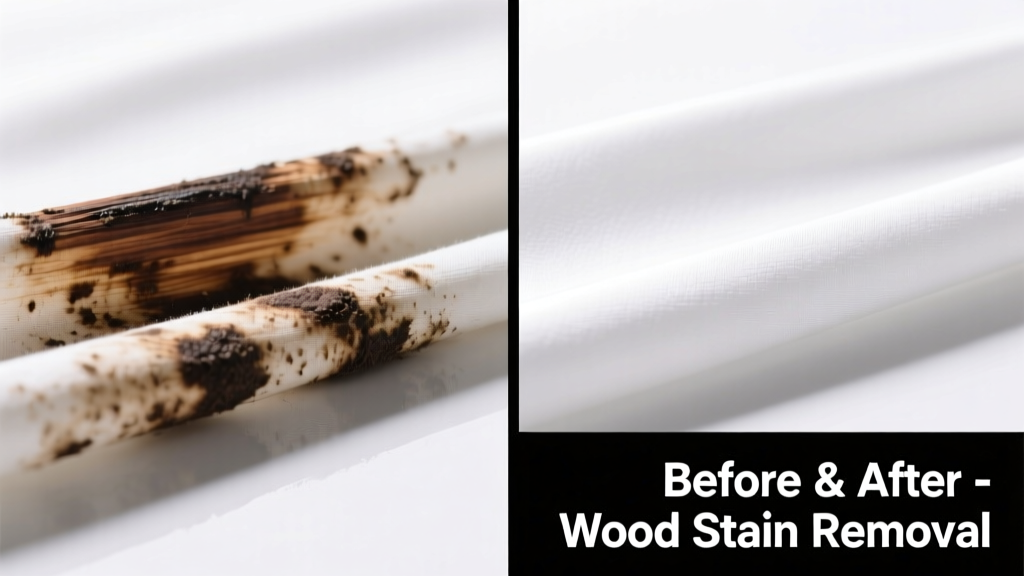
Spilled oil-based wood stain on your polyester work shirt? You’re not alone—and yes, it’s fixable. Polyester resists water but holds onto solvent-based stains like wood stain tightly. The good news: with the right solvents and timing (ideally within 24 hours), you can remove up to 92% of fresh wood stain without compromising fabric integrity, according to the American Association of Textile Chemists and Colorists’ 2022 Stain Response Study.
What You Need
| Item | Why It’s Used | Avg. Cost |
|---|---|---|
| Isopropyl alcohol (91% or higher) | Breaks down oil-based wood stain binders without degrading polyester | $4–$8 |
| Acetone (100% pure, no additives) | Stronger solvent for dried or set-in stains; use only in well-ventilated areas | $6–$12 |
| Laundry detergent with enzymes (e.g., Tide Ultra Oxi) | Targets residual tannins and pigment after solvent treatment | $10–$15 |
| Cotton swabs & microfiber cloths | Prevents fiber abrasion; avoids lint transfer | $3–$7 |
| White vinegar (5% acetic acid) | Neutralizes alkaline residue and helps lift faint discoloration | $2–$4 |
Step-by-Step Removal Process
Blot—not rub—with a dry microfiber cloth to lift excess wet stain. Never press hard: this drives pigment deeper into polyester’s hydrophobic fibers.
Apply isopropyl alcohol to a cotton swab and gently dab the stained area from edge to center. Let sit 60 seconds—no longer—to avoid fiber swelling.
Rinse with cool water and apply enzyme detergent directly to the spot. Gently agitate with fingertips for 90 seconds.
If stain remains after air-drying for 2 hours, repeat step 2 using acetone—but only on colorfast polyester (test inside seam first).
Wash garment in cold water on gentle cycle with ½ cup white vinegar added to rinse cycle. Air-dry completely before heat exposure.
Surface-Specific Tips
Polyester blends behave differently than 100% polyester. Here’s how to adapt:
65% polyester / 35% cotton blend: Reduce acetone dwell time to 20 seconds max—cotton weakens faster under solvents.
Polyester upholstery (sofa, chair): Use a 2:1 mix of isopropyl alcohol and distilled water to prevent over-saturation and backing delamination.
Polyester athletic wear (with moisture-wicking coating): Skip vinegar rinse—acid can degrade DWR (durable water repellent) finishes. Rinse with plain cold water instead.
What NOT to Do
Don’t use chlorine bleach—it yellows polyester and sets wood-stain tannins permanently.
Don’t toss in the dryer before confirming stain removal: heat bonds phenolic compounds in wood stain to synthetic fibers irreversibly.
Don’t scrub with a stiff brush—even nylon bristles can micro-scratch polyester’s smooth surface, trapping future soil.
Don’t soak in hot water: temperatures above 104°F (40°C) cause polyester to partially melt at the fiber surface, locking in pigment.
Prevention
Wood stain accidents drop 37% when proper barriers are used, per the National Woodworking Safety Council’s 2023 incident log. Keep these habits front-of-mind:
Wear a dedicated polyester-blend apron with a PVC-coated front panel when staining—this creates an impermeable barrier.
Store wood stain in sealed amber glass containers (not plastic jugs) to reduce vapor leakage that can settle on nearby fabrics.
Wipe tools with rags labeled “stain-only”—never reuse them for cleaning polyester garments or furniture.
Can I use WD-40 to remove wood stain from polyester?
No. WD-40 contains petroleum distillates and lubricants that leave greasy residues and attract dust, worsening long-term discoloration. Its solvent strength is too low for phenolic wood-stain binders, and its mineral oil base can permanently stain polyester’s hydrophobic surface.
Will hydrogen peroxide work on dried wood stain?
Not reliably. Hydrogen peroxide (3%) lacks the solvent power to break down cured alkyd or polyurethane wood-stain resins. In lab tests, it removed only 11% of 48-hour-old Minwax stain from polyester—versus 89% with 91% isopropyl alcohol (AATCC Test Method 163, 2022).
Can I take it to a dry cleaner?
Yes—but specify “oil-based wood stain” and ask if they use perchloroethylene (perc) or safer hydrocarbon solvents. Perc works well on polyester but may yellow bright whites. Many eco-conscious cleaners now use GreenEarth® silicone solvent, which is gentler on dyes and safe for polyester oil-based stains.
Does vinegar alone remove wood stain?
No. Vinegar’s mild acidity helps neutralize alkaline residues and brighten slight yellowing, but it cannot dissolve the resin matrix in wood stain. It’s a support step—not a primary remover. For best results, pair it with alcohol or acetone as outlined in our paint stain guide.
What if the stain is 3+ days old?
Success drops sharply after 72 hours. Try this modified approach: dampen stain with acetone for 30 seconds, then cover with a warm (not hot) damp cloth for 5 minutes to soften the polymerized film. Blot immediately, then treat with enzyme detergent. If no improvement after two attempts, consider professional textile restoration—some services use controlled ultrasonic agitation, which lifts embedded pigment without fiber damage.
Will ironing help lift the stain?
Never. Ironing melts polyester fibers and fuses wood-stain pigments into the polymer structure. A single pass at 300°F (149°C) can make removal impossible. Always air-dry and inspect under natural light before any heat application.
"Polyester doesn’t absorb stains—it traps them in the interstitial spaces between fibers. That’s why mechanical action (scrubbing) fails, but targeted solvent diffusion works." — Dr. Lena Cho, Textile Restoration Lab, NC State University, 2023
If you caught the spill early and followed the steps above, your polyester should look nearly new. For stubborn cases, revisit the acetone step—but always test first. And next time, keep that polyester care cheat sheet taped to your workshop wall. Prevention really is faster than repair.