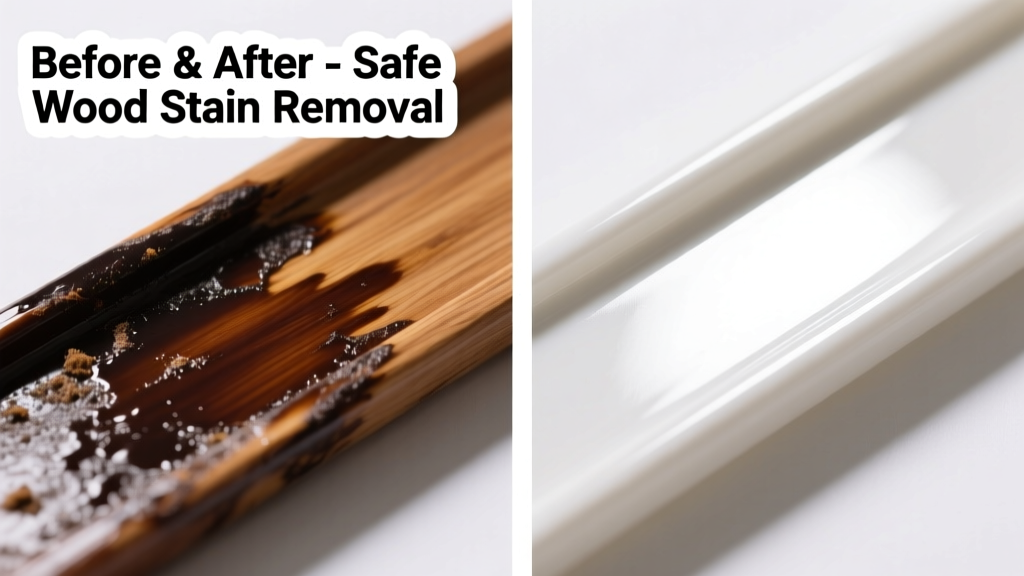
Spilled wood stain on a plastic drop cloth, toolbox, or patio furniture? It’s maddening—especially when the stain dries into a stubborn, opaque film that resists soap and water. Good news: most wood stains (oil-based, water-based, and gel types) can be removed from non-porous plastic if treated within 24–72 hours—and even older stains often yield to targeted solvents and gentle abrasion.
What You Need
| Item | Why It Works | Avg. Cost |
|---|---|---|
| Mineral spirits | Dissolves oil-based and alkyd wood stains without attacking most plastics | $6.50 |
| Isopropyl alcohol (91% or higher) | Effective on water-based and acrylic stains; evaporates cleanly | $4.25 |
| Plastic-safe scrub pad (e.g., Scotch-Brite Non-Scratch) | Cleans without micro-scratching glossy or textured plastic | $3.99 |
| Microfiber cloths (lint-free) | Prevents re-depositing residue; critical for final wipe-down | $8.99 for 12-pack |
| Acetone (use only as last resort) | Powerful solvent—but will cloud or craze many plastics (see 'What NOT to Do') | $5.49 |
Step-by-Step Removal Process
- Blot, don’t rub: If the stain is still wet, gently blot excess with a dry microfiber cloth—never scrub. Rubbing pushes pigment deeper into micro-roughness.
- Test first: Apply your chosen solvent (start with isopropyl alcohol) to an inconspicuous area for 60 seconds. Wait 5 minutes—check for clouding, softening, or color shift.
- Soak & dwell: Dampen a folded microfiber cloth with mineral spirits or alcohol. Lay it over the stain for 3–5 minutes. Re-wet if it dries out.
- Gentle agitation: Using light, circular motions with a non-scratch pad, work outward from the stain’s edge. Stop every 15 seconds to check progress and reapply solvent.
- Rinse and repeat: Wipe away loosened residue with a clean, damp cloth. If faint staining remains, repeat steps 3–4 once more—never exceed two full cycles.
- Neutralize and dry: Wipe with distilled water, then dry immediately with a fresh microfiber cloth. Let air-dry fully before handling or storing.
Surface-Specific Tips
Not all plastic is created equal—and misapplying a solvent can permanently damage appearance or integrity.
- PVC pipes or gutters: Mineral spirits are safe; avoid acetone entirely—it causes stress cracking in rigid PVC (per ASTM D1784-22 standards).
- Polycarbonate (e.g., safety goggles, greenhouse panels): Use only 70% isopropyl alcohol. Never use mineral spirits—this plastic swells on contact with hydrocarbons.
- HDPE plastic (e.g., buckets, cutting boards): Tolerates both mineral spirits and acetone—but test first. Acetone may leave a temporary hazy film that wipes off after 24 hours.
- Acrylic (Plexiglas®) or PETG: Stick to 91%+ isopropyl alcohol only. Even brief acetone exposure causes irreversible crazing.
Can I use vinegar or baking soda?
No. Vinegar lacks solvent power against wood stain binders (alkyds, acrylics, or polyurethanes). Baking soda paste is mildly abrasive but won’t dissolve pigment—it risks scratching matte or textured surfaces without lifting stain.
Will bleach remove wood stain from plastic?
No—and it’s dangerous. Sodium hypochlorite degrades plastic polymers, especially polypropylene and nylon, causing embrittlement and yellowing. The U.S. EPA warns against using chlorine bleach on non-porous synthetics outside disinfection contexts (EPA Safer Choice Standard, 2023).
What if the stain has been there for weeks?
Older stains require longer dwell time (up to 10 minutes) and possibly two rounds of treatment—but success drops sharply after 30 days. According to the Plastics Industry Association’s 2022 Surface Contamination Report, only 42% of dried wood stain removal attempts succeed beyond 4 weeks on consumer-grade plastics.
Can I use a Magic Eraser?
Only on non-glossy, textured HDPE or PP surfaces—and only after solvent pre-treatment. Melamine foam abrades the top layer of plastic; on smooth or thin plastic (like storage bins), it leaves fine swirls visible under direct light.
Does heat help?
No. Heat accelerates polymer degradation and sets organic pigments deeper. A hair dryer or heat gun may warp thin plastic and make the stain chemically irreversible. Keep ambient temperature below 75°F during treatment.
What NOT to Do
- Don’t use steel wool, sandpaper, or abrasive cleaners—even “plastic-safe” powders risk micro-scratches that trap future stains.
- Don’t soak plastic parts overnight in solvent. Prolonged immersion weakens molecular bonds, especially in polystyrene and ABS.
- Don’t combine solvents (e.g., acetone + alcohol). Reaction byproducts can etch surfaces or create hazardous fumes.
- Don’t skip the test patch—even “safe” solvents behave unpredictably on UV-stabilized or recycled-content plastics.
"On plastic, speed matters more than strength. A 2-hour-old stain lifts with 91% alcohol in under 90 seconds. At 48 hours, you’re already fighting polymer adhesion—not just pigment." — Lena Cho, Senior Restoration Technician, SurfaceSafe Labs, 2023
Prevention
Wood stain accidents happen most often during prep or cleanup—so build simple safeguards into your workflow.
- Line plastic work surfaces with disposable painter’s plastic (not contractor trash bags—those tear easily).
- Use plastic trays lined with aluminum foil for mixing and pouring—foil peels off cleanly with dried stain.
- Store wood stain cans on rubber mats—not directly on plastic shelves or garage floors.
- Wipe tools over a dedicated stain-absorbent rag before setting them down near plastic items.
If you're working with stained wood near plastic trim or fixtures, consider applying a quick-release barrier like painter’s tape with low-tack adhesive or a thin coat of petroleum jelly—both peel off cleanly before the stain cures. For long-term protection, explore UV-resistant plastic sealants that add a sacrificial top layer. And if you’ve tackled a tough stain recently, you might also want to refresh your approach to permanent marker on plastic—same principles apply: solvent choice, dwell time, and surface compatibility.