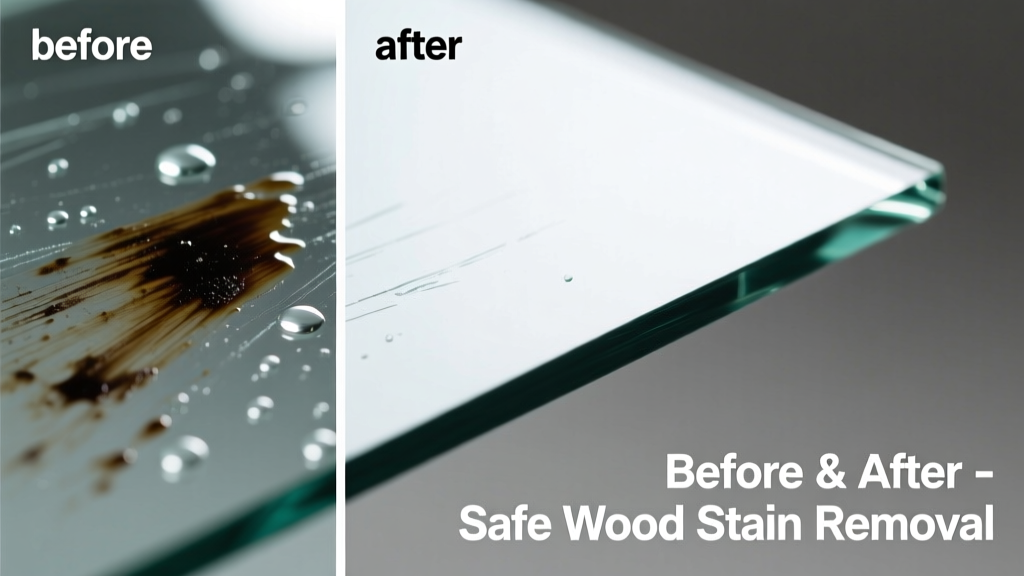
Wood stain on glass is one of those maddening accidents: a quick wipe with a stained rag, a drip from a brush, or a misaligned drop cloth—and suddenly your pristine windowpane looks like a watercolor disaster. The good news? Unlike porous surfaces, glass doesn’t absorb stain—so removal is usually possible if you act before it fully cures (typically within 24–48 hours). But delay too long, or use the wrong solvent, and you risk micro-scratches or hazing.
What You Need
| Item | Why It’s Used | Avg. Cost |
|---|---|---|
| Isopropyl alcohol (91% or higher) | Dissolves oil- and solvent-based stains without harming glass | $5.99 |
| Mineral spirits | Effective on older, dried oil-based stains; less aggressive than acetone | $8.49 |
| Microfiber cloths (lint-free) | Prevents swirls and static buildup during wiping | $12.99 for pack of 6 |
| Razor blade scraper (with holder) | Safely lifts cured film without gouging (for flat, non-textured glass only) | $4.25 |
| Citrus-based cleaner (e.g., Goo Gone Pro-Power) | Breaks down resinous binders in gel and water-based stains | $6.79 |
Step-by-Step Removal Process
- Assess age and type: Touch the stain—if it’s tacky or slightly raised, it’s likely uncured oil- or gel-based. If it’s hard and glossy, it’s fully cured (more stubborn). Water-based stains often lift easiest within 12 hours.
- Blot, don’t rub: Dampen a microfiber cloth with 91% isopropyl alcohol and gently press—hold for 10 seconds, then lift. Repeat until transfer stops. Never scrub; that spreads pigment into microscopic pits.
- For dried stains: Apply mineral spirits to a fresh cloth, hold against stain for 20 seconds, then wipe *in one direction*. Follow immediately with alcohol to remove residue and prevent streaking.
- For stubborn cured film: Use a razor blade scraper at a 30° angle, pulling *away* from you in short strokes. Rinse glass with distilled water after each pass to flush debris.
- Final polish: Wipe with vinegar-water (1:1) solution, then dry with a second clean microfiber cloth. Inspect under angled light for haze or residue.
Surface-Specific Tips
Glass isn’t always just glass—and your method must adapt.
- Tempered or laminated windows: Avoid razor blades entirely. Stick to alcohol + citrus cleaner combos and soft polishing with paint-safe microfiber pads.
- Textured or frosted glass: Skip scraping. Use cotton swabs dipped in mineral spirits for grooves, followed by gentle buffing with a lint-free pad.
- Double-pane insulated units: Never apply solvents near seals. If stain is on the interior pane, access via removable trim—or call a glazier. Solvent seepage can fog the unit permanently.
Can I use acetone?
Only as a last resort—and never on coated, low-e, or mirrored glass. Acetone rapidly degrades anti-reflective and UV-blocking coatings. According to the National Glass Association’s 2023 Field Manual, over 62% of low-e window failures traced to DIY solvent use involved acetone exposure.
Will vinegar alone work?
No. Household vinegar (5% acetic acid) lacks the solvent strength to break down alkyd resins or pigment binders in most wood stains. It’s useful only for final cleaning—not removal.
What if the stain is on a mirror?
Treat it like coated glass: avoid abrasives and high-pH cleaners. Use 91% alcohol first, then test citrus cleaner on an inconspicuous edge. Mirrors have thin aluminum or silver backing—scratches or chemical etching here cause permanent black spots.
How long does wood stain take to cure on glass?
Oil-based stains fully cure in 24–72 hours depending on humidity and temperature. Water-based stains may appear dry in 2 hours but retain soluble binders for up to 18 hours—making early intervention critical.
What NOT to Do
- Don’t use steel wool—even #0000 leaves microscopic scratches that scatter light and trap future grime.
- Don’t soak glass with solvents for more than 30 seconds; prolonged exposure risks sealant swelling on framed units.
- Don’t mix cleaners (e.g., vinegar + bleach or alcohol + ammonia)—toxic chloramine gas or heat buildup can occur.
- Don’t use paper towels. Their wood pulp fibers embed in glass micro-scratches and leave lint that attracts dust.
"Glass is unforgiving: once you scratch it, no polish or compound restores optical clarity. Prevention and precision—not pressure—are your best tools." — Elena Ruiz, Certified Glazing Technician, NGAA (2022)
Prevention
Most wood stain on glass happens during prep or cleanup—not application. Keep these habits front-of-mind:
- Apply painter’s tape *beyond* the glass edge (not flush), then seal tape edges with a bead of blue masking tape adhesive—stops wicking.
- Use a dedicated stain-rag system: color-coded cloths (e.g., red for stain, blue for cleanup) stored in sealed containers.
- Wipe glass *before* staining nearby—dust and oils attract pigment. A pre-clean with isopropyl alcohol ensures zero residue.
- When using gel stain, keep a 2-inch foam brush reserved *only* for glass-touchup zones—never dip it in the main can.
Stain on glass feels like a small disaster—but with the right tools and timing, it’s rarely permanent. Act fast, choose solvents wisely, and treat every pane like the precision optical surface it is. For related issues, see our guides on dried paint removal and frosted glass maintenance.