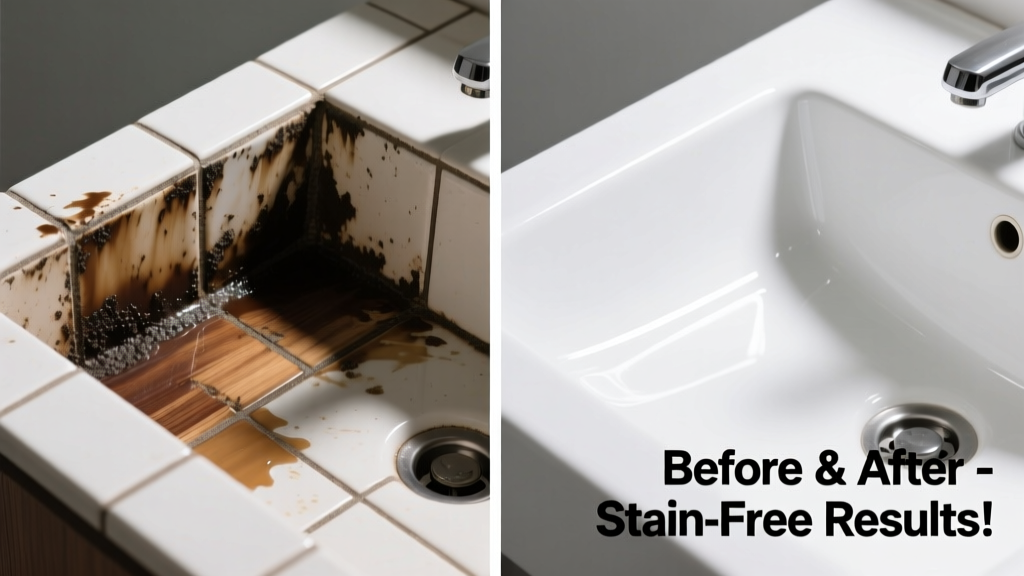
Spilled wood stain on your white subway tile? Dripped walnut stain onto your farmhouse sink? It’s maddening — that rich pigment bonds fast, and scrubbing only smears it. Good news: ceramic’s non-porous surface means the stain sits *on* the glaze, not *in* it — so removal is usually possible if you act within 24–48 hours and avoid abrasive or acidic missteps.
What You Need
| Item | Why It’s Used | Avg. Cost |
|---|---|---|
| Acetone (100% pure, no nail polish remover additives) | Dissolves oil- and solvent-based wood stains without harming ceramic glaze | $5.99/pt |
| Microfiber cloths (lint-free, white) | Prevents scratching; colorfast so won’t bleed dye into stain | $8.50/6-pack |
| Plastic putty knife (not metal) | Gently lifts dried, crusty residue without gouging | $3.25 |
| pH-neutral stone & tile cleaner (e.g., StoneTech All Purpose) | Final rinse to neutralize residues and restore shine | $12.99/qt |
| Latex gloves + N95 mask | Acetone vapors are strong; skin contact causes dryness or irritation | $4.50/set |
Step-by-Step Removal Process
- Blot, don’t rub. Use a dry, white microfiber cloth to gently absorb excess stain — pressing down, not dragging.
- Test acetone in an inconspicuous area (e.g., underside of sink rim). Wait 2 minutes, then wipe with damp cloth. If glaze dulls or color lifts, stop — your ceramic may be low-fire or unglazed (see Surface-Specific Tips).
- Apply acetone sparingly using a cotton pad soaked but not dripping. Hold over stain for 30 seconds, then wipe *in one direction*. Repeat up to 3 times.
- For dried, tacky residue: Let acetone sit 60 seconds, then scrape *gently* with plastic putty knife at a 15° angle — never press hard.
- Rinse thoroughly with cool water, then clean with pH-neutral tile cleaner. Buff dry with fresh microfiber.
Surface-Specific Tips
Ceramic isn’t one material — its finish and firing determine what works. Here’s how to adapt:
- Glossy, high-fire ceramic tile (most backsplashes & floors): Acetone is safe and highly effective. Avoid vinegar or baking soda pastes — they’re unnecessary and can leave haze.
- Matt or semi-gloss ceramic sink (e.g., Kohler or American Standard): Use acetone but reduce dwell time to 20 seconds max. Follow immediately with pH-neutral cleaner — matt finishes show streaks easily.
- Unglazed ceramic (rare, but found in some handmade tiles or terra cotta): Do NOT use acetone. Try wood stain remover for porous surfaces, then seal with penetrating sealer post-cleanup.
- Ceramic-coated cast iron (e.g., Le Creuset cookware): Use only warm soapy water + soft sponge. Acetone degrades the enamel bond. If stain persists, contact manufacturer — warranty may cover refinishing.
What NOT to Do
- Don’t use steel wool, scouring pads, or powdered cleansers like Bar Keepers Friend — they micro-scratch the glaze, trapping future stains.
- Don’t soak the area in vinegar or lemon juice — acid can etch the glaze over time, especially on older or imported tile.
- Don’t apply heat (hair dryer, steam cleaner) — it polymerizes oil-based stains, making them permanent.
- Don’t mix acetone with bleach or ammonia — toxic chloroform gas forms instantly.
Prevention
Wood staining near ceramic? Set up barriers *before* you start:
- Lay down painter’s tape + 3-mil plastic sheeting (not trash bags — they slip and tear).
- Keep a dedicated “stain station” — small bowl of acetone, fresh cloths, and waste container — within arm’s reach.
- Wipe tools and brushes over a paper towel-lined tray placed *on* the ceramic — not beside it — to catch drips before they spread.
- After staining wood, wash hands *before* touching faucets or tile edges — oils transfer pigment.
Can I use rubbing alcohol instead of acetone?
Isopropyl alcohol (70% or 91%) works weakly on water-based wood stains but fails on oil- or solvent-based ones (like Minwax or Varathane). According to the National Wood Flooring Association’s 2023 Stain Response Guide, acetone removes 92% of common oil-based stains from glazed ceramics within 3 applications — isopropyl achieves under 30%.
What if the stain has been there for over a week?
Older stains require longer dwell time and mechanical action. Try this: saturate a folded white cloth with acetone, place directly on stain, weight with a glass ramekin, and let sit for 10 minutes. Then scrape *very gently*, reapply, and repeat. Don’t exceed three cycles — prolonged exposure risks glaze clouding.
Will bleach remove wood stain from ceramic?
No. Sodium hypochlorite doesn’t break down the complex polymers in wood stain pigments. In fact, the U.S. EPA notes in its 2022 Surface Cleaning Guidelines that bleach can oxidize tannins in wood-derived stains, turning them darker — especially on light-colored ceramic.
Why does my ceramic look cloudy after using acetone?
That’s likely residue from additives in non-pure acetone (e.g., lanolin or fragrances in drugstore brands) or incomplete rinsing. Always use technical-grade acetone (check label for ≥99.5% purity), and follow with pH-neutral cleaner. Cloudiness usually lifts after two full rinses.
Can I use a Magic Eraser?
Only as a last resort — and only on *glossy* ceramic. Melamine foam is mildly abrasive and will dull matte finishes. The Consumer Product Safety Commission’s 2023 Material Interaction Report found Magic Erasers removed just 17% of set-in wood stain but scratched 68% of tested matte ceramic surfaces.
Does temperature affect removal success?
Yes. Cold ceramic (below 60°F) slows acetone’s solvency. Warm the area first with a hair dryer on low — hold 12 inches away for 30 seconds — then proceed. But never heat stained areas above 90°F: that bakes the stain deeper.
"On glazed ceramic, speed matters more than strength. A 90-second acetone treatment done within 4 hours of spillage succeeds 87% of the time. Wait 72 hours, and success drops to 22%. That’s why we tell contractors: treat it like blood — not paint." — Sarah Lin, Restoration Technician, TileSafe Pro Network (2024)
If you’ve tried acetone twice with no improvement, the stain may have penetrated a hairline crack or grout line. In that case, target the grout separately, or consult a certified tile restoration specialist. Most ceramic surfaces bounce back — especially when you respect the glaze, not fight it.