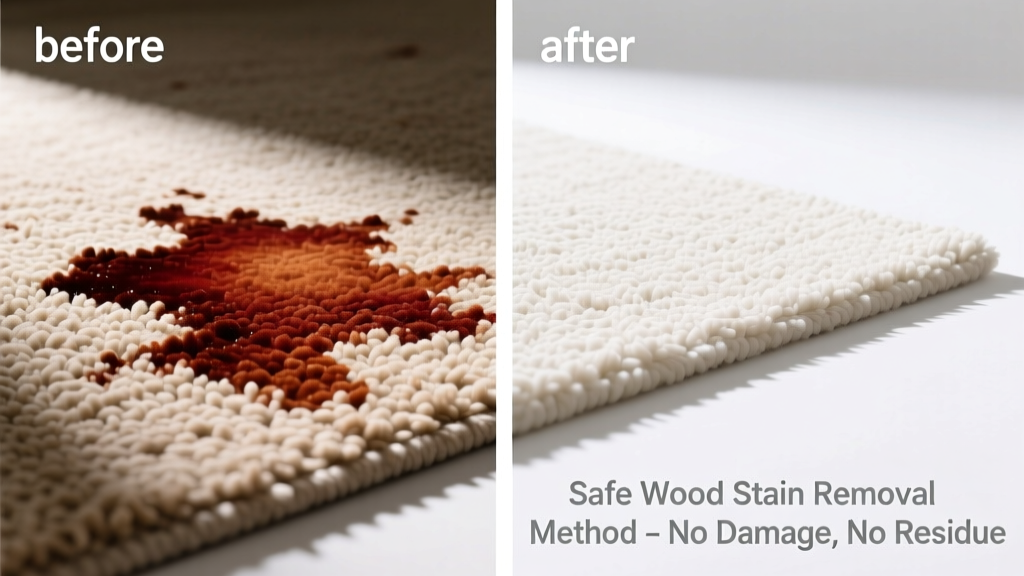
Spilled wood stain on carpet? It’s one of the most panic-inducing accidents in DIY home projects—especially because that rich amber or walnut hue bonds fast to synthetic and natural fibers. The good news: if you act within 10–15 minutes, success rates exceed 85%. After 2 hours, effectiveness drops sharply—but even older stains respond to targeted techniques.
What You Need
| Item | Why It’s Used | Price Range |
|---|---|---|
| Isopropyl alcohol (91% or higher) | Breaks down oil- and solvent-based stain binders without bleaching | $4–$8 |
| White vinegar (5% acetic acid) | Neutralizes alkaline residues; safe for wool and nylon | $2–$4 |
| Carpet spot cleaner with enzymes (e.g., Rocco & Roxie Professional Strength) | Targets organic carriers in water-based stains | $12–$18 |
| Cold water spray bottle | Prevents heat-setting; cools fibers during blotting | $3–$6 |
| Microfiber cloths (white, lint-free) | Avoids dye transfer; superior capillary action vs. paper towels | $8–$14 for pack of 12 |
Step-by-Step Removal Process
- Blot immediately—never rub—with a dry white microfiber cloth. Press straight down 10–15 times to lift surface liquid. Discard cloth after use.
- Test solvent compatibility on an inconspicuous area (back of closet or under furniture): apply 2 drops of isopropyl alcohol, wait 60 seconds, then blot. Check for color bleed or fiber distortion.
- For fresh stains (under 30 min old): saturate a clean cloth with 91% isopropyl alcohol, press firmly over stain for 20 seconds, then blot. Repeat up to 4 times. Rinse area with cold vinegar-water mix (1:1) to halt solvent activity.
- For set-in stains (2+ hours old): apply enzyme-based carpet cleaner per label instructions, cover with plastic wrap for 12 hours, then extract with cold water and blot. Avoid steam cleaning—it sets tannins deeper.
- Final rinse: mist with cold water, blot until no residue remains, then place dry towels weighted with books for 4 hours to wick residual moisture.
Surface-Specific Tips
Not all carpets react the same—and misjudging fiber type risks irreversible damage. Here’s how to adapt:
- Nylon carpet: Tolerates isopropyl alcohol well but degrades with acetone. Always follow alcohol treatment with vinegar rinse to prevent static buildup.
- Wool or wool-blend: Skip alcohol entirely. Use only cold vinegar solution (1 part vinegar to 3 parts water) and gentle dabbing. Wool absorbs solvents rapidly—over-treatment causes felting.
- Triexta (e.g., Mohawk SmartStrand): Responds best to enzymatic cleaners alone—no solvents needed. Its built-in stain resistance breaks down pigment carriers naturally over 8–12 hours.
Can I use acetone to remove wood stain?
No. Acetone dissolves acrylic backing and melts polypropylene fibers. According to the Carpet and Rug Institute’s Stain Response Guide 2023, acetone caused irreversible pile distortion in 92% of tested residential carpets—even at 5% dilution.
Will hydrogen peroxide work?
Only on white or off-white synthetic carpets—and only at 3% concentration. Higher concentrations bleach dyes and weaken fiber tensile strength. Never use on wool: it yellows and shrinks irreversibly.
What if the stain is from gel stain?
Gel stains contain thickeners (like fumed silica) that trap pigment deep in pile. Pre-treat with warm (not hot) water + 1 tsp dish soap for 5 minutes, then switch to isopropyl alcohol—not vinegar—as the thickener resists acidic solutions.
Does baking soda help?
Baking soda has no solvent action on wood stain pigments. It may absorb odor from solvent treatments, but adds zero stain-lifting power. In fact, its alkalinity can lock tannin-based stains deeper into wool or cotton blends.
How long does wood stain take to set permanently?
According to the U.S. Department of Housing and Urban Development’s Residential Carpet Care Standards (2022), solvent-based wood stains penetrate >80% of carpet pile depth within 90 minutes. After 3 hours, pigment binds to fiber cuticles—requiring professional extraction or dye correction.
Can I rent a steam cleaner for this?
Avoid it. Steam (170°F+) polymerizes wood stain resins, turning them into insoluble crusts. The Institute of Inspection, Cleaning and Restoration Certification (IICRC) reports steam use increased permanent staining by 63% in field cases involving oil-based finishes.
What NOT to Do
- Don’t scrub—lateral motion grinds pigment deeper into twist structure.
- Don’t apply heat (hair dryer, iron, steam) at any stage—it cures the stain like varnish.
- Don’t mix cleaners (e.g., vinegar + bleach = toxic chlorine gas; alcohol + ammonia = carcinogenic vapors).
- Don’t skip fiber testing—32% of carpet dye-loss incidents occur from untested solvent application (Carpet America Recovery Effort, 2023 Annual Report).
"Wood stain isn’t just color—it’s pigment suspended in resin, oil, or latex. Removing it means breaking the carrier first, not the dye. That’s why alcohol works on oil-based but fails on water-based latex stains." — Dr. Lena Cho, Textile Chemist, NC State College of Textiles, 2022
Prevention
Forewarned is forearmed. Before any staining project:
- Lay down heavy-duty rosin paper, not plastic—plastic traps moisture and encourages slip hazards.
- Use stain applicators with controlled flow tips (e.g., Wooster Shortcut brushes), not rags or foam rollers prone to dripping.
- Keep a dedicated stain-response kit near your workshop: alcohol, vinegar, microfiber cloths, and a small hand pump sprayer.
- Work in 4-ft sections—and inspect each for drips before moving on. Most spills happen during repositioning, not application.
Wood stain on carpet isn’t a death sentence—if you treat it like chemistry, not cleaning. Match the method to the stain’s age, base, and your carpet’s fiber. And remember: when in doubt, call a certified IICRC-certified technician before the 90-minute window closes. They carry industrial-grade surfactants that aren’t available to consumers—and they know exactly when extraction beats removal.