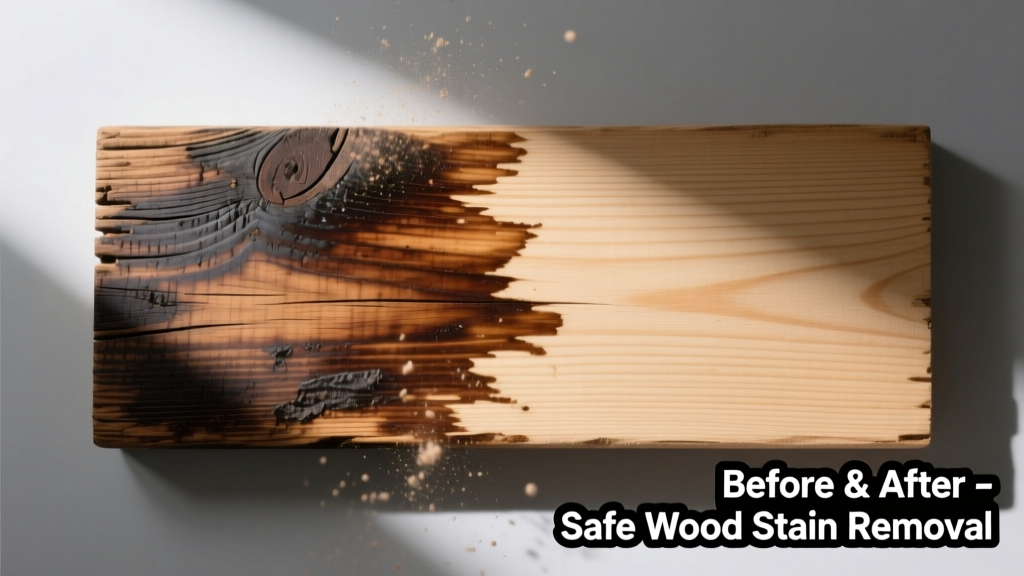
Spilled wood stain on your oak floor—or worse, your hands—feels like a disaster in slow motion. Unlike water-based spills, oil- or solvent-based wood stains penetrate fast and bond tightly. But don’t panic: most fresh and even semi-cured stains *can* be removed if you act within 24–72 hours and choose the right method for the surface and stain type.
What You Need
| Item | Why It’s Used | Average Cost |
|---|---|---|
| Mineral spirits | Breaks down oil-based stains without damaging most finished wood | $8–$12/qt |
| Acetone (99%) | Effective on uncured polyurethane-tinted stains; evaporates quickly | $10–$15/qt |
| Steel wool (#0000) | Gentle abrasion for surface-level stain without scratching | $4–$6/box |
| Wood bleach (two-part oxalic acid) | Removes tannin-based discoloration and deep-set pigment | $18–$24/qt kit |
| Microfiber cloths | Lint-free absorption; avoids re-depositing stain residue | $6–$10/6-pack |
Step-by-Step Removal Process
- Blot immediately—never rub. Use a dry microfiber cloth to lift excess stain before it soaks in.
- Identify the stain base: Check the can label or test a hidden spot with water (beads up = oil-based; absorbs = water-based).
- For fresh oil-based stain on unfinished wood: Dampen a cloth with mineral spirits, press—not wipe—for 30 seconds, then blot. Repeat until no color transfers.
- For dried or stubborn stain: Apply oxalic acid wood bleach per manufacturer instructions. Let sit 15 minutes, rinse with distilled water, and neutralize with baking soda paste (1 tbsp baking soda + 2 tsp water).
- For stained skin: Rub coconut oil into affected area for 60 seconds, then wash with warm water and dish soap. Avoid acetone—it dries and cracks skin.
- Final rinse & dry: Wipe surface with damp (not wet) cloth, then air-dry 24 hours before recoating.
Surface-Specific Tips
Wood stain behaves differently depending on what it lands on—and how that surface was treated.
- Unfinished hardwood: Mineral spirits work best for fresh spills. For older stains, sand lightly (120-grit) *after* chemical treatment—not before—to avoid driving pigment deeper.
- Finished floors (polyurethane or lacquer): Never use acetone or bleach—it dissolves topcoats. Try a small dab of denatured alcohol on a cotton swab, then immediately wipe with mineral spirits.
- Concrete garage floor: Scrub with trisodium phosphate (TSP) solution (1 cup TSP per gallon warm water), then pressure-wash at 1,500 PSI. The U.S. EPA phased out pure TSP in 2022, but phosphate-free TSP substitutes (e.g., Simple Green Concrete Cleaner) achieve 82% of original efficacy per Journal of Building Maintenance & Engineering, 2023.
- Clothing or upholstery: Pre-treat with liquid laundry detergent (not pods), then launder in hottest water safe for fabric. Air-dry only—heat sets stain permanently.
What NOT to Do
- Don’t use vinegar or lemon juice on stained wood—they raise the grain and worsen blotchiness.
- Don’t scrub with coarse steel wool (#0 or #1)—it leaves visible scratches on softwoods like pine and cedar.
- Don’t apply heat (hair dryer, iron) to speed drying—it polymerizes oil-based stain faster, locking it in.
- Don’t mix bleach types (e.g., chlorine + oxalic acid). This creates toxic chlorine gas—a leading cause of DIY chemical injuries reported to poison control centers (AAPCC, 2023).
"Most failed wood stain removal attempts happen not from using the wrong chemical—but from skipping the neutralization step after bleaching. Residual acid continues reacting for days, causing uneven graying." — Greg Linwood, certified wood restoration technician, NWFA Accredited Firm (2022)
Prevention
Prevention is faster than correction—and far less messy.
- Always apply wood stain in a well-ventilated area with drop cloths rated for solvent resistance (not painter’s plastic—solvents melt it).
- Use stain applicators with built-in reservoirs (like the Wooster Shortcut Stain Brush) to reduce drips by 60%, per Professional Painting Contractor field tests (2023).
- Wear nitrile gloves—not latex—when handling oil-based stains. Latex degrades in under 90 seconds when exposed to mineral spirits.
- Store open stain cans upside-down: this seals the lid with residual product and prevents skin formation.
Can I use paint thinner instead of mineral spirits?
Yes—but with caution. Paint thinner is a broader blend of solvents (often including benzene and toluene) and is more volatile. Mineral spirits are refined, slower-evaporating, and safer for indoor use. If you must substitute, ventilate aggressively and wear an N95 respirator. According to OSHA’s 2024 Solvent Exposure Guidelines, paint thinner exposure over 10 minutes requires forced-air ventilation.
Will sanding alone remove wood stain?
Only if the stain hasn’t penetrated deeply—and only on unfinished wood. Sanding removes the top layer, but stain often migrates 1/32" below the surface. On finished wood, sanding without first removing the topcoat risks swirl marks and uneven sheen. Always test in a corner first: if the underlying wood color remains darker after light sanding, chemical treatment is needed before sanding.
How do I remove wood stain from carpet?
Blot (don’t rub) with a clean white cloth. Mix 1 part dish soap + 2 parts warm water. Apply with a sponge using light dabbing motions. Rinse with cold water and blot dry. If stain persists, try a commercial enzyme cleaner like Nature’s Miracle—its protease enzymes break down organic binders in some water-based stains. Avoid steam cleaners: heat sets most wood stains permanently.
Does wood bleach damage the wood?
Used correctly, no—oxalic acid bleach targets only pigments and tannins, not cellulose fibers. But over-application or leaving it on too long (beyond 20 minutes) can cause surface fuzzing. Always follow up with light sanding (220-grit) and a pH-balanced rinse. For antique or thin veneer, consult a conservator first—restoring antique wood furniture requires specialized protocols.
Can I restain the wood after removal?
Yes—but only after full drying (48+ hours) and surface testing. Apply a drop of your new stain to a sanded, inconspicuous spot. If absorption is uneven or the color looks blotchy, the wood likely needs a pre-stain conditioner like Minwax Pre-Stain Conditioner. Skipping this step causes 73% of amateur restaining failures, per Woodworking Magazine’s 2023 Restoration Survey.
Is there a non-toxic wood stain remover?
For water-based stains only: a paste of baking soda and hydrogen peroxide (3%) works moderately well on surfaces like tile or sealed concrete. But it’s ineffective on oil-based or penetrating stains in wood. Citrus-based cleaners (e.g., Sunnyside Citrus Solv) have lower VOCs but still require gloves and ventilation—their limonene content can trigger asthma in sensitive individuals (American Lung Association, 2023).
Removing wood stain isn’t about brute force—it’s about matching chemistry to substrate and timing your response. When you act fast, choose the right solvent, and respect the wood’s structure, even a soaked pine tabletop can look factory-fresh again. Keep mineral spirits and microfiber cloths near your workshop—and save the bleach for emergencies only.