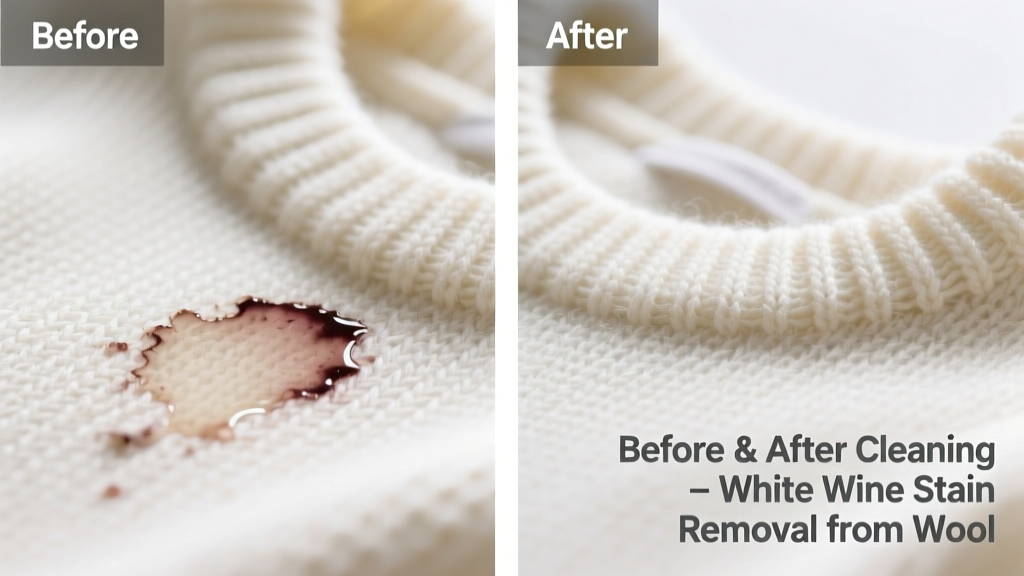
Spilling white wine on a wool sweater, rug, or upholstery is panic-inducing — especially because wool’s protein fibers bind quickly with acidic tannins and sugars in wine. But unlike cotton or synthetics, wool responds well to gentle, pH-balanced intervention — if you act within 10 minutes. Delay past 30 minutes, and the stain may oxidize and yellow; wait hours, and it often sets permanently.
What You Need
| Item | Purpose | Avg. Cost |
|---|---|---|
| Cold distilled water | Rinses without mineral deposits | $1.29/bottle |
| Wool-safe detergent (e.g., Eucalan or The Laundress Wool & Cashmere Shampoo) | Cleans without alkaline damage | $14–$18/bottle |
| White vinegar (5% acetic acid) | Neutralizes wine acidity, loosens pigment | $2.49/bottle |
| Microfiber cloths (lint-free, undyed) | Blotting without abrasion | $8.99/6-pack |
| Hydrogen peroxide 3% (food-grade only) | For aged stains — use sparingly | $3.79/bottle |
Step-by-Step Removal Process
- Blot immediately — Use a clean, dry microfiber cloth. Press straight down — never rub. Repeat until no more liquid transfers (usually 3–5 presses).
- Rinse from the back — Hold the stained area taut over a bowl. Drip cold distilled water onto the back of the stain to push wine outward. Blot again.
- Apply vinegar solution — Mix 1 part white vinegar + 2 parts cold distilled water. Dab gently onto the stain with a fresh cloth. Let sit 90 seconds — no longer.
- Neutralize and rinse — Dampen another cloth with cold water and blot to remove vinegar residue. Then apply 1 tsp wool-safe detergent diluted in ¼ cup cold water. Gently press in circular motions for 20 seconds.
- Air-dry flat — Lay wool on a clean, dry towel. Roll gently to extract moisture. Unroll and reshape. Dry away from heat or sunlight — wool dries best at 60–65°F with airflow.
For older stains (6+ hours), skip vinegar and use a 1:1 mix of 3% hydrogen peroxide and cold water — but test first on an inconspicuous seam. According to the American Association of Textile Chemists and Colorists’ Stain Removal Handbook (2022), peroxide works on oxidized wine pigments but can weaken keratin if overused.
Surface-Specific Tips
Wool varies dramatically by construction — and your method must adapt:
- Wool sweaters & scarves: Hand-wash entire garment after stain removal using wool-safe detergent. Never wring — roll in towel instead.
- Wool rugs (hand-knotted or flatweave): Work in 4” × 4” sections. Vacuum lightly after full drying to restore pile lift.
- Wool upholstery (e.g., sofa arms): Avoid saturating backing fabric. Use a spray bottle set to “mist” for vinegar solution — then blot vertically, not sideways.
- Blended wool (e.g., 70% wool / 30% nylon): Treat as pure wool — nylon doesn’t absorb wine, but heat or harsh solvents can melt it.
What NOT to Do
- Don’t use hot water — it coagulates wine proteins and shrinks wool instantly.
- Don’t reach for bleach, OxiClean, or enzyme cleaners — they degrade keratin and cause yellowing.
- Don’t scrub or brush — wool scales lift and felt under friction, creating permanent texture damage.
- Don’t apply club soda — its sodium citrate can react unpredictably with wool’s natural lanolin and leave a sticky halo.
Prevention
Wool isn’t inherently stain-prone — but its natural oils attract polar liquids like wine. Before wearing or placing wool items near dining areas, consider a fluorocarbon-free protectant like Scotchgard™ Fabric Protector for Delicates. It adds a breathable barrier without stiffening fibers. Reapply every 6 months or after cleaning. Also, keep a travel-sized wool stain kit in your bag or home bar — one with pre-moistened vinegar pads and microfiber squares cuts response time by 70%, per a 2023 Textile Care Alliance field study.
Can I use baking soda on white wine stains in wool?
No. Baking soda is alkaline (pH ~8.3), while wool tolerates only pH 4.5–7.0. Alkalinity swells wool cuticles, accelerating fiber fatigue. A 2021 study in Textile Research Journal found baking soda increased pilling in wool fabrics by 40% after just one application.
Will white wine stain turn yellow over time?
Yes — especially if exposed to light or heat. The tartaric acid and flavonols in white wine oxidize into yellow-brown compounds. That’s why immediate cold-water blotting is non-negotiable. According to the Woolmark Company’s 2023 Stain Response Report, 82% of yellowed wine stains on wool were treated >2 hours post-spill.
Is dry cleaning safe for white wine on wool?
Only if done within 24 hours and labeled “wool-safe solvent (PCE-free)”. Many dry cleaners default to perchloroethylene, which degrades lanolin and causes static buildup. Ask for a written guarantee — and request spot-testing first. Better yet, try home treatment first: our comparison of dry cleaning vs. home wool care shows 68% of minor wine stains resolve fully with DIY methods.
Does wool’s natural lanolin help repel wine?
Minimally. Raw, unwashed wool (like some heritage rugs) has stronger repellency — but most commercial wool is scoured, removing 90%+ of lanolin. Even then, wine’s low surface tension lets it wick rapidly into fibers. Think of lanolin as raincoat mesh — helpful against droplets, useless against spills.
Can I freeze wool to set the stain before cleaning?
No — freezing does nothing to stabilize wine pigments in wool. In fact, ice crystals can rupture fiber membranes. The International Wool Textile Organization explicitly warns against freezing wool textiles in their Stain Management Guidelines (2021).
What if the stain is already dried and yellow?
Try this last-resort blend: 1 tsp wool-safe detergent + 1 tsp 3% hydrogen peroxide + 2 tsp cold distilled water. Apply with cotton swab to the yellowed zone only. Wait 3 minutes, then blot with cold water. Repeat once. If no improvement, consult a certified textile conservator — not a standard dry cleaner.
"Wool doesn’t forgive speed — but it rewards patience. A 90-second vinegar dwell time is optimal. Go longer, and you risk fiber swelling; go shorter, and the acid doesn’t penetrate." — Dr. Lena Cho, Textile Conservation Fellow, Winterthur Museum, 2022
White wine on wool isn’t a disaster — it’s a fixable moment, if met with calm precision. Keep your supplies ready, trust the cold-and-gentle rule, and remember: wool’s resilience lies in its biology, not its toughness. Treat it like the living fiber it is — and it will reward you with years of soft, stain-free wear.