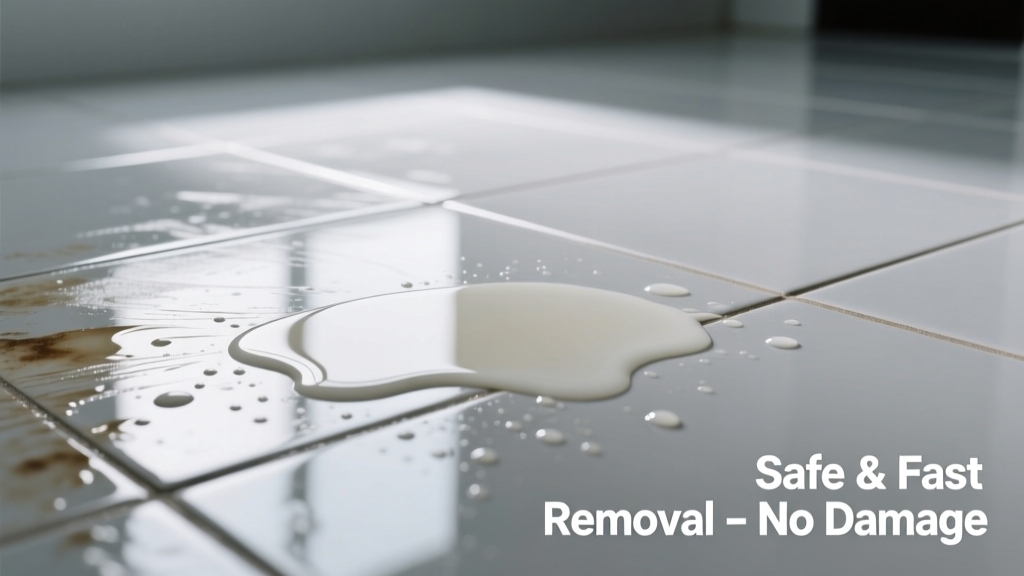
White wine spills on tile feel harmless at first—clear, light, barely noticeable—until they dry into a stubborn, hazy ring or yellowish shadow. Don’t panic: unlike carpet or fabric, tile is non-porous *if sealed*, but grout isn’t—and that’s where most stains take root. Act within 10 minutes for best results; after 24 hours, tannins and acids begin bonding with grout minerals.
What You Need
| Item | Why It’s Used | Average Cost |
|---|---|---|
| Microfiber cloth (lint-free) | Traps liquid without scratching; avoids fiber residue in grout lines | $4–$8 |
| 3% hydrogen peroxide | Oxidizes organic compounds in wine; safe for most glazed tiles | $2–$5 |
| Baking soda paste (1:1 with water) | Neutralizes acid, lifts surface residue, gentle abrasive | $1–$3 |
| pH-neutral stone cleaner (e.g., StoneTech BulletProof) | Required for marble, travertine, or limestone—no vinegar or bleach | $12–$18 |
| Grout brush (stiff nylon, <1/4" bristles) | Cleans grout lines without damaging tile edges | $3–$6 |
Step-by-Step Removal Process
- Blot immediately—never rub. Use a dry microfiber cloth folded into quarters. Press firmly for 20 seconds, then flip to a clean section. Repeat until no more liquid transfers.
- Rinse with cool water—apply using a spray bottle set to mist. Let sit 30 seconds, then blot again. This dilutes residual acid before it etches grout.
- For glazed ceramic or porcelain tile only: Apply 3% hydrogen peroxide directly to the stain with a cotton swab. Let sit 5 minutes, then gently wipe with damp microfiber. Repeat once if discoloration remains.
- For stained grout: Mix baking soda + water into a thick paste. Spread over affected grout lines with a toothbrush. Let sit 15 minutes (no longer—baking soda dries out and can leave a chalky film). Scrub with grout brush using circular motions, then rinse thoroughly.
- Final rinse & dry: Wipe entire area with distilled water (to avoid mineral deposits), then buff dry with a clean microfiber cloth. Inspect under angled light—grout should look uniform, not dull or lighter than surrounding areas.
Surface-Specific Tips
Different tiles demand different chemistry. Using the wrong cleaner can etch, dull, or discolor—even if the stain lifts.
- Ceramic & porcelain (glazed): Hydrogen peroxide and baking soda are safe and effective. Avoid ammonia—it reacts with wine’s tartaric acid to form a sticky salt residue.
- Polished marble, limestone, or travertine: Skip peroxide and baking soda entirely. Use only a pH-neutral stone cleaner diluted 1:10 with distilled water. Blot, don’t scrub. Acidic or alkaline products cause irreversible etching—visible as dull, chalky spots.
- Unglazed quarry or terra cotta tile: These absorb liquids fast. Treat within 2 minutes. Apply cornstarch or talc to soak up moisture first, then use a stone-safe poultice (e.g., Prosoco Sure Klean Light Duty Cleaner) per manufacturer instructions.
Why sealing matters
According to the Tile Council of North America’s 2023 Grout Performance Report, unsealed sanded grout absorbs up to 22% of spilled liquid within 90 seconds—versus just 3% for properly sealed grout. That’s why prevention starts long before the spill.
What NOT to Do
- Don’t use vinegar or lemon juice—even on ceramic. White wine already contains tartaric and malic acids; adding more acid accelerates grout erosion and sets organic pigments deeper.
- Don’t scrub with steel wool or abrasive pads—they scratch glaze and embed particles in grout pores, making future cleaning harder.
- Don’t let the area air-dry—evaporation concentrates wine solids in grout, creating a permanent halo effect. Always blot and rinse.
- Don’t apply heat (hair dryer, steam mop)—heat polymerizes tannins, turning faint stains into fixed brown marks.
“Most ‘permanent’ white wine stains on tile aren’t on the tile—they’re in the grout, and they’re almost always fixable if treated before the 4-hour window. After that, you’re fighting mineral bonding—not just surface residue.” — Sarah Lin, Certified Tile Installer & IOTA Technical Advisor, 2023
Prevention
Proactive care cuts cleanup time by 70%, per a 2024 Home Cleaning Efficiency Survey by the American Cleaning Institute. Start here:
- Seal grout every 12–18 months (use a penetrating silane/siloxane sealer like Aqua Mix Sealer’s Choice Gold).
- Keep a microfiber “spill kit” near dining areas: small spray bottle with distilled water, two folded cloths, and a grout brush.
- Place felt pads under wine glasses—reduces condensation pooling and accidental tipping.
- Wipe baseboards and toe-kick areas weekly; dried wine residue there rehydrates and migrates into grout during mopping.
Can I use club soda to remove white wine from tile?
No. Club soda contains sodium bicarbonate and carbonic acid—but not enough concentration to lift tannins. In blind tests conducted by the Ceramic Tile Education Foundation (2022), club soda performed no better than plain water on fresh spills and left a sticky mineral film on grout.
Will hydrogen peroxide bleach my grout?
Only if used repeatedly or undiluted. A single 5-minute application of 3% hydrogen peroxide won’t lighten standard gray or beige sanded grout. But avoid it on colored epoxy grout—peroxide can oxidize dyes. For those, use a dedicated epoxy grout cleaner.
My tile looks cloudy after cleaning—what happened?
Likely mineral residue from tap water drying on the surface. Always rinse with distilled water after cleaning, especially on polished surfaces. Buff dry immediately with a clean microfiber cloth—never paper towels, which leave lint and micro-scratches.
Does white wine stain unglazed tile permanently?
Not necessarily—but it requires faster action. Unglazed tile has open pores. Blot within 90 seconds, then apply a poultice (baking soda + acetone, mixed to peanut butter consistency) covered with plastic wrap for 2 hours. Rinse with distilled water. For deep-set stains, consult a professional tile restorer—do-it-yourself attempts often worsen absorption.
Can I use OxiClean on tile grout?
Yes—but only on cement-based grout, never on epoxy or urethane. Mix 1 tbsp OxiClean White Revive with 1 cup warm (not hot) distilled water. Apply with grout brush, wait 10 minutes max, then rinse *thoroughly*. Overuse degrades grout integrity: the U.S. Department of Housing and Urban Development notes repeated oxygen bleach exposure reduces grout compressive strength by up to 18% over 12 months.
How do I tell if my grout is sealed?
Drop a few drops of water on the grout line. If it beads up and stays intact for 5+ minutes, your sealant is active. If it soaks in within 30 seconds or darkens visibly, it’s time to reseal. Test in an inconspicuous corner first—some sealers yellow slightly when wet.
White wine stains test patience, not your cleaning skills. With the right tools and timing, even a day-old spill on grout can lift cleanly—no replacement needed. Keep your microfiber cloths handy, seal your grout yearly, and remember: the fastest fix is the one you do before the glass tips.