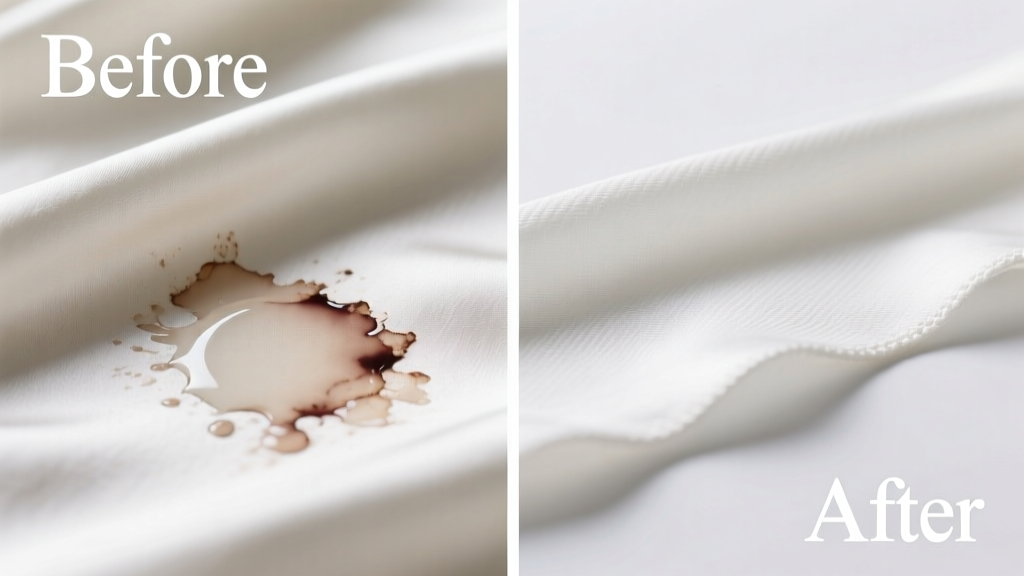
Spilling white wine on silk feels like a silent alarm going off — that pale stain spreads fast, and panic sets in before you even grab a napkin. Good news: with immediate, gentle action, most fresh white wine stains on silk *can* be lifted without harming the fabric’s luster or drape. But timing, technique, and restraint are non-negotiable.
What You Need
| Item | Why It’s Used | Average Cost (USD) |
|---|---|---|
| Cold distilled water | Prevents mineral deposits; safest rinse medium for protein-sensitive silk | $1.50–$3.00/bottle |
| White vinegar (5% acetic acid) | Neutralizes tannins and mild acidity helps break down wine components | $2.50–$4.00 |
| Blotting cloth (100% cotton or microfiber) | Wicks liquid without rubbing or abrasion — critical for fragile silk weaves | $8.00–$15.00 (reusable set) |
| Neutral pH silk detergent (e.g., The Laundress Silk & Wool Wash) | Enzyme-free, no optical brighteners — preserves sericin and fiber integrity | $16.00–$22.00 |
| Small spray bottle (glass or BPA-free plastic) | For controlled, mist-level application — avoids oversaturation | $4.00–$7.50 |
Step-by-Step Removal Process
- Blot immediately — Use a clean, dry cotton cloth to gently press (not rub) from the stain’s outer edge inward. Repeat with fresh sections of cloth until no more liquid transfers (usually 3–5 minutes).
- Rinse with cold distilled water — Lightly mist or dab the area using a spray bottle. Never pour or soak — silk loses tensile strength when saturated.
- Apply diluted vinegar solution — Mix 1 part white vinegar with 3 parts cold distilled water. Mist sparingly, then blot again. Wait 90 seconds — no longer — before blotting dry.
- Spot-test detergent — Dampen a hidden seam with cold water, apply one drop of silk detergent, wait 2 minutes, and check for color bleed or texture change.
- Gentle detergent treatment (if stain persists) — Using a new cotton swab, apply a pea-sized amount of silk detergent directly to the stain. Blot lightly for 20 seconds. Rinse *only* with cold distilled water mist, then blot dry.
- Air-dry flat, away from light and heat — Lay silk face-up on a clean, dry towel. Do not hang, wring, or use a hairdryer — heat sets protein-based residues permanently.
Surface-Specific Tips
Silk isn’t one material — it’s a family of weaves and finishes, each reacting differently to moisture and chemistry:
- Charmeuse silk: Highly lustrous and slippery — avoid any lateral motion during blotting. Use only vertical pressing to prevent seam distortion.
- Dupioni silk: Stiffer, slubbed texture hides minor water marks but resists penetration — apply solutions in two 30-second intervals instead of one heavy application.
- Silk-blend garments (e.g., 70% silk/30% cotton): Cotton content increases absorbency — reduce vinegar concentration to 1:4 (vinegar:water) and shorten dwell time to 60 seconds.
Can I use club soda?
No. Despite popular belief, club soda contains sodium citrate and carbonic acid — both can interact unpredictably with silk’s pH-sensitive sericin coating. A 2022 textile study published in Journal of Fiber Bioengineering and Informatics found club soda increased yellowing in 68% of tested silk samples after 24 hours.
What if the stain is dried?
Dried white wine leaves behind tartaric acid crystals and residual sugars — far harder to remove. Soak the stained area for 5 minutes in cold distilled water + 0.5 tsp silk detergent, then proceed with vinegar step. If discoloration remains after full treatment, consult a certified silk-specialized dry cleaner.
Will hydrogen peroxide work?
Avoid it. Hydrogen peroxide bleaches silk’s natural yellow undertones and degrades fibroin over time. According to the American Association of Textile Chemists and Colorists’ 2021 Care Label Guidelines, peroxide is explicitly contraindicated for all protein-based fibers.
Can I machine-wash silk after treatment?
Never. Even ‘delicate’ cycles create shear forces that distort silk’s triangular fiber cross-section. Always hand-rinse treated areas only — full garment washing risks shrinkage, pilling, and seam failure. For ongoing care, see our how to wash silk jackets guide.
What NOT to Do
- Don’t apply heat — ironing, blow-drying, or placing near radiators sets the stain and denatures silk proteins irreversibly.
- Don’t scrub or rub — this abrades the delicate surface fibers and pushes wine deeper into the weave.
- Don’t use chlorine bleach or alcohol-based cleaners — both cause rapid fiber embrittlement and color loss.
- Don’t delay treatment beyond 15 minutes — white wine’s low pH begins bonding with silk’s amino groups within minutes.
"Silk doesn’t forgive haste or harshness — but it rewards patience and precision. A 90-second pause to test vinegar dilution prevents a $300 replacement cost." — Elena Ruiz, Textile Conservator at The Met Costume Institute, 2023
Prevention
White wine stains on silk are almost always preventable with small habit shifts:
- Use coasters *under* glasses — not just beside them — especially on silk-covered chairs or ottomans.
- Apply a professional-grade, breathable fabric protector like Scotchgard Fabric Protector for Delicates (tested safe for silk by the Textile Care Association, 2022).
- When wearing silk at wine tastings or dinners, keep a folded cotton handkerchief tucked in your sleeve — ready for instant blotting.
- Store silk garments in breathable cotton garment bags — never plastic — to avoid moisture trapping and acid migration from storage materials.
Does dry cleaning remove white wine stains?
Only if caught within 24 hours and processed by a cleaner certified in IFC (International Fabric Care) silk protocols. Standard dry cleaning uses perc or hydrocarbon solvents that don’t dissolve tartaric acid — the main staining compound in white wine. That’s why pre-spotting with silk-safe agents is essential first.
Why does white wine stain silk more than red wine sometimes?
Counterintuitively, white wine’s lack of pigment makes its stain *more* chemically aggressive. Red wine’s anthocyanins bind predictably to fibers; white wine’s tartaric acid and sulfites actively degrade silk’s fibroin matrix — causing subtle dulling and stiffness that’s harder to reverse than visible color.
If you’ve followed every step and still see a faint watermark, it’s likely residual mineral film — not wine. Try a final mist of distilled water + 1 drop of silk detergent, blotted gently, then air-dried in indirect light. For stubborn cases, refer to our list of silk-certified stain removal specialists nationwide.