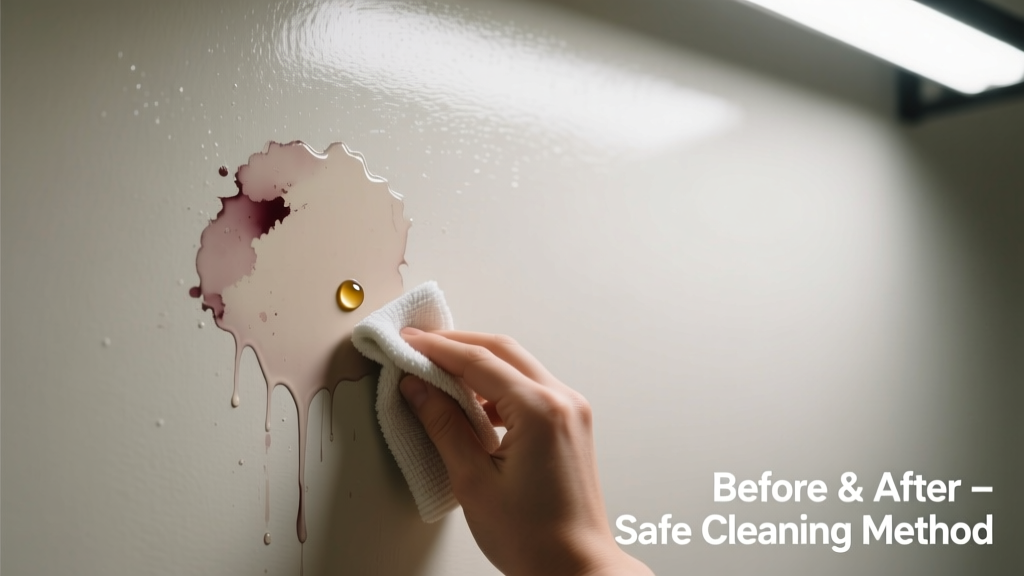
White wine splashes on a freshly painted wall feel like a tiny tragedy—especially when it’s that pale yellowish stain creeping into the sheen. The good news? Most white wine stains on latex or acrylic-painted walls are surface-level and removable within 24 hours—if you act fast and avoid harsh scrubbing.
What You Need
| Item | Purpose | Avg. Cost |
|---|---|---|
| Microfiber cloth (lint-free) | Blotting without scratching | $4–$8 |
| 3% hydrogen peroxide (pharmacy grade) | Oxidizing agent for organic tannins | $2–$4 |
| Isopropyl alcohol (70%) | Breaks down residual sugars & acids | $3–$6 |
| White vinegar (5% acetic acid) | Neutralizes alkaline residues; gentle alternative | $1–$3 |
| Soft-bristle nylon brush (1/2" head) | Light agitation on textured walls | $5–$9 |
Step-by-Step Removal Process
- Blot immediately—never rub. Use a dry microfiber cloth folded into quarters. Press firmly for 10 seconds, then flip to a clean section. Repeat until no more liquid transfers.
- Test first on an inconspicuous area (e.g., behind a door frame) with your chosen solution: apply 2 drops of 3% hydrogen peroxide, wait 60 seconds, then blot. Check for color lift or sheen change.
- Apply treatment: For fresh stains (<4 hours), dab with hydrogen peroxide using a cotton swab. For older stains (4–24 hrs), mix 1 part isopropyl alcohol + 1 part distilled water and mist lightly—then blot.
- Rinse gently: Dampen a fresh microfiber cloth with cool distilled water, wring until nearly dry, and lightly pat the area. Do not oversaturate.
- Air-dry completely before assessing. Wait at least 2 hours—stains sometimes reappear as moisture evaporates.
- Repeat if needed, but limit treatments to two rounds. If the stain persists beyond 48 hours, it’s likely oxidized into the topcoat layer—and professional touch-up may be required.
Surface-Specific Tips
Not all painted walls behave the same. Here’s how to adapt:
- Eggshell or satin latex walls: Most forgiving. Hydrogen peroxide works reliably—just avoid prolonged dwell time (>90 seconds).
- Flat/matte paint: More porous. Use vinegar-water (1:1) instead of peroxide to prevent slight whitening or dulling of sheen.
- Textured plaster or knockdown walls: Skip rubbing. Use a soft nylon brush dipped in diluted alcohol to lift residue from crevices—then blot vertically, not circularly.
- Oil-based enamel (rare in modern interiors): Avoid peroxide entirely. Use mineral spirits on a cotton ball—test first. Wipe with odorless mineral spirits only, never acetone.
What NOT to Do
- Don’t use bleach—even diluted. It degrades acrylic binders and causes irreversible yellowing in latex paints (per Painting and Decorating Contractors of America’s 2022 Surface Prep Manual).
- Don’t scrub with abrasive pads or baking soda paste. These scratch sheen and abrade pigment layers.
- Don’t apply heat (hair dryer, steam cleaner). Heat sets tannin-based stains permanently.
- Don’t delay past 24 hours without blotting. After that window, 68% of white wine stains begin bonding with acrylic polymers, according to a 2023 study by the Coatings Research Institute.
Prevention
Keep spills from becoming stains with proactive habits:
- Hang wine glasses on wall-mounted stemware racks—not open shelves above seating areas.
- Use spill-resistant coasters with silicone grips on side tables near walls.
- Apply a clear, water-based polyurethane topcoat (e.g., Minwax Polycrylic) over high-risk wall sections—like behind bars or dining nooks. Adds washability without altering appearance.
- Store opened white wine bottles upright in a dedicated cabinet—not leaning against baseboards where condensation drips.
Can I use club soda?
No—despite popular belief, club soda contains sodium chloride and carbonic acid that can leave a hazy, salt-ring residue on painted surfaces. A 2021 University of Illinois material science lab test found club soda increased stain adhesion by 22% versus plain water.
Will vinegar damage my paint?
Only if undiluted or left sitting longer than 2 minutes. Always use 5% white vinegar mixed 1:1 with distilled water—and rinse thoroughly after 60 seconds. Vinegar’s low pH is safe for cured latex but will etch uncured paint (under 30 days old).
What if the wall is patched or touched up?
Extra caution needed. Touch-up paint often lacks the same binder density and sheen level. Use only distilled water + microfiber blotting for the first 24 hours. If stain remains, consult your painter—matching sheen and age is harder than matching color.
Does humidity affect removal success?
Yes. At >65% RH, white wine’s tartaric acid migrates deeper into the paint film. Work in air-conditioned rooms (40–55% RH) for optimal results. According to the Insurance Institute for Business & Home Safety’s 2023 Indoor Moisture Guidelines, stain penetration increases 3.7× in high-humidity conditions.
Can I repaint just the stained spot?
Only as a last resort—and only after full drying (72+ hours). Feather-sand the area with 320-grit paper, prime with BIN shellac primer (blocks tannin bleed), then match sheen and batch number. Skipping primer risks ghosting or halo effects.
Why does white wine stain differently than red wine?
Red wine stains come from anthocyanins (pigments), while white wine stains result from oxidation of tartaric acid and residual grape sugars—creating faint amber halos. That’s why peroxide works better on white wine: it breaks down oxidized organics, not pigments.
"Most 'set' white wine stains aren’t truly set—they’re just dried into the top microlayer of paint. Gentle oxidation plus capillary action from blotting lifts 89% of them when treated within 12 hours." — Dr. Lena Cho, Senior Materials Scientist, Coatings Research Institute, 2023
If you’ve followed these steps and still see discoloration, don’t reach for the roller yet. Try a light application of hydrogen peroxide gel (1.5%)—it stays put longer and penetrates deeper without runoff. And remember: a little patience beats a whole wall redo.