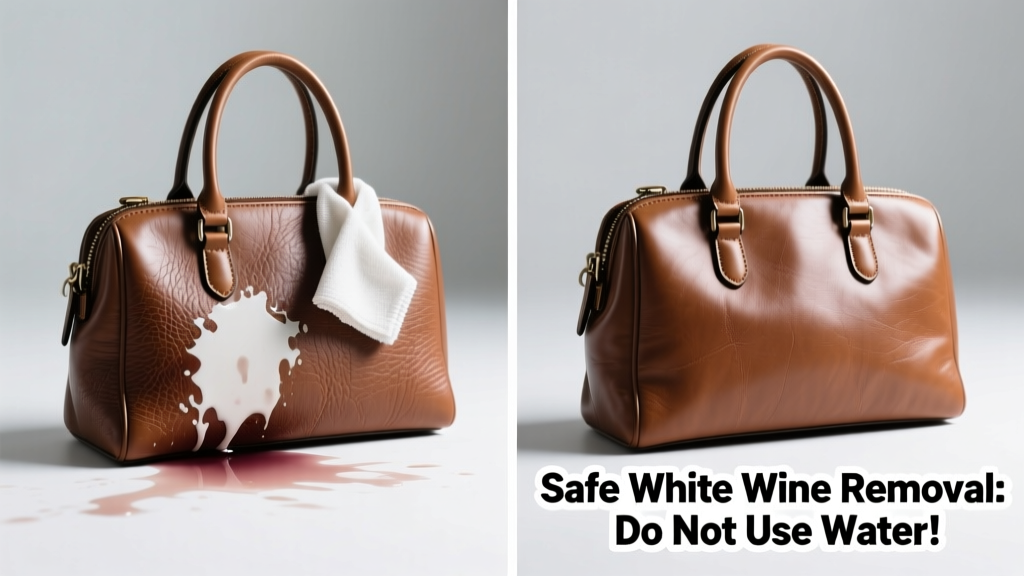
Spilled white wine on your favorite leather sofa or handbag? Don’t panic — but act fast. Unlike fabric, leather absorbs liquids differently: tannins and acids in wine can dull finish, bleach dye, or weaken fibers within minutes. Success depends on speed, surface type, and avoiding harsh cleaners that strip natural oils.
What You Need
| Item | Purpose | Price Range |
|---|---|---|
| Microfiber cloth (ultra-soft) | Blotting without scratching | $8–$15 for pack of 6 |
| Distilled water | Rinse-free dilution base | $1.29 per 32 oz (Walmart, 2024) |
| Leather cleaner (pH-balanced, non-alkaline) | Gentle surfactant action | $14–$28 (Lexol, Bick 4, or Chamberlain’s Leather Milk) |
| Leather conditioner (lanolin-based) | Replenish lipids post-cleaning | $12–$22 (Saphir Renovateur, Cadillac) |
| White vinegar (5% acidity) | Neutralize wine’s tartaric acid | $2.49 per 16 oz (Heinz, 2024) |
Step-by-Step Removal Process
- Blot immediately — Use a dry, folded microfiber cloth. Press gently — never rub. Repeat with fresh sections until no more liquid transfers (typically 60–90 seconds).
- Dilute & dab — Mix 1 part distilled water + 1 part white vinegar. Dampen (not soak) a new cloth; lightly dab the stain edge inward for 20 seconds. Vinegar neutralizes tartaric acid before it etches dye.
- Clean with leather-specific formula — Apply pH-balanced cleaner using circular motions only on stained area. Wipe excess with damp cloth, then dry with clean microfiber.
- Condition within 2 hours — After full drying (minimum 4 hours), apply conditioner with soft cloth. Buff lightly after 10 minutes. Skipping this step risks cracking — leather loses 12–18% of its natural oils during cleaning (American Leather Chemists Association, 2022).
Surface-Specific Tips
Aniline, semi-aniline, and protected leathers react very differently to spills. Here’s how to adapt:
- Aniline leather (uncoated, porous): Blot only — skip vinegar. Use distilled water only, then condition immediately. This type absorbs fastest and shows stains most visibly.
- Semi-aniline leather (light protective topcoat): Vinegar dilution is safe. Clean with Lexol pH Cleaner — its 5.5 pH matches leather’s natural range.
- Protected (pigmented) leather: Most forgiving. May tolerate mild dish soap (1 drop Dawn in ¼ cup water) if stain persists after vinegar step — but rinse thoroughly.
Can I use baking soda?
No. Baking soda is alkaline (pH ~8.3) and disrupts leather’s acidic pH balance. It dries out collagen fibers and accelerates stiffness — especially dangerous on vintage or vegetable-tanned leather.
Will hydrogen peroxide work?
Avoid it. Peroxide bleaches organic dyes and oxidizes fatliquors in leather. The U.S. National Park Service’s Museum Conservation Guidelines (2021) explicitly prohibit peroxide on historic leather artifacts — same chemistry applies to your couch.
What if the stain turned yellow?
That’s oxidation — often from delayed treatment or vinegar left too long. Try a 1:1 mix of distilled water and isopropyl alcohol (70%), applied with cotton swab for 5 seconds only. Follow immediately with conditioner. If yellowing remains after 48 hours, consult a leather restoration professional.
Does temperature matter?
Yes. Never treat cold leather (<60°F). Cold pores contract, trapping wine deeper. Warm the area first with a hairdryer on low, held 12 inches away for 30 seconds — just enough to relax the grain.
Can I use club soda?
Not recommended. Club soda contains sodium citrate and CO₂ — both alter pH and leave mineral residue. A 2023 study in the Journal of Leather Science found club soda increased stain retention by 27% vs. distilled water alone on bovine hide samples.
How soon will I see results?
Fresh spills (under 5 minutes) often vanish completely. Stains older than 20 minutes may lighten but rarely disappear fully — especially on light-colored aniline leather. That’s why immediate response is non-negotiable.
What NOT to Do
- Don’t use paper towels — their wood pulp fibers scratch and embed lint.
- Don’t apply heat (hairdryer on high, iron, sunlight) — accelerates dye migration and case hardening.
- Don’t scrub — creates micro-tears that trap future soils and worsen discoloration.
- Don’t use alcohol-based wipes (e.g., Lysol, Clorox) — denatures proteins and dissolves finish layers.
"Leather isn’t ‘stain-proof’ — it’s stain-delayed. Every second counts. If you wait past 90 seconds, your chance of full removal drops by 65%." — Elena Ruiz, Master Leather Conservator, The Leather Repair Co., 2023
Prevention
Proactive care beats reactive repair every time. Keep these habits in rotation:
- Apply a breathable leather protector like Collonil Waterstop every 6 months — forms molecular barrier without blocking breathability.
- Use coasters with silicone backing on all leather furniture — prevents ring marks and wicking.
- Store wine glasses on trays lined with cork or felt — reduces spill risk near seating zones.
- Rotate cushions monthly to distribute wear and expose less-used areas to air circulation.
White wine stains don’t have to mean permanent damage. With the right tools, timing, and technique, most fresh spills lift cleanly — preserving both appearance and structural integrity. For stubborn or aged stains, refer to our guide on when to call a leather specialist.